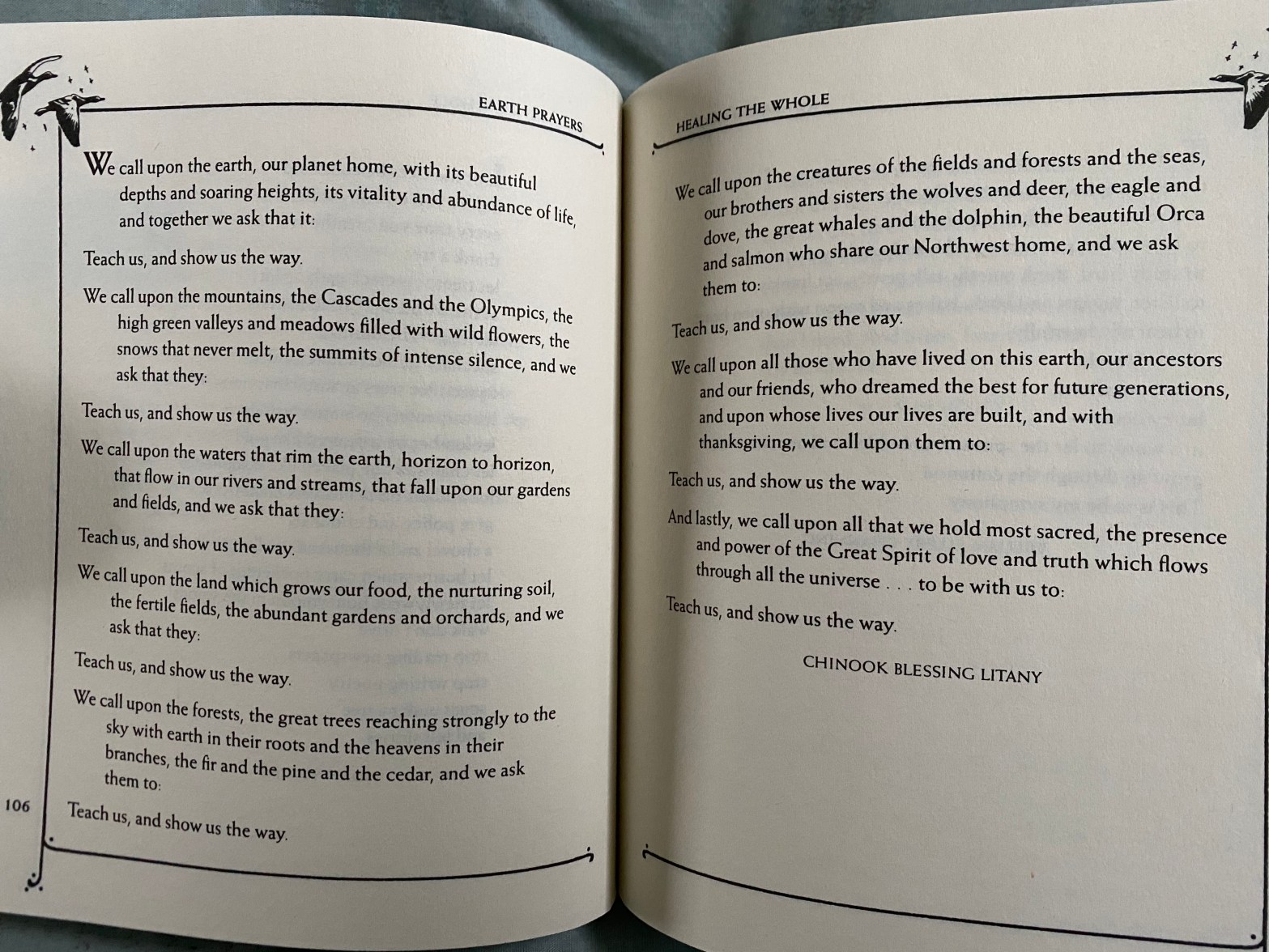
My colleague and dear friend Rabbi Nicole Luna recommended Earth Prayers, a book that can easily fit in your coat pocket. I share this beautiful Chinook blessing — the refrain, “Teach us, and show us the way” is an apt message as preparation for Shabbat begins. The Chinook people lived just south of here, along the Colombia River.
Week one

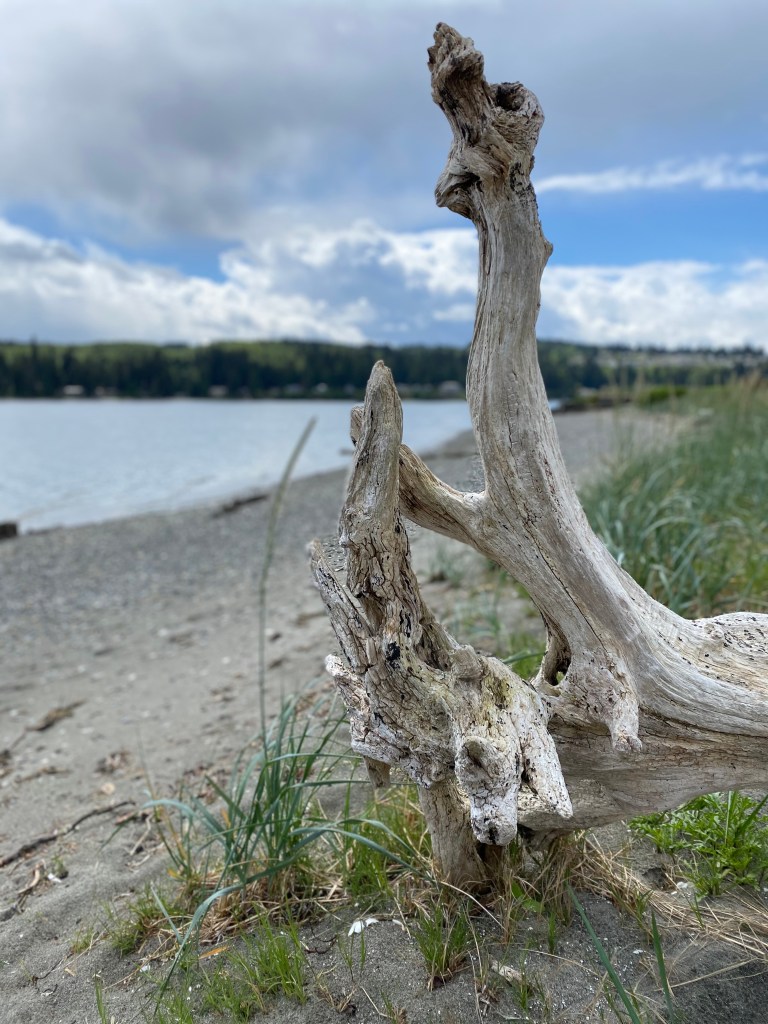
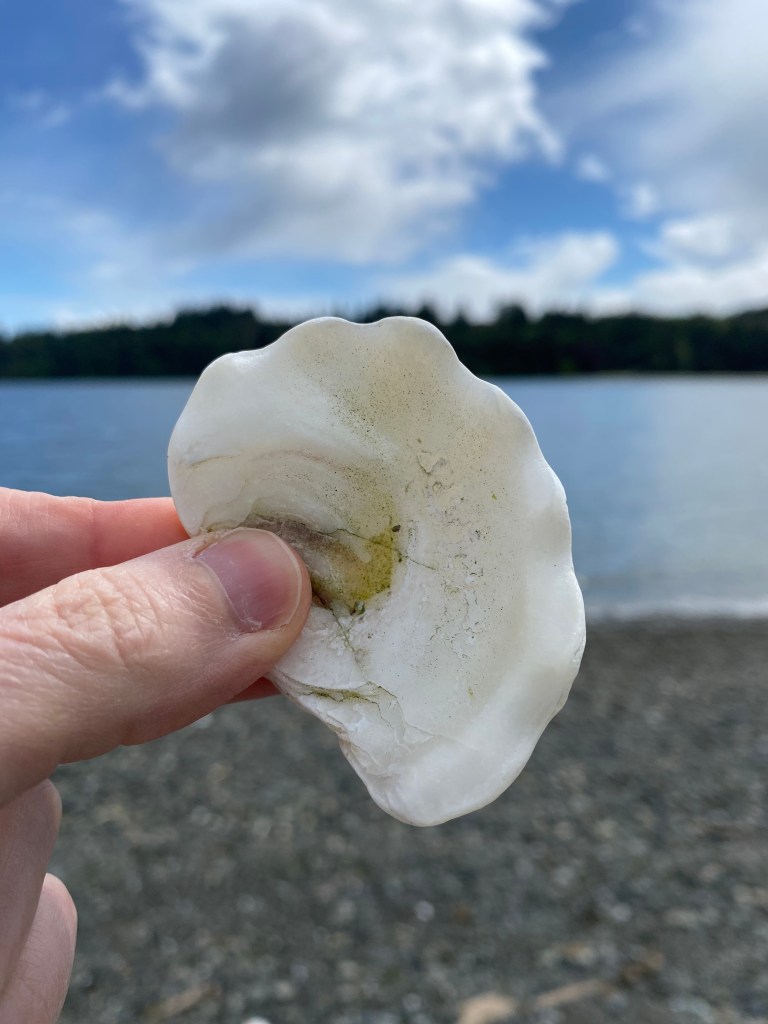



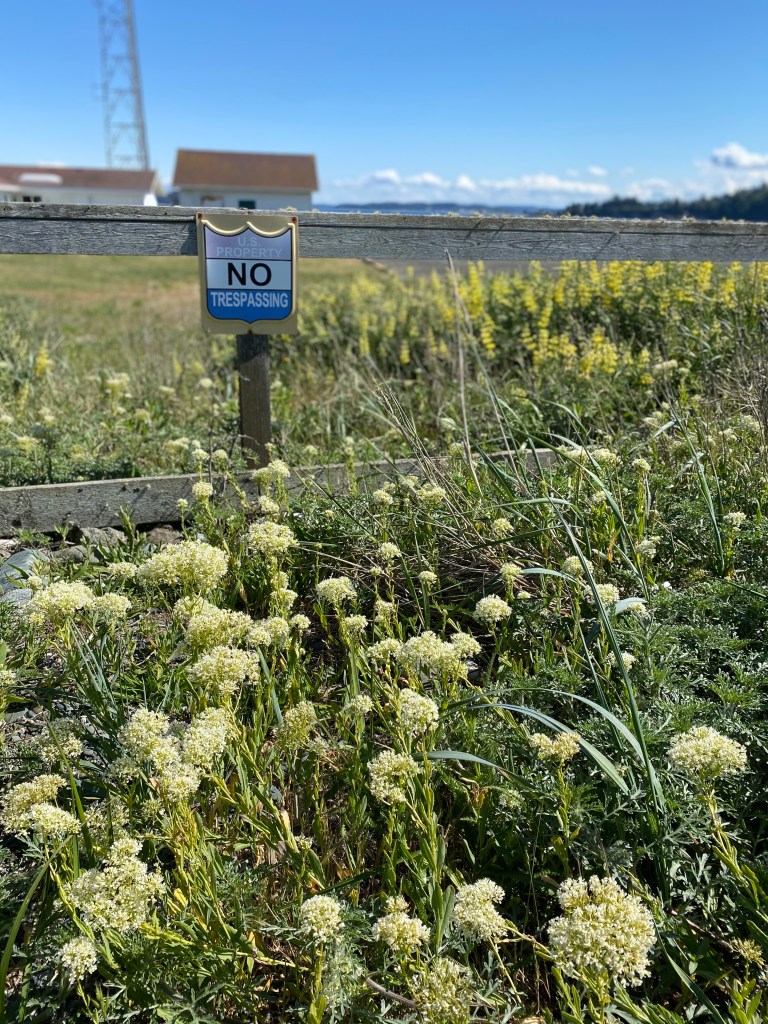
Down the Road
…because Jews have faced the threat of extinction on account of radically evil, human acts, Jews have a distinctive vantage point from which to speak about the destruction that humans now inflict on God’s creation…to protect God’s world from further abuse by humans is a Jewish moral obligation. —Hava Tirosh-Samuelson, Judaism and Ecology
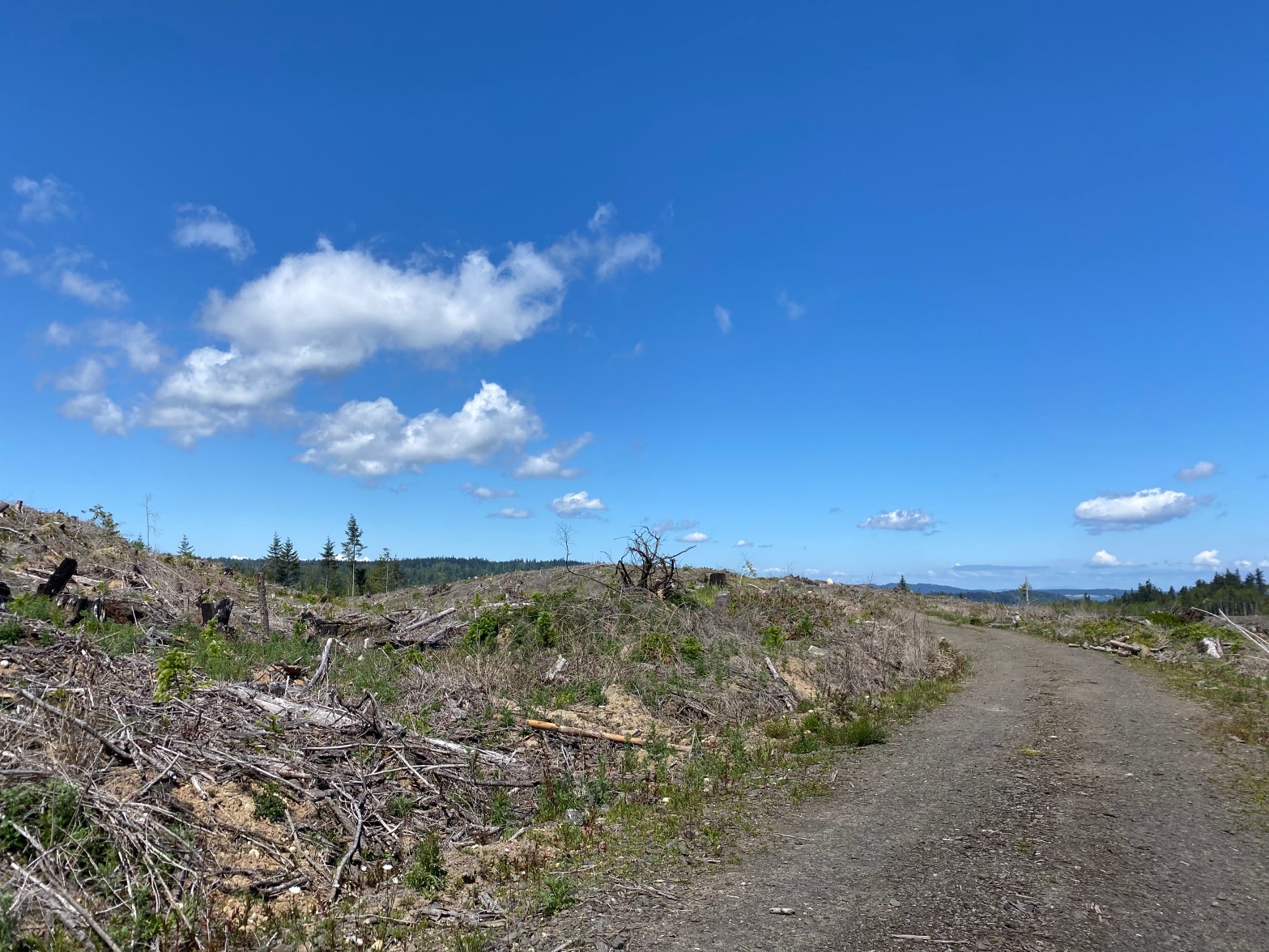
Just down the road from the lush, old growth forest, about a five minute drive from my parent’s home, lies stark clear cut that spans a vast number of acres. I haven’t stopped before, but today I pulled off the road, walked past a parked truck with a bumper sticker that said “I love my lab” with a picture of a yellow lab, and onto a wide path with clear cut on either side. It smelled a bit of rotting trash, such a contrast from the scent of moss and pine.
I believe the person working the clear cut, likely steering the machine piling the logs far in the distance, loves his/her laboratory retriever. I believe the person has to earn a living, and perhaps her/his family has been in the business for generations. I believe there are always many sides to reality, and yet, as I listened to the trees falling with a kind of precision and rhythm, as my eyes scanned the bare land, it all felt terribly raw and desolate. It was difficult to connect with a sense of “sanctuary” here, but more chilling, was the sense that my children and children’s children would experience the old growth forests as even more of a rarity.
Ve’asu li mikdash veshachanti betocham—And let them make Me a sanctuary, that I may dwell among them (Exodus 25:8). I have always read the “them” in this verse as God asking us to create sacred spaces (physical and spiritual) where we can form deep connections between each other, right here in the present. In addition, I now read this verse to mean: And let them make Me a sanctuary [in all creation] that I may dwell among them [in this moment, and for future generations].
These words from Art Green resonated deeply today—
…the new tale will need to achieve its own harmony, summarized with no less genius than was possessed by the author of Genesis 1. It will need to tell of the unity of all beings and help us to feel that fellow-creature hood with trees and rivers as well as with animals and humans. As it brings us to awareness of our common source, ever-present in each of us, so must it value the distinctiveness and sacred integrity of each creature on its own, even the animals, or fish, or plants we eat, even the trees we cut down. If we Jews are allowed to have a hand in it, it will also speak of a human dignity that still needs to be shared with most of our species and of a time of rest, periodic liberation from the treadmill of our struggle for existence, in which we can contemplate and enjoy our fellow-feeling with all that is. This sacred time also serves as a model for the world that we believe “with perfect faith” is still to come, a world of which we have never ceased to dream.—Art Green, Judaism and Ecology
Through our inner artist’s lens
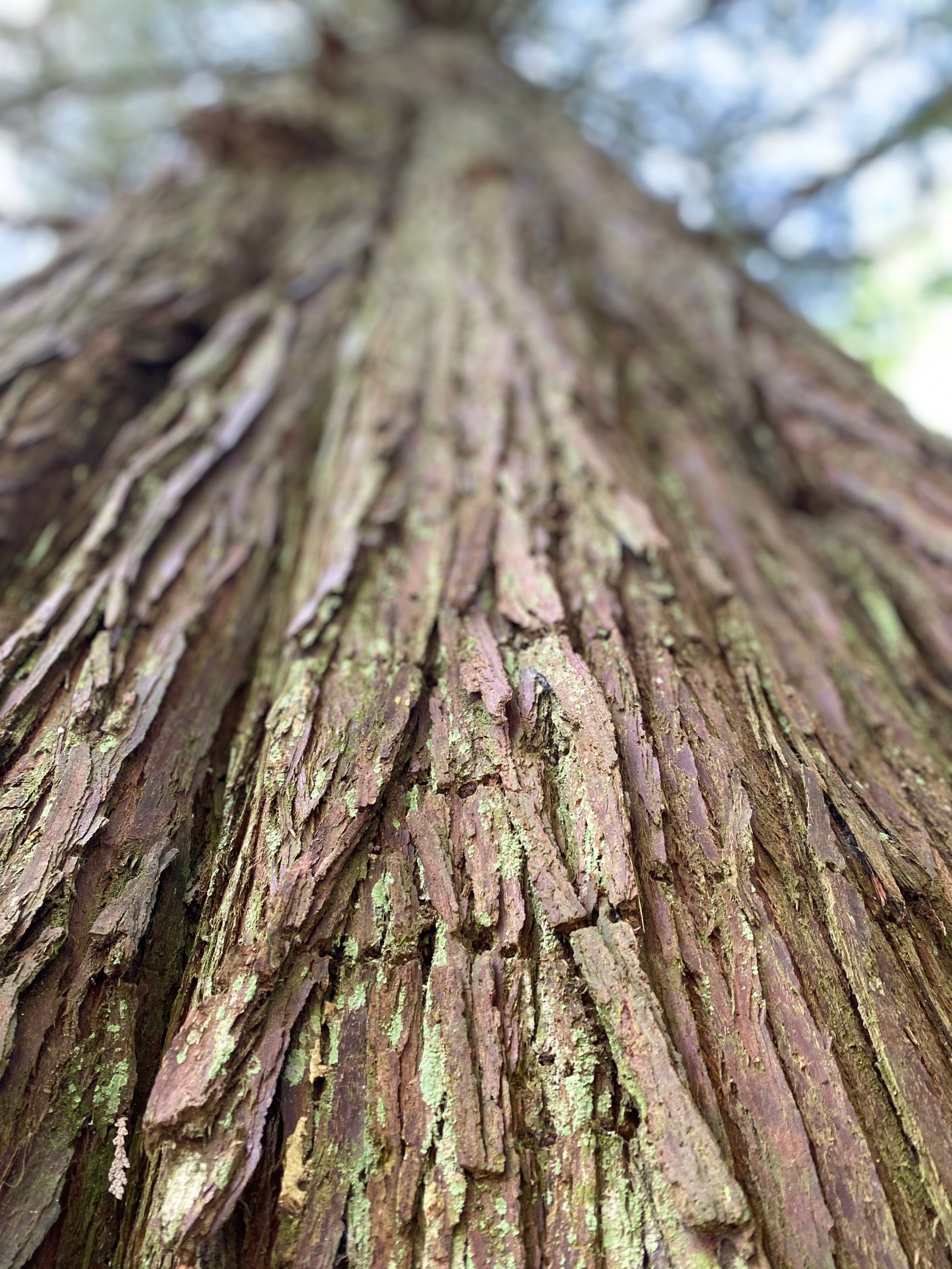
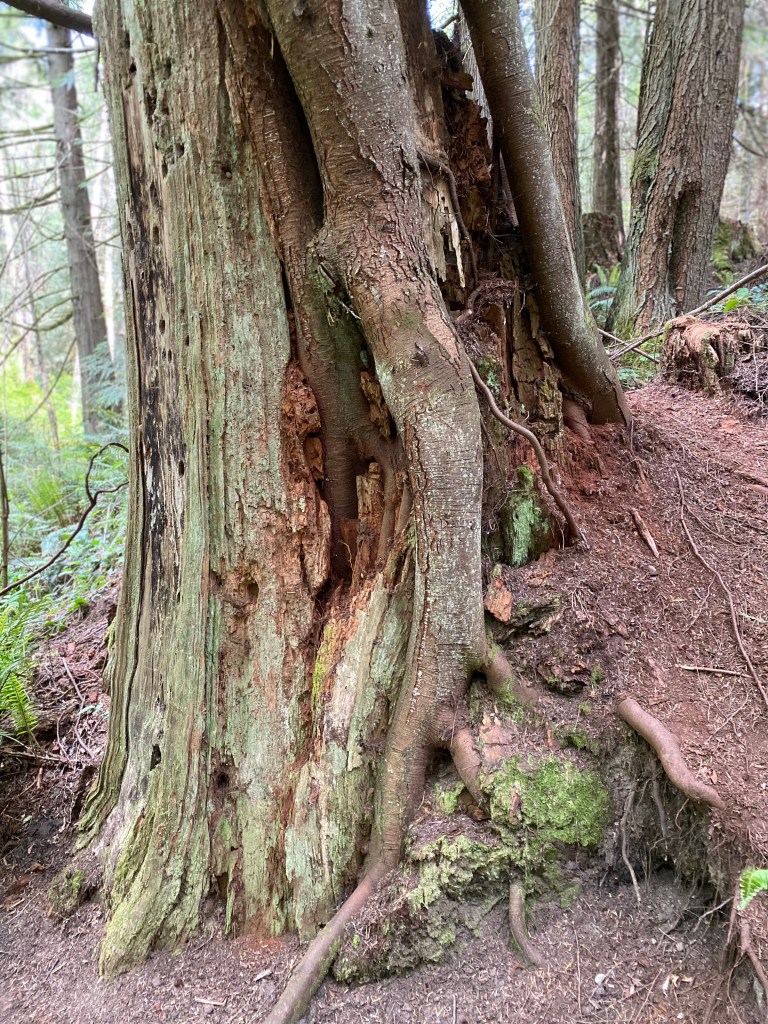
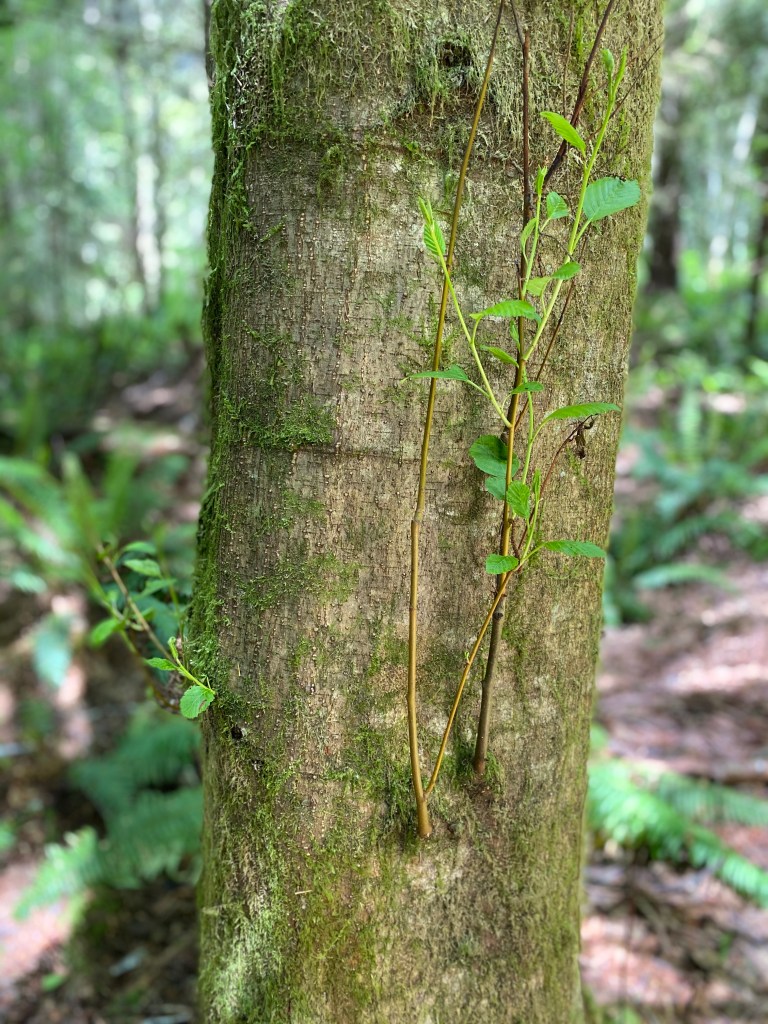
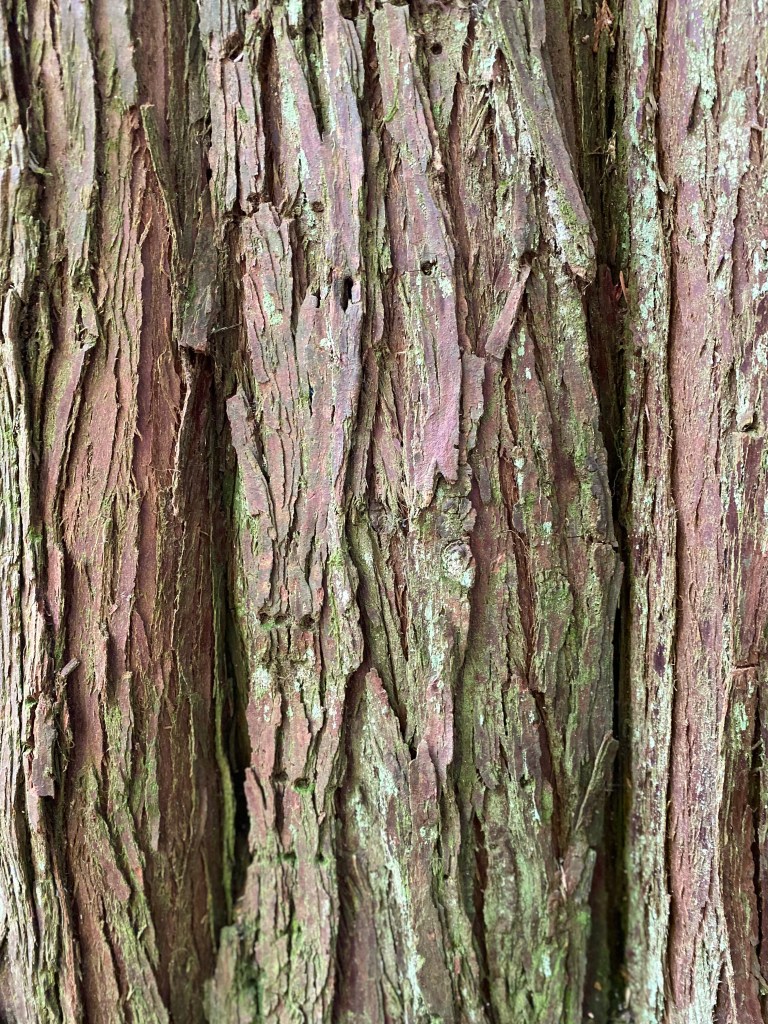
I took this close-up of a favorite old Western Red Cedar, which stands on the edge of a gully, reaching up higher than the eye can see, on a local loop trail (Ludlow Falls).
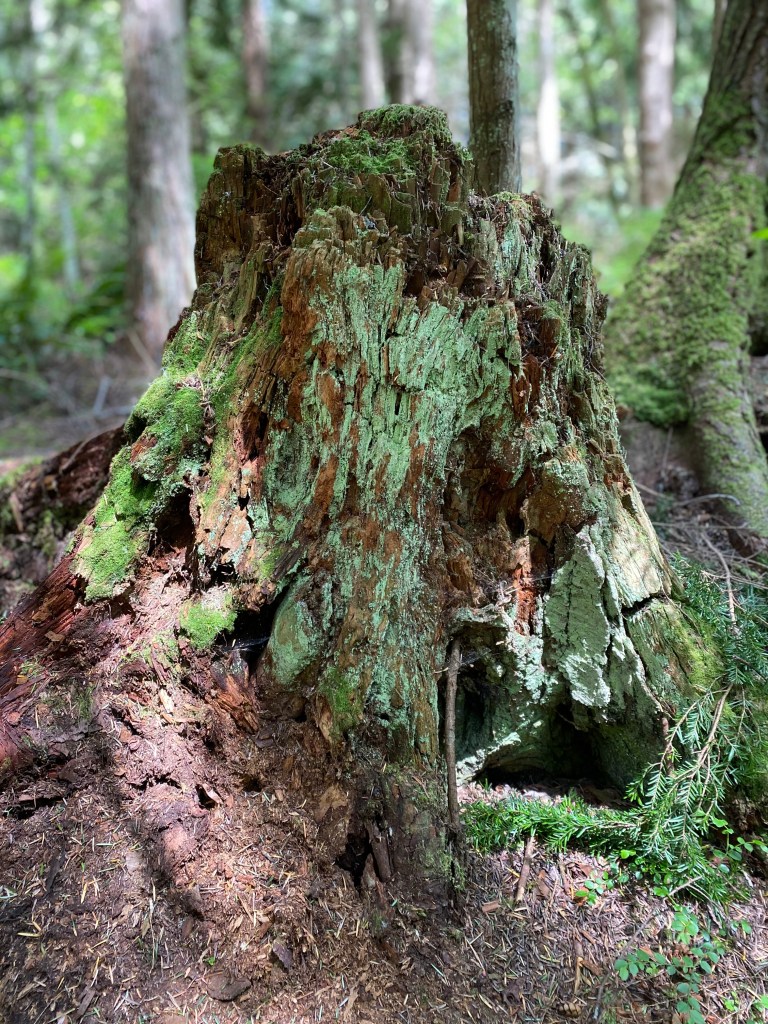
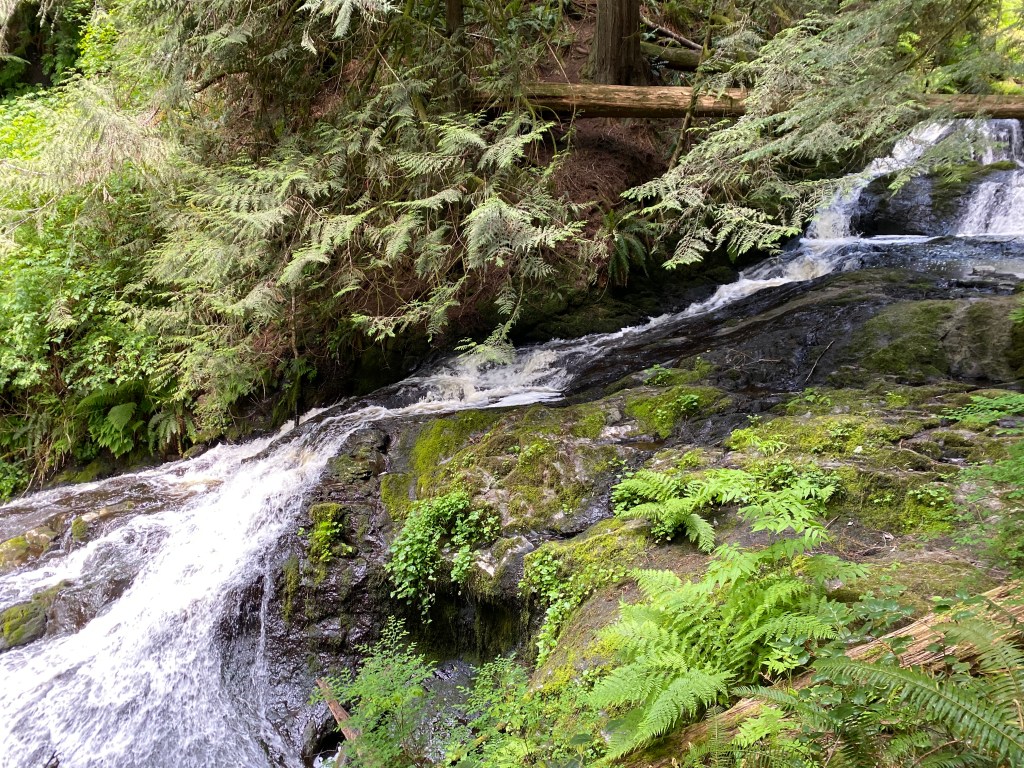
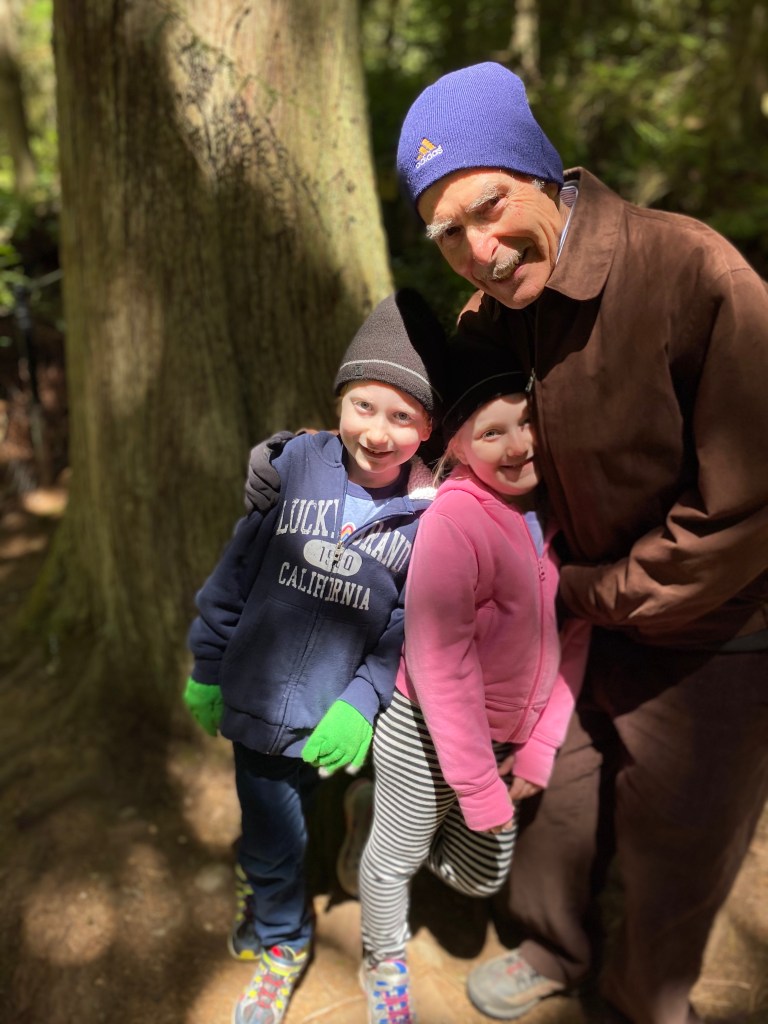
The local loop trail in three acts: the first alone, the second with my photographer mother as my coach, the third time following the kiddos. And so captures the different dimensions to our lives, the varied sources of our wisdom: that which we experience in solitude, in connection to those who nurture us, and in relationship to those we nurture.
A word on the gift of shadowing/accompanying my Mom. Time seemed to slow down, reminding me that her love of creating art has always been just that—being fully present to something special, and true, and messy unfolding. Prayer and ritual often feels this way to me, as does guiding connections between people in community that can bring about powerful change. How joyful it is to keep discovering new ways to see the world through our inner artist’s lens, which we are all blessed to have. Sometimes we just need to remember it’s there, as poet Ted Kosser writes:
The quarry road tumbles toward me
Out of the early morning darkness,
Lustrous with frost, an unrolled bolt
Of softly glowing fabric, interwoven
With tiny glass beads on silver thread,
The cloth spilled out and then lovingly
smoothed by my father’s hand
As he stands behind his wooden counter
(Dark as these fields) at Tilden’s Store
So many years ago. “Here,” he says smiling,
“You can make something special with this.”
Edge after Edge
The way we stand you can see we have grown up this way together, out of the same soil, with the same rains, leaning in the same way toward the sun. See how we lean together in the same direction. How the dead limbs of one of us rest in the branches of another. How those branches have grown around the limbs. How the two are inseparable. And if you look you can see the different ways we have taken this place into us. Magnolia, loblolly bay, sweet gum, Southern bayberry, Pacific bayberry; wherever we grow there are many of us; Monterrey pine, sugar pine, white-bark pine, four-leaf pine, single-leaf pine, Jeffery pine, bishop pine. And we are various, and amazing in our variety, and our differences multiply, so that edge after edge of the endlessness of possibility is exposed. —Susan Griffin
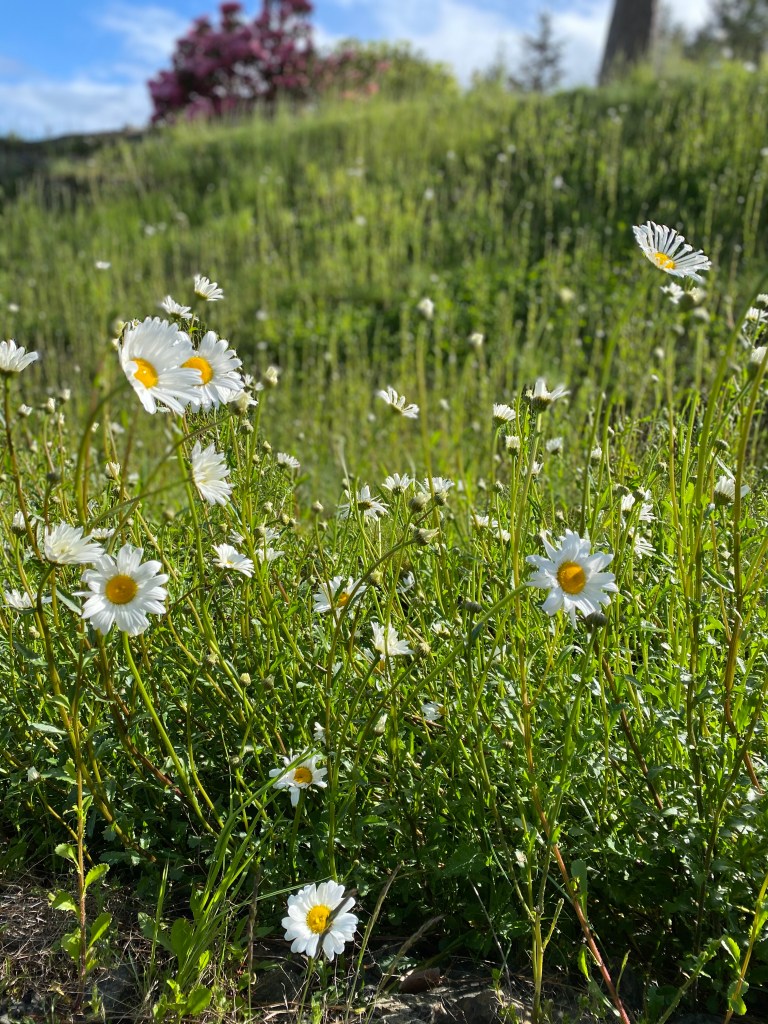
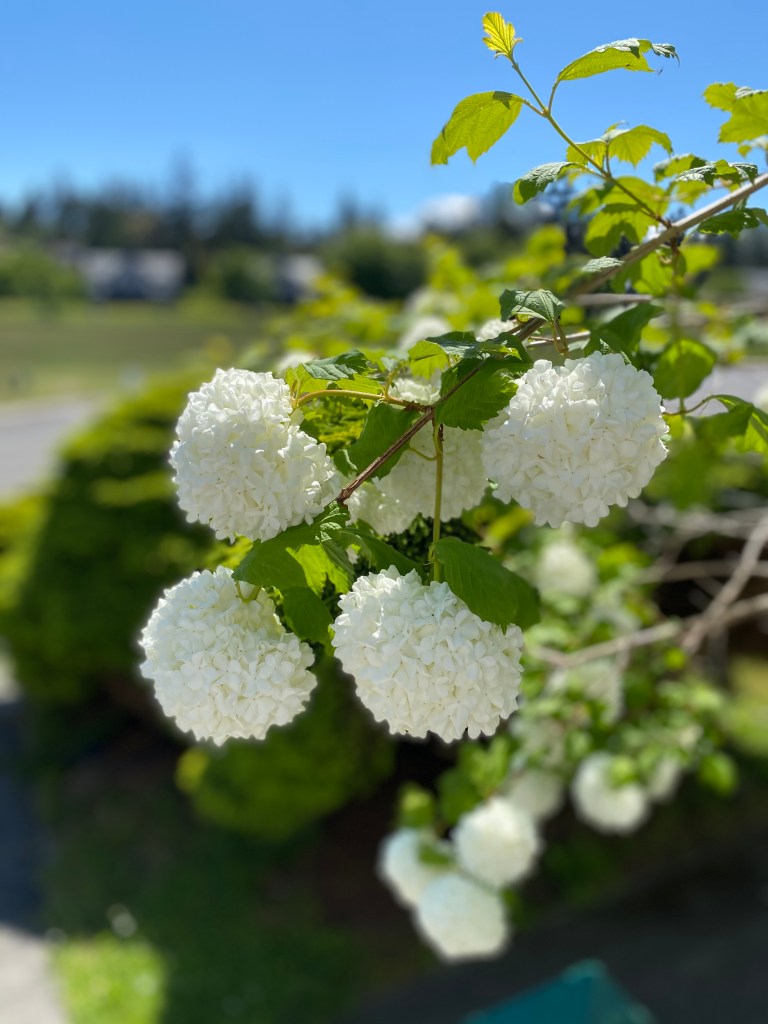
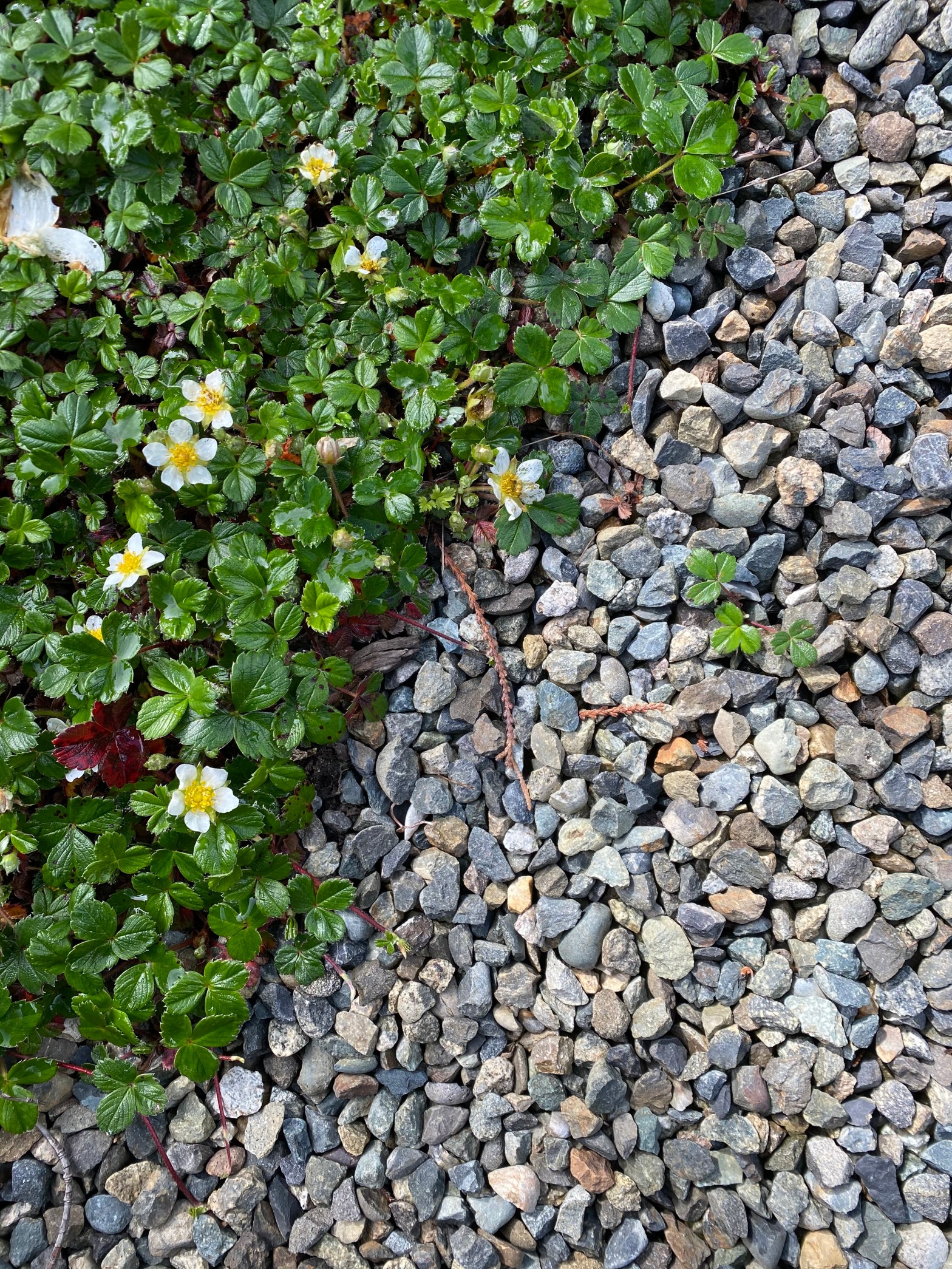
As witnessed on my morning walk: Delicate white and yellow flowers in a sea of green leaves. Small pebbles strewn to create a meditative path through a cultivated patch of garden. And between the two, a clear, orderly boundary created by human hand.
This boundary caught my eye—such a contrast to a forest floor untouched by human design! As I looked closer, three sprigs of green popped up through the pebbles. What courage to cross over the boundary, I thought—courage in our divided world amidst the realities of us vs. them, borders aflame, families separated. And yet, in nature, just wind and rain, root systems and creatures that transport seeds. In nature, boundaries aren’t set for purposes of furthering a dominate narrative, or sapping resources to their extinction. Edge after edge of the endlessness of possibility.
How far will we take our unrestrained hunger to create order in every forest floor and animal habitat? And how can I be more mindful in my everyday life of my own complicity and denial? Jewish tradition is full of wisdom with many responses. One that comes to mind (which I have turned to often in the Mishnah Tefilah prayerbook and other sources) by Rabbi Nachman of Bratzlav:
Grant me the ability to be alone; May it be my custom to go outdoors each day among the trees and grasses, among all growing things and there may I be alone, and enter into prayer to talk with the One that I belong to.
And another trusted companion that I hold often in my prayers, Psalm 121 (along with what I think is a powerful modern version, a poem by Nancy Wood):
I lift my eyes to the mountains
From where will my help come?
My help comes from God, maker of heaven and earth.
God will not let your foot give way; your Guardian will not slumber.
See, the guardian of Israel neither slumbers nor sleeps!
God is your guardian, God is your protection at your right hand.
By day the sun will not strike you, nor the moon by night.
God will guard you from all harm, and will guard your soul/spirit/life.
God will guard your going and coming now and forever.
My help is in the mountains
Where I take myself to heal
The earthly wounds
That people give to me.
I find a rock with sun on it
And a stream where the water runs gentle
And the trees which one by one give me company.
So must I stay for a long time
Until I have grown from the rock
And the stream is running through me
And I cannot tell myself from one tall tree.
Then I know that nothing touches me
Nor makes me run away.
My help is in the mountain
That I take away with me.
Earth cure me. Earth receive my woe. Rock strengthen me. Rock receive my weakness. Rain wash my sadness away. Rain receive my doubt. Sun make sweet my song. Sun receive the anger from my heart.
And lastly (for now), this prayer by Black Elk emerged for me as another response:
Hey! Lean to hear my feeble voice
At the center of the sacred hoop
You have said that I should make the tree to bloom.
With tears running, O Great Spirit, my
Grandfather,
With running eyes I must say
The tree has never blossomed
Here I stand, and the tree is withered.
Again, I recall the great vision you gave me.
It may be that some little root of the sacred tree still lives.
Nourish it then
That it may leaf and bloom
And fill with singing birds!
Hear me, that the people may once again
Find the good road
And the shielding tree.
Look at the Trees
And I thought over again
My small adventures
As with a shore-wind I drifted out
In my kayak
And thought I was in danger,
My fears,
those small ones
That I thought so big
For all the vital things
I had to get and to reach.
And yet, there is only
One great thing,
The only thing:
To live to see in huts and on journeys
The great day that dawns,
And the light that fills the world.
-Inuit Song
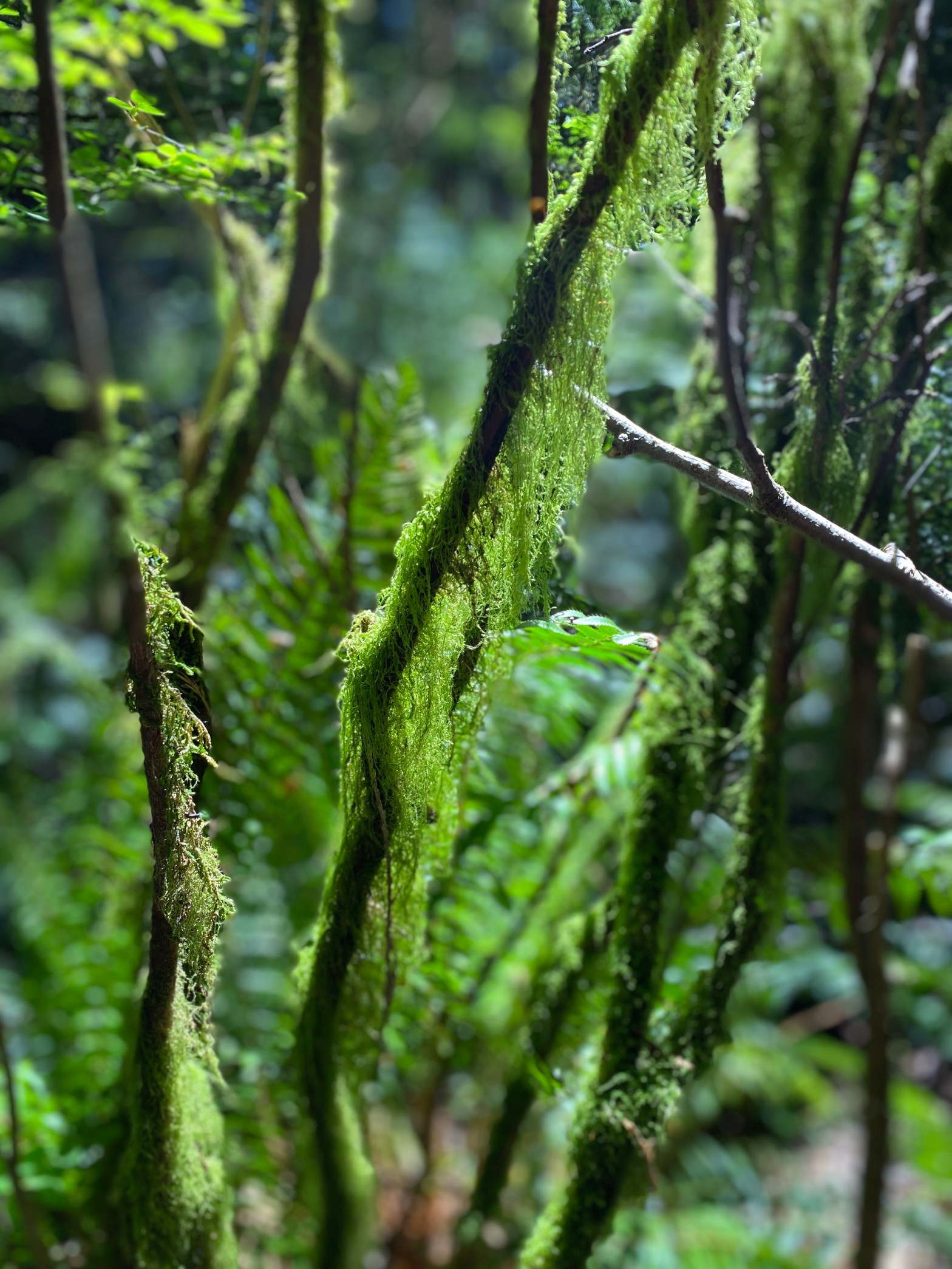
“Look at the trees, look at the trees” my grandmother, Roselle (Riz) would say as we drove through the windy roads of Yosemite National Park. They were majestic blurs of green through the windshield, as they often were when she walked briskly on a path through the woods. Age slowed her pace and, as time went on, the clearest memories are of her holding court in her room at the Ahwahnee Hotel, the tips of the trees dancing through the window as she moved her hands with great animation.
I began Ludlow Falls loop hike with gratitude for the joy my grandmother still brings to my heart, with her shouts “Look at the trees” forever ringing in my memory. And I also held the wisdom my mom, Jane, her daughter, recently shared on an evening walk, wisdom shared from one of her photography teachers: Notice how people walk so quickly on hiking trails, my mom said. They miss so much. Slow down—it changes your perspective.
What does it mean to really look at the trees?
I realize now that I chose to focus on trees because it’s challenging to be still. I have always been drawn to water because of the obvious and dramatic movement of this life-giving source—-like my grandmother, I am often tempted to walk with a certain resolute speed and direction. However, the movement of energy and currents hidden from view is part of the trees story too. But it takes being still enough to see it, to feel it, to hear it.
So perhaps I am beginning to understand just a bit what Suzanne Simard writes in her book Finding the Mother Tree, “This is not a book about how we can save the trees. This is a book about how the trees might save us” (p.6). Save us from our blindness to the light that fills the world. Save us from walking the path too quickly that we miss seeing the wisdom that’s been there all along. Save us from fear, and in doing so, liberate the voice within that can sing out with clarity and hope.
The path to boundless love

After days of counting up and planning we’ve arrived. It doesn’t seem like a coincidence that we made our way to the place where Michael and I stood under the chuppah almost thirteen years ago as the holiday of Shavuot began, a sacred day of standing under the chuppah with God at Sinai. Michael and I stood under a chuppah, which was under a tree, and on a point expanding out into the waters of the Pudget Sound. The chuppah features a vibrant Tree of Life designed by a dear family friend. It has hung on the wall in our home sanctuary where I’ve led services and connected as best as we can in a year of rupture.
And like a wedding, or any kind of covenantal moment, there is a kind of anticipatory counting up, arriving, and affirming. I’ve enjoyed the centering practice of Omer counting and felt sadness it came to a conclusion. Like a divine messenger, a friend and colleague (thank you Rabbi Nancy Kasten) recently sent along a meditation practice that spans 21 days (chopracentermeditation.com) focused on Activating the Divine Feminine. Today, the mediation explored our power to heal through loving awareness, a boundless love that emanates from within and felt when we awaken to the interconnected-ness of all nature. The mantra was Aham Prema (My nature is love) and soon I found myself chanting Ahavah Rabbah, the great and full love of God that has been a source of healing though time. Through the wilderness, though rupture, through the devastating uprooted ness of life. And through it all, Shechinah continues to welcome us back home, to continue on the path of boundless love with Her.
Mother Tree
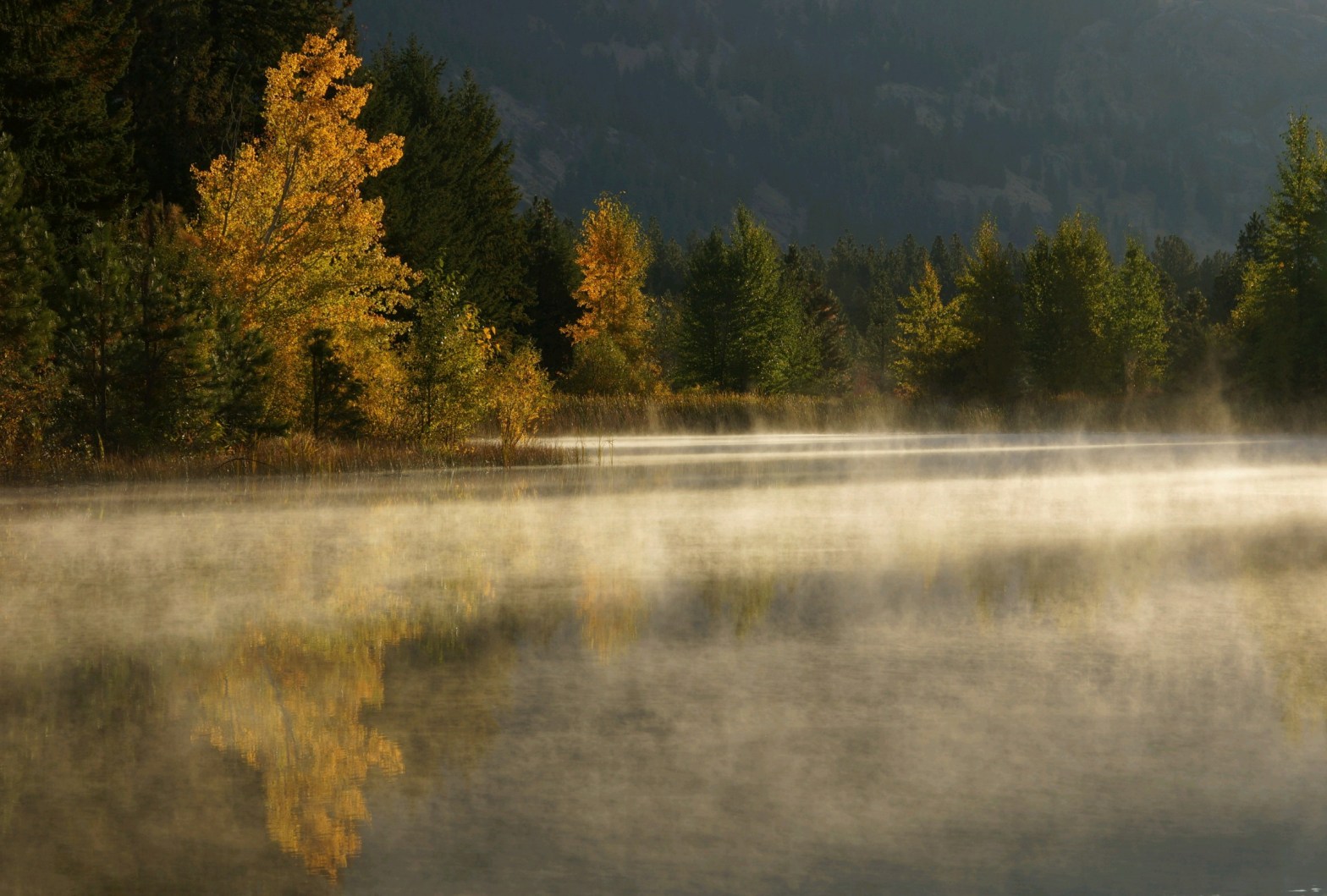
Photo by Jane S. Herzog, my mom. As part of my sabbatical practice, I intend to shadow her in the Washington forests, the lush Olympic Peninsula pathways and the stark fields of clear-cut logging.
The Man in the Moon
(This poem, by Billy Collins, is magnificent; photo credit: Winn Fuqua)
He used to frighten me in the nights of childhood,
the wide adult face, enormous, stern, aloft.
I could not imagine such loneliness, such coldness.
But tonight as I drive home over these hilly roads
I see him sinking behind stands of winter trees
and rising again to show his familiar face.
And when he comes into full view over open fields
he looks like a young man who has fallen in love
with the dark earth,
a pale bachelor, well-groomed and full of melancholy,
his round mouth open
as if he had just broken into song.
Ode on the Omer: In a Pandemic

by Kimberly Herzog Cohen (inspired by a poem written by my teacher, Rabbi David Stern)
It’s Blursday
And cups of coffee pile in the sink.
Shoulders crunched, my Omer counter chimes,
A beckoning call to
Close windows
Extract ear pods
Declare recess for Zoom school on the second floor.
The door opens,
All before and within me.
With the joy of dirt under my fingernails,
we find Hesed in the garden soil.
Over stubborn roots that laugh at the concrete,
Gevurah welcomes us to trip triumphantly.
Sap coursing under hidden bark,
Tiferet is a reminder–
the stickiness
isn’t begging to be scrubbed away.
We marvel at Netzach-determined chipmunks leaping free,
Unaware of nose swabs and immunity.
Moments of Hod-like surrender laying on the grass
With my once-babies looking up at the leaves,
Our breathing gentle.
Yesod.
The rings of time
Keep expanding
With gratitude.
 Reflections by Rabbi Kim