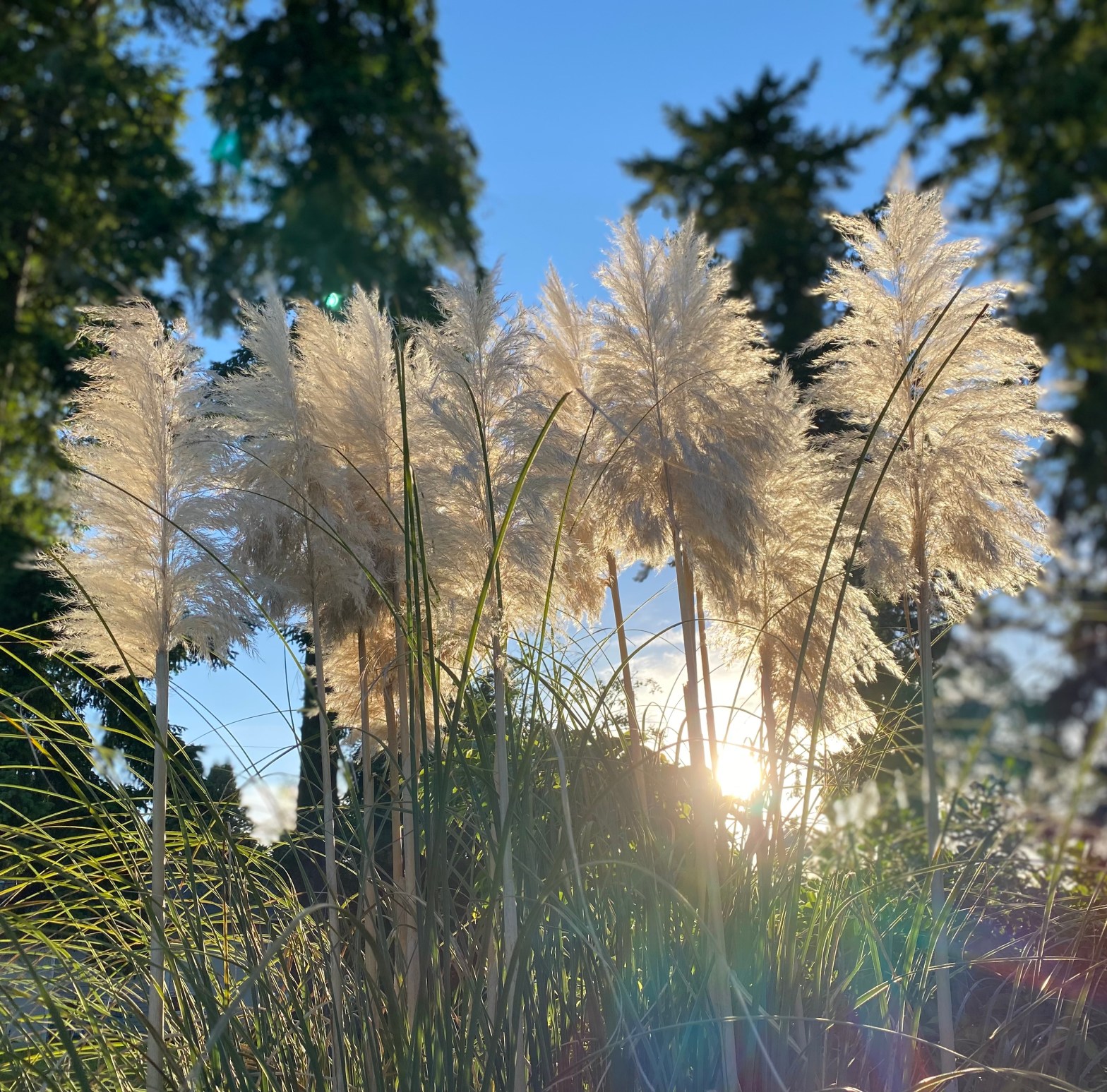
Farmhouse poetry

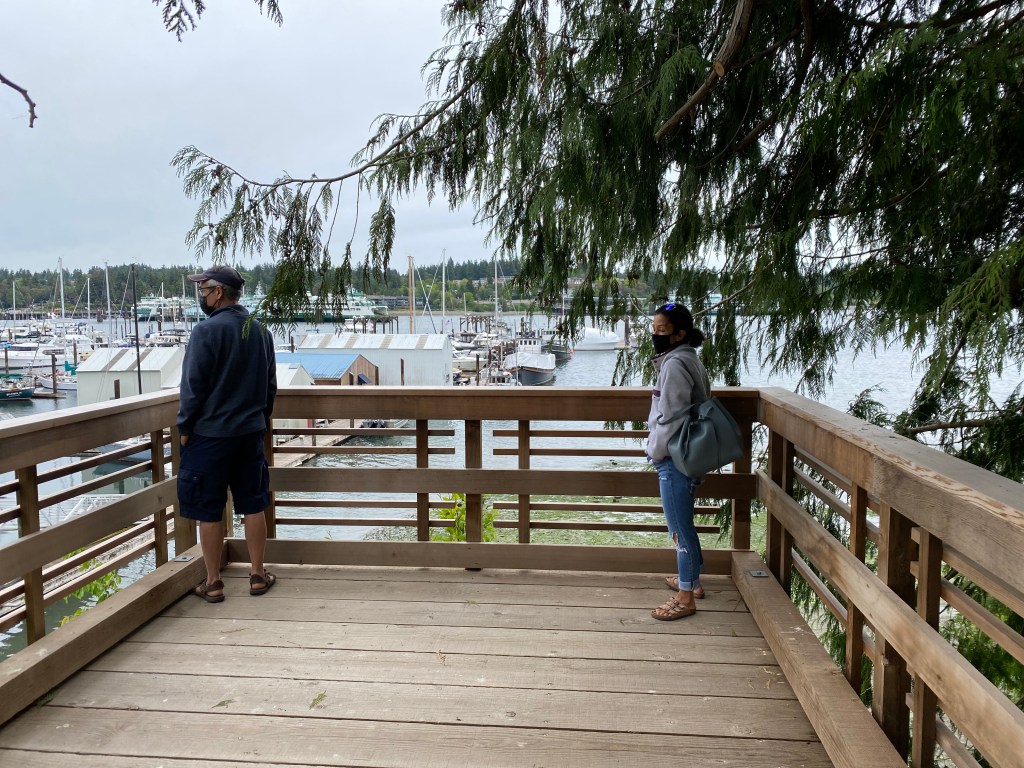
We moved into a farmhouse on Marrowstone Island for ten days as Airbnb Herzog shifts to welcoming my brother, sister in law, and delicious niece and nephew. It’s been well over a year and a half. My nephew just turned one and we haven’t met him in person, which is a stark contrast to the physical presence I’ve felt at milestone moments for my niece, especially the gift of meeting her hours after her birth. And yet, the ties of love and wonder are deep across the miles. I just can’t wait to take in the details of these people I love in a way that Zoom and FaceTime can’t quite capture. My heart is alive with the feeling of anticipation as we await their arrival.

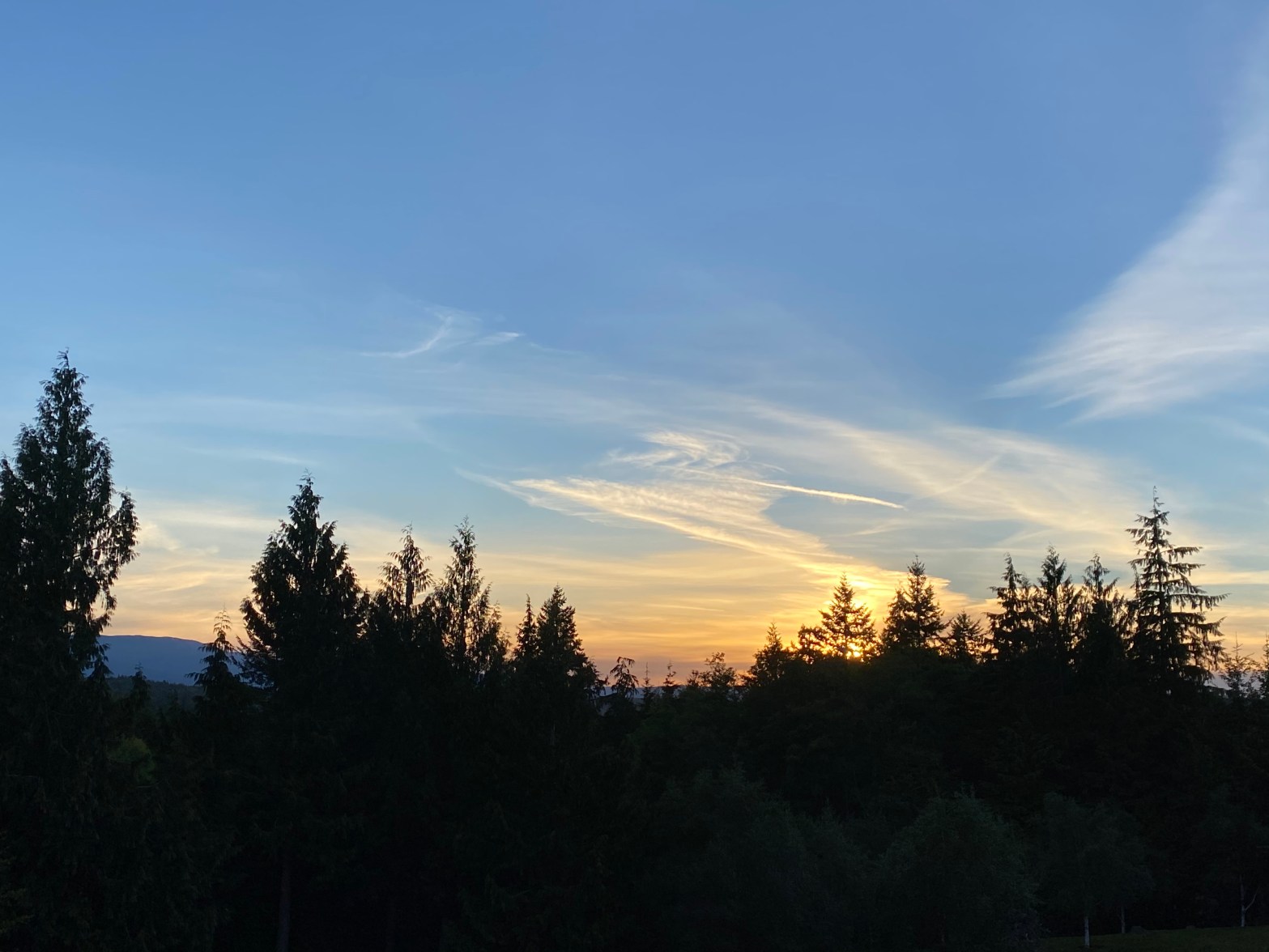
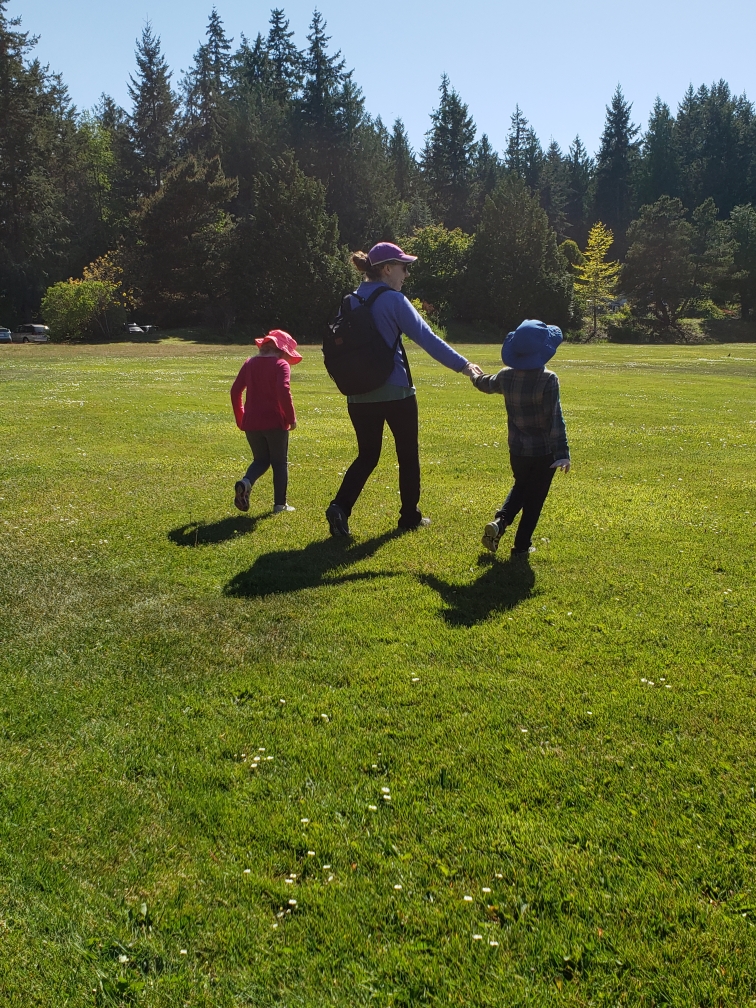
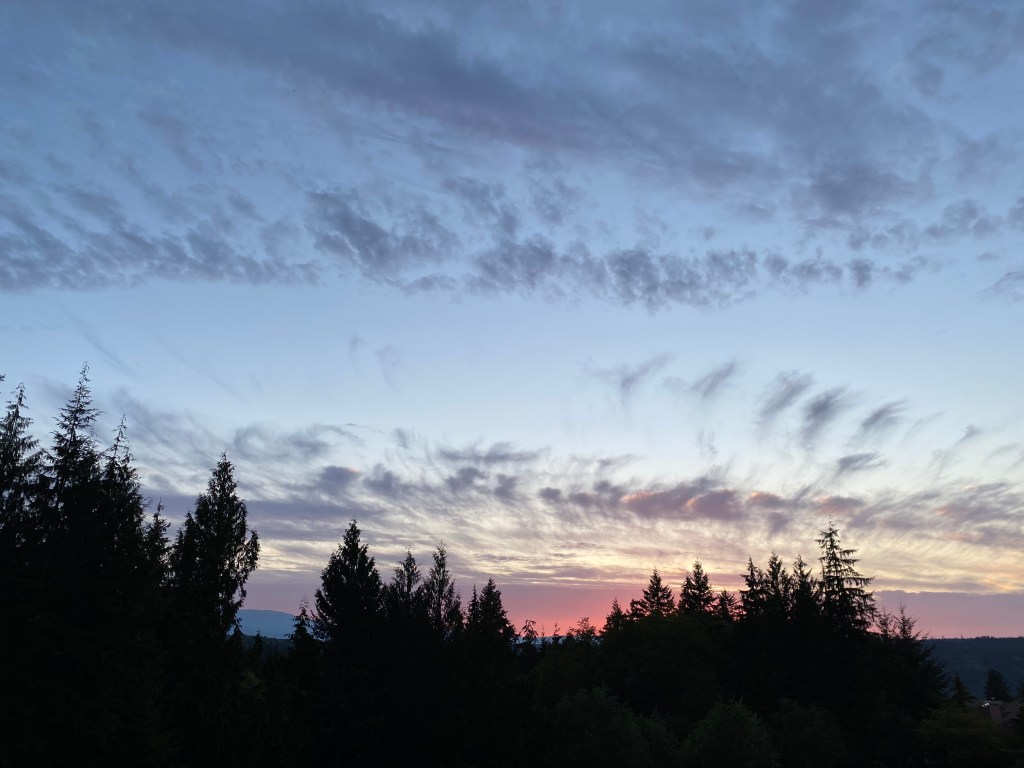
And as we wait, the four of us are settling into the sounds and play of light on the farm—the rooster crow, the porch swing creak, the movement of shadows on the pastures. The stately trees and birdsong, the view through the kitchen window, the owner’s warm hospitality, all are beckoning to us—breathe in the present moment, slowly, slowly.

Although it is set in the winter months, this piece by Ted Kosser spoke to the poetry of walking farmland roads:

Just as a dancer, turning and turning,

may fill the dusty light with the soft swirl

of her flying skirts, our weeping willow—

now old and broken, creaking in the breeze—

turns slowly, slowly in the winter sun,

sweeping the rusty roof of the barn

with the pale blue lacework of her shadow.
Bugs in a bowl

I love independent book stores and found myself perusing one in the historic downtown of Poulsbo, WA. Sometimes it feels like the books choose me, which is what seemed to happen when I picked up Buzz Words—Poems About Insects. We’ve heard several squeals these past weeks from the kids—an ant, a spider, an…ahhh, what’s that!? They are our neighbors, residing in nature with us, I often say, and yet, memories of wasp stings and spider bites do invoke compassion when they dash inside or up the trail. 
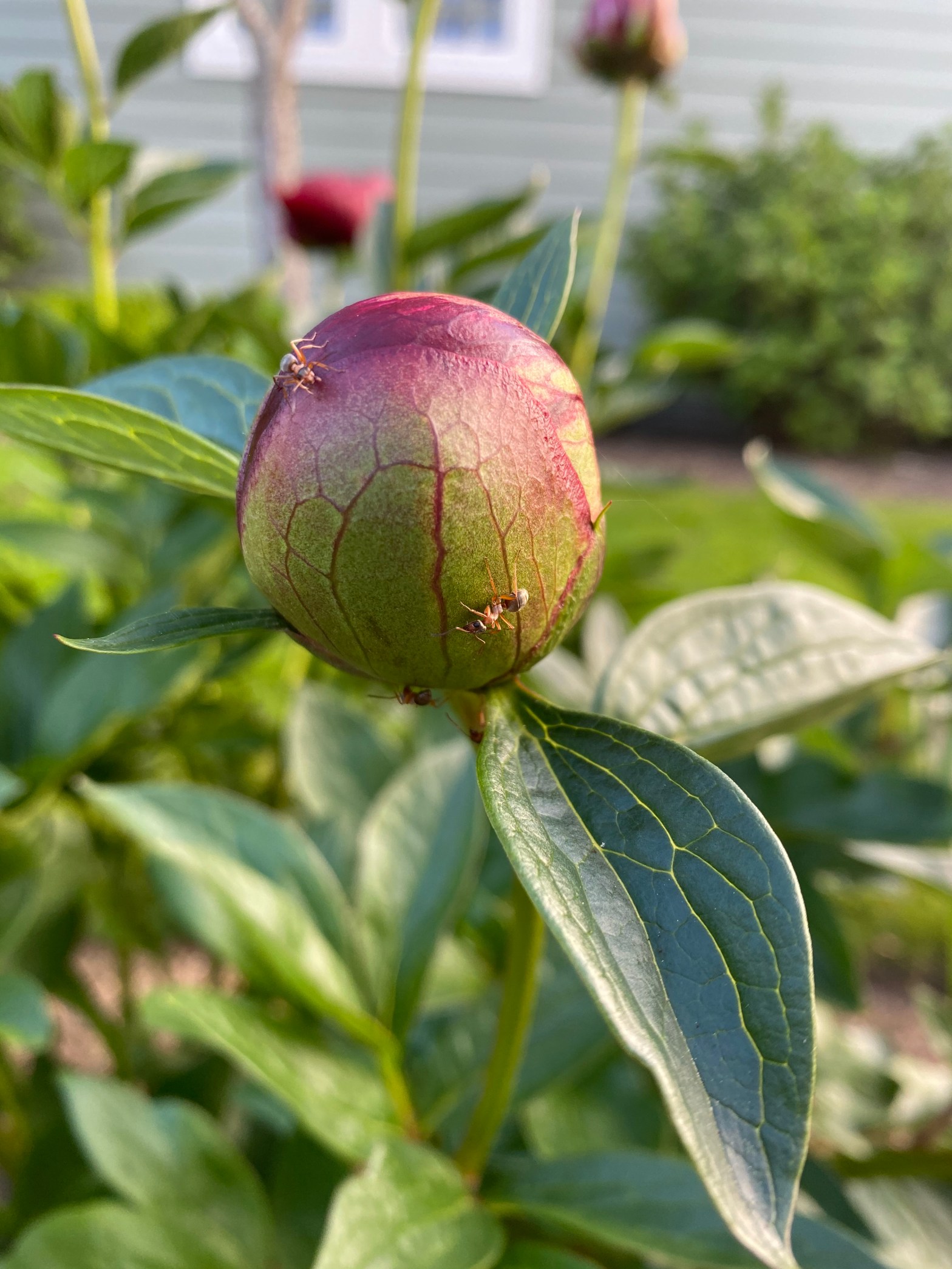
The cover is smooth and elegant, the size, a perfect fit in the small black bag of notecards I had just purchased from a local artist’s collective. I opened to the first poem and laughed in delight, then felt horror at the next, then delight again. Here are two of my favorite so far, and a picture of clever ants sojourning on a flower bud at evening time:

BUGS IN A BOWL

Han Shan, the great and crazy, wonder-filled

Chinese poet of a thousand years ago said:

We’re just like bugs in a bowl. All day

Going around never leaving their bowl.

I say, That’s right! Every day climbing up

The steep sides, sliding back.

Over and over again. Around and round.

Up and back down.

Sit in the bottom of the bowl, head in your hands,

Cry, moan, feel sorry for yourself.

Or. Look around. See your fellow bugs.

Walk around.

Say, Hey, how you doin’?

Say, Nice bowl!

—David Budbill

ON THE GRASSHOPPER AND CRICKET

The poetry of earth is never dead:

When all the birds are faint with the hot sun,

And hide in cooling trees, a voice will run

From hedge to hedge about the new-mown mead;

That is the Grasshopper’s—he takes the lead

In summer luxury, — he has never done

With his delights; for when tired out with fun

He rests at ease beneath some pleasant weed.

The poetry of earth is ceasing never:

On a lone winter evening, when the frost

Has wrought a silence, from the stove there

Shrills 

The Cricket’s song, in warmth increasing ever,

And seems to one in drowsiness half lost,

The Grasshopper’s among some grassy hills.

—John Keats 

Ma’ariv Aravim

There’s no diva in the choral dusk-

Croaking frogs and evening birdsong

Dogs howling across the bay

Equally join in conversation and praise.

Patiently, Her paint-brushed sky 

Wraps tree crowns 

Like silken prayer shawls 

On majestic bodies of sap and bark.

Together we roll with time and currents of light

Into darkness, darkness into light.

Walking slowly, the gates open,

As I make my way home to Your heart.

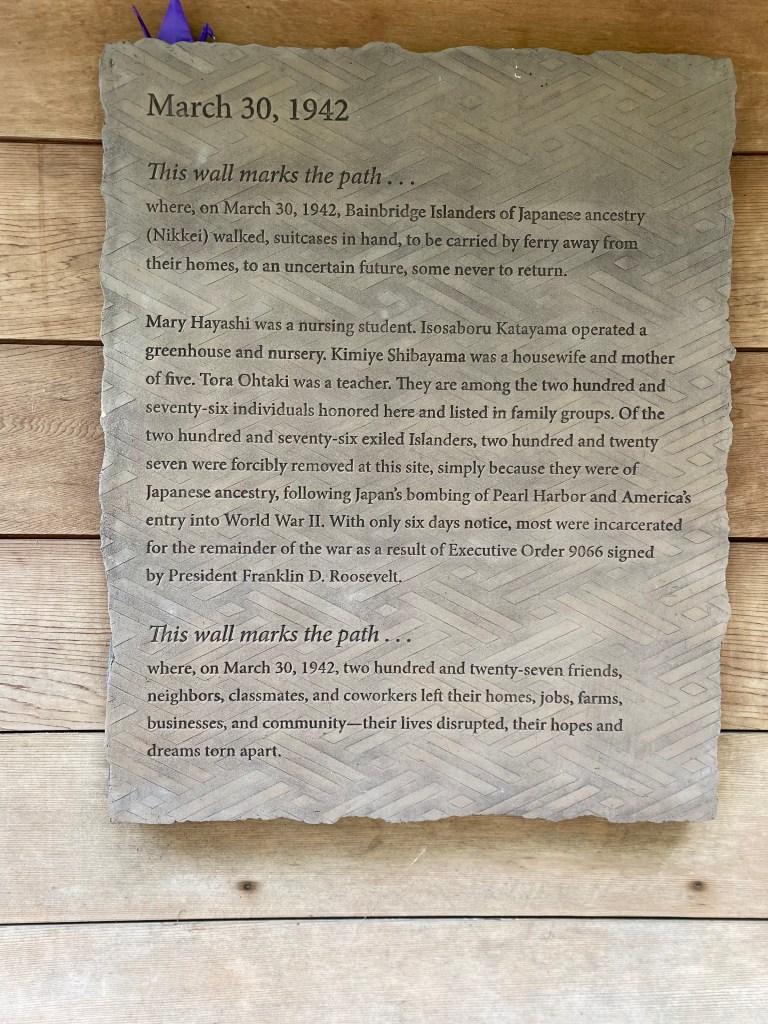
This wall marks the path…

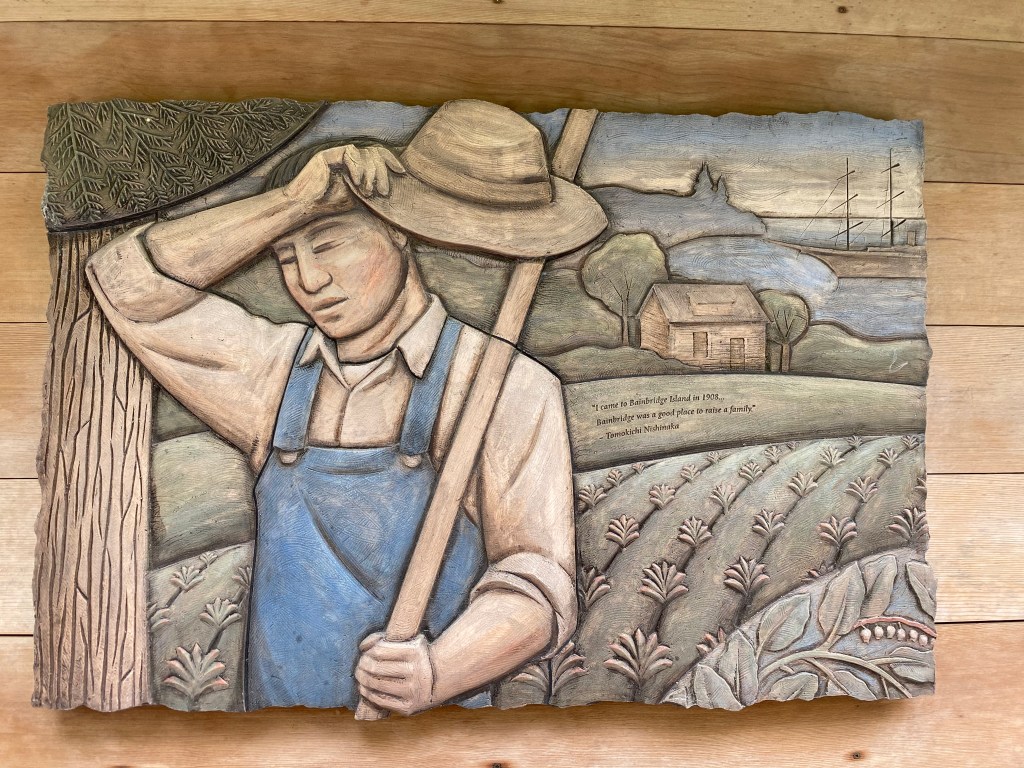
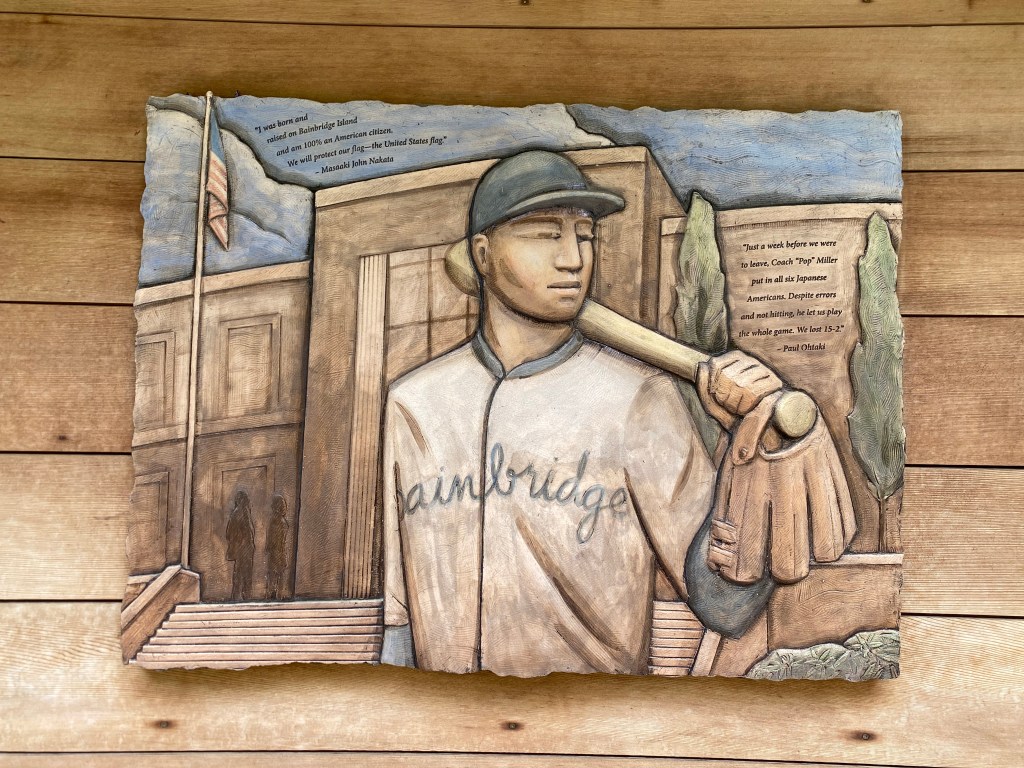
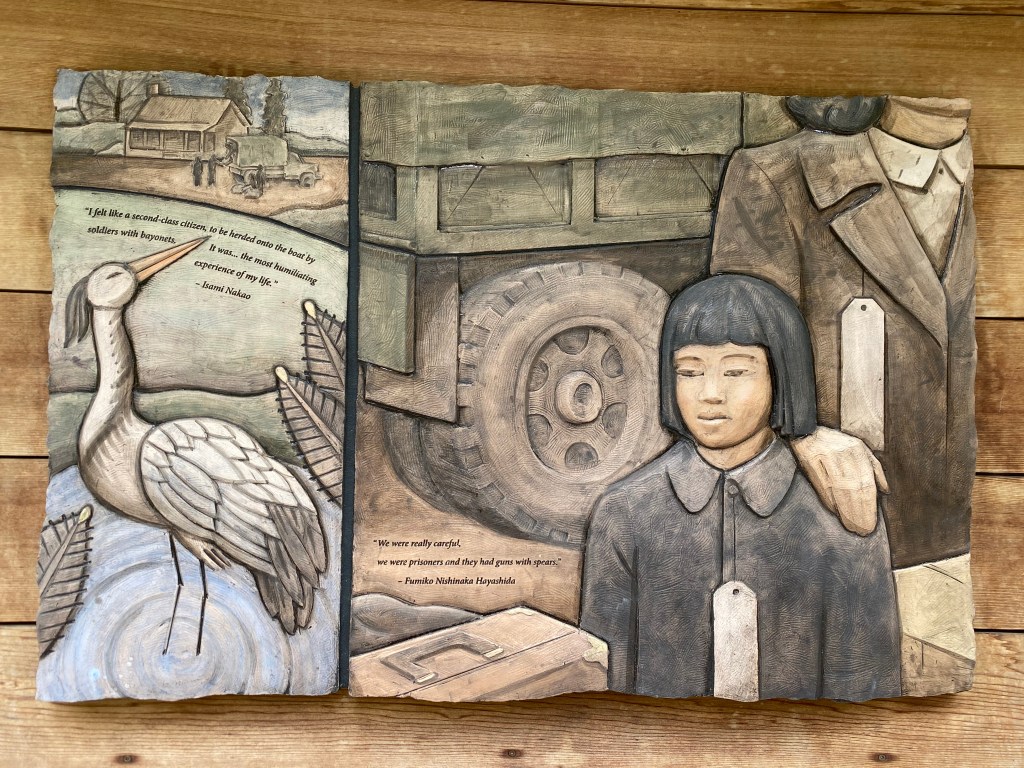
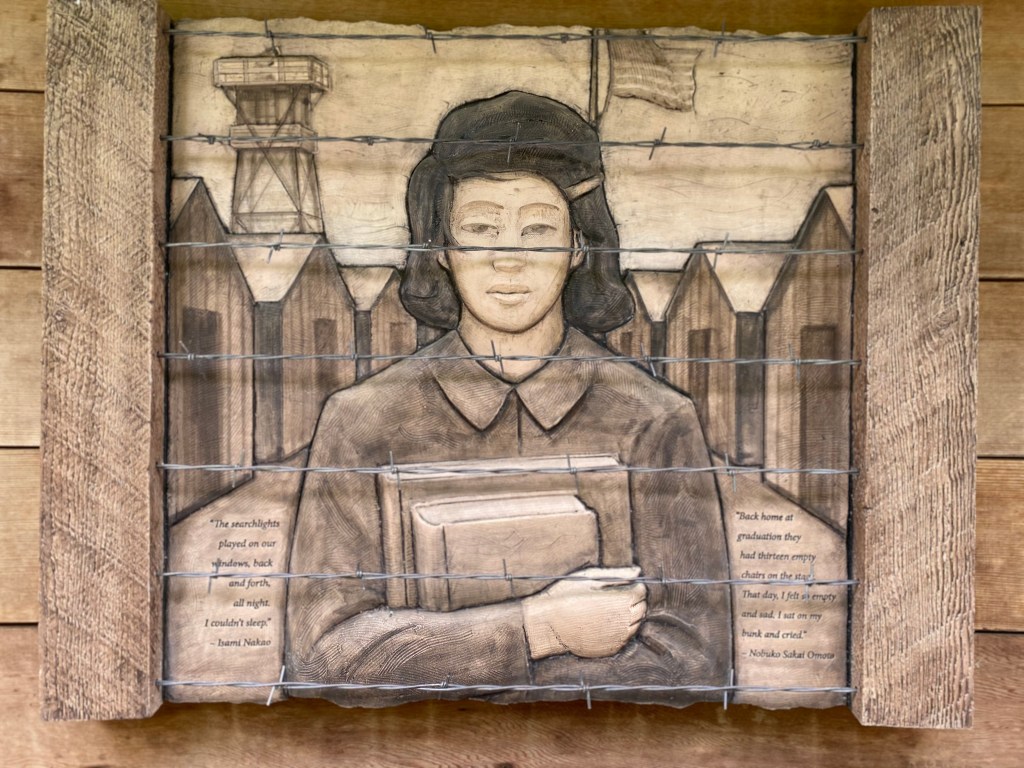
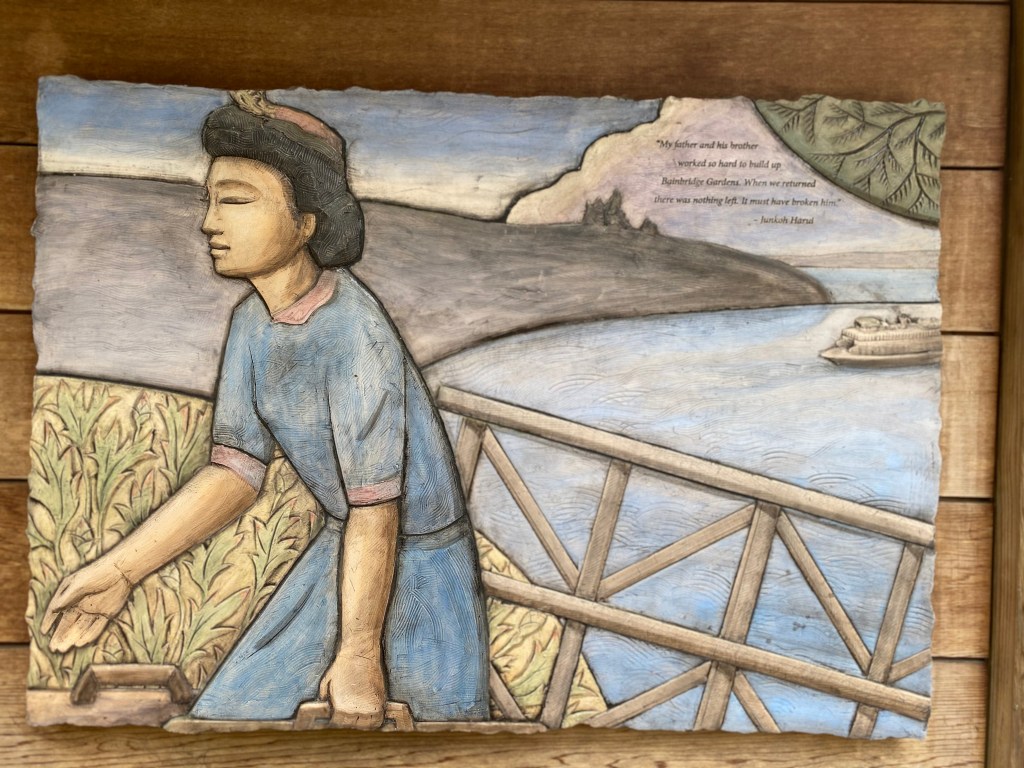
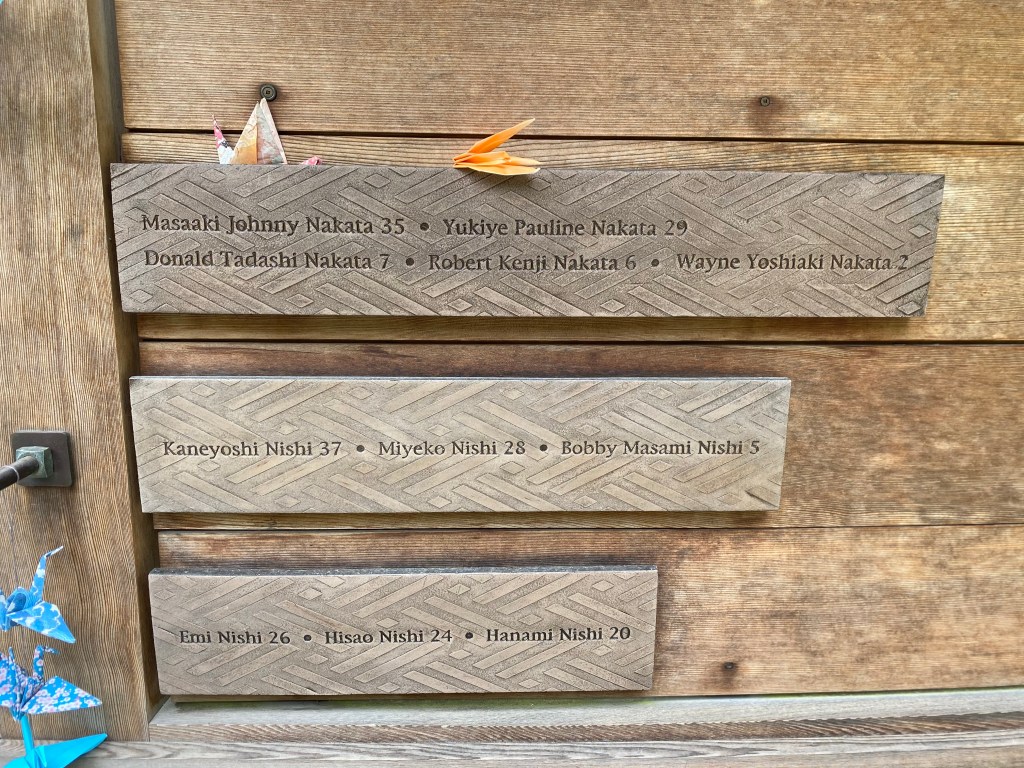
I recently learned of Bainbridge Island’s Japanese American Exclusion Memorial, not far from the ferry terminal I have frequented these past fifteen summers visiting Port Ludlow and the surrounding area. When I visited the website to learn more, there was mention of a 100–year–old Western Red Cedar that was added to the National Registry of Historic Trees in 2003, the second to be named a historic tree on the West Coast. The cedar stood near the ferry dock as 276 Japanese Americans were forced to leave their homes on March 30, 1942 as a result of Executive Order 9066 signed by President Roosevelt. 276 people of all ages and stages, community members, neighbors, colleagues and friends, had six days notice to pack their belongings and leave. The cedar is considered a living witness and still stands today at the memorial site.

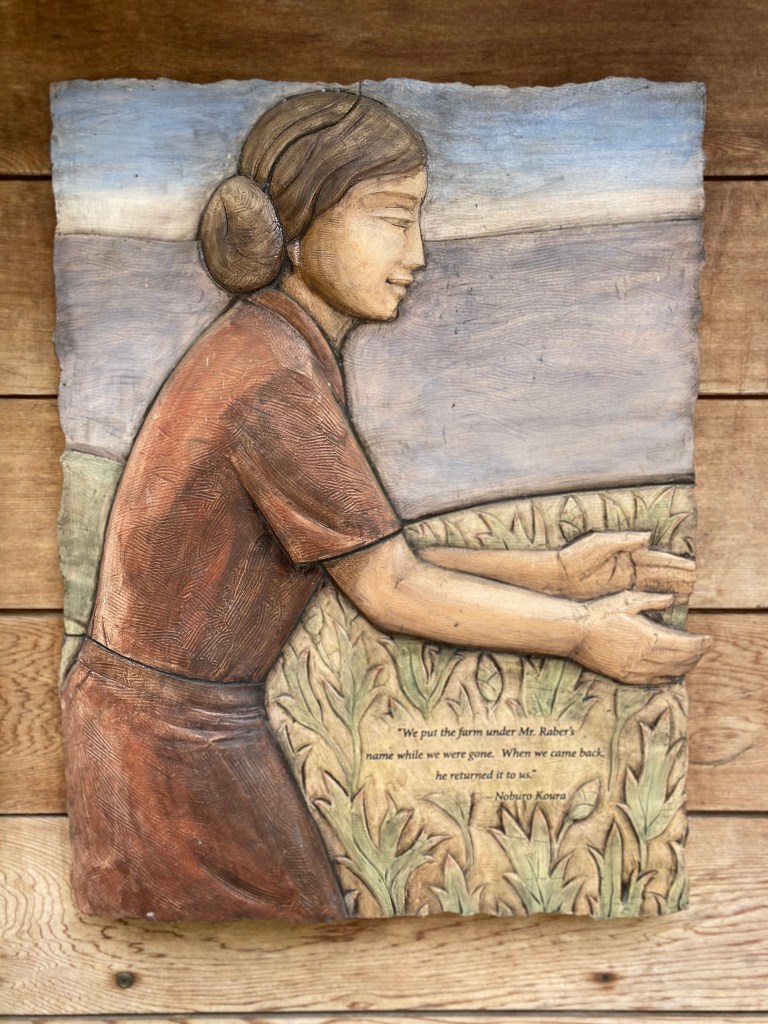
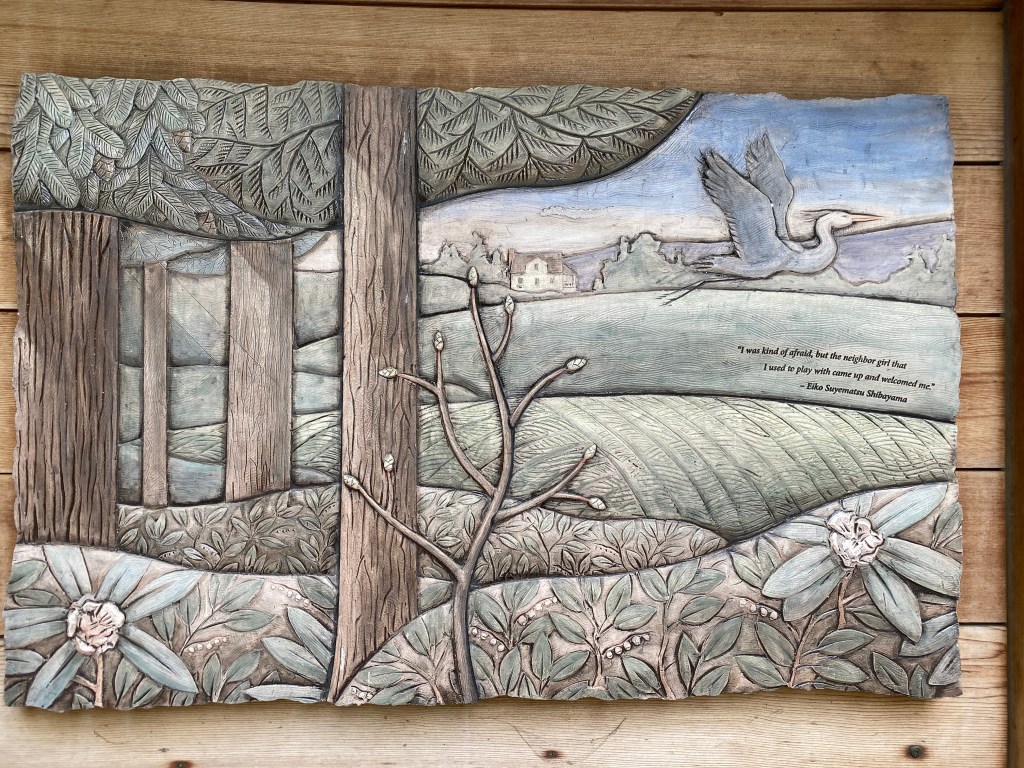
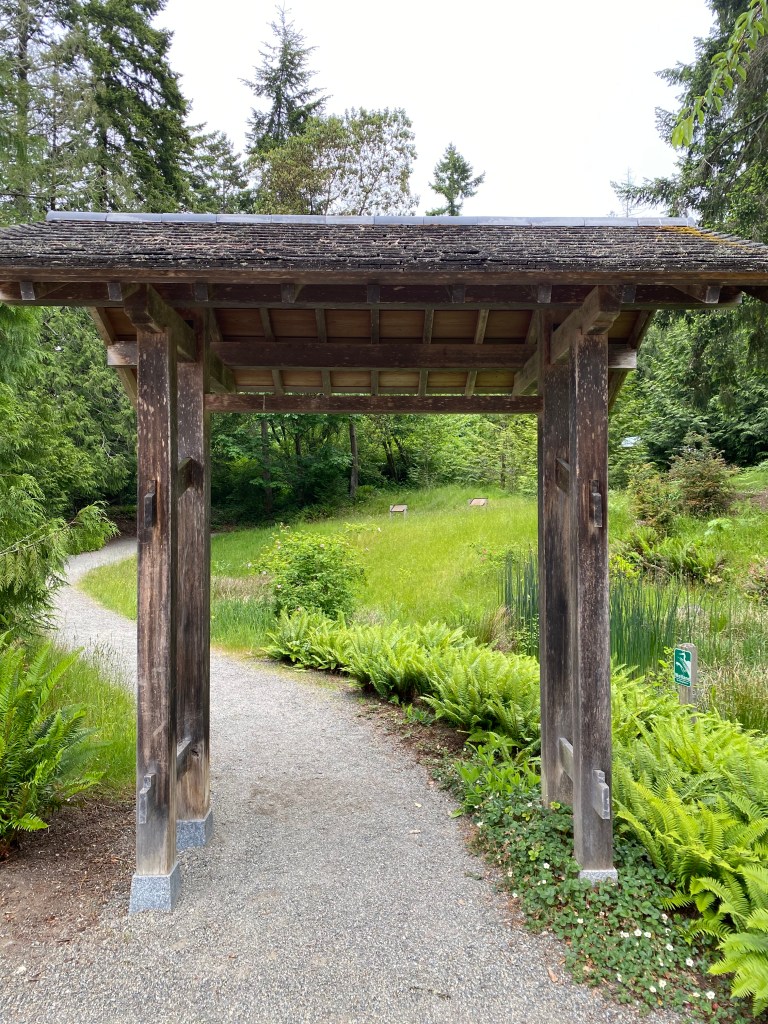
I walked the path of the memorial and thought of walking the path of Manzanar’s memorial on one of our visits to Mammoth Lakes in the Sierra Nevada Mountains of CA. Many of the 276 Bainbridge residents were sent to Manzanar where they suffered, stripped of their constitutional rights. Some never returned to Bainbridge and others rebuilt their lives. Some neighbors turned their backs and others watched over property and businesses.

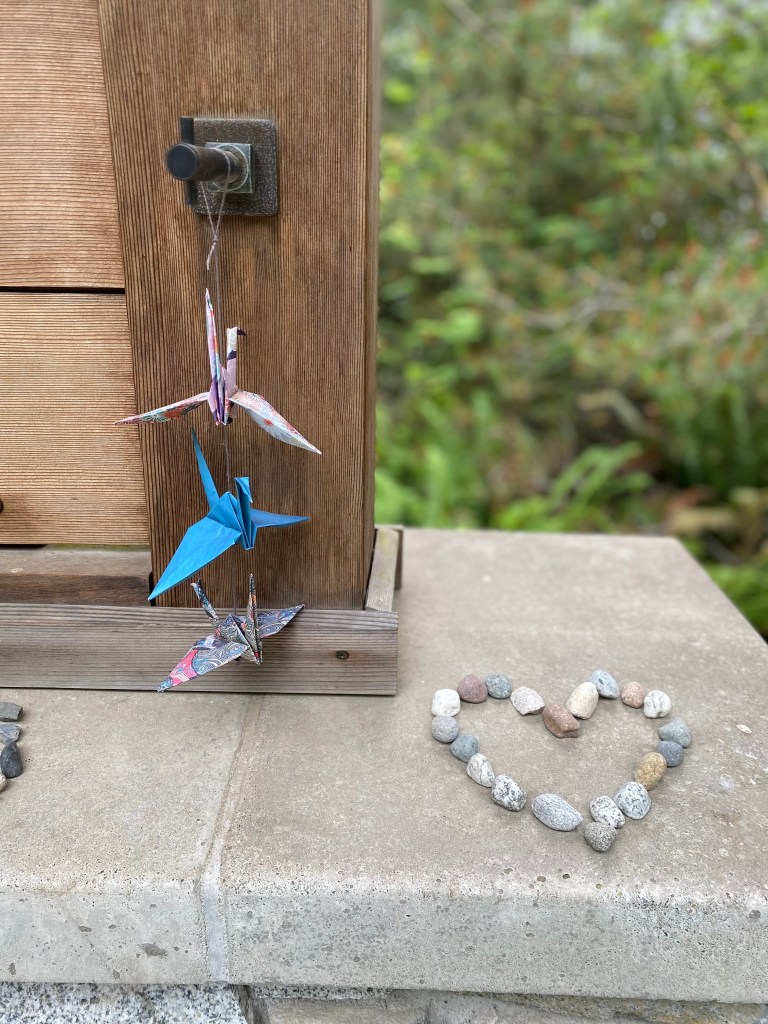
I walked the path yesterday with a lump in my throat, knowing that omens of past horrors are present, that the hatred and fear of the “other” is still such a destructive force in our country as Asian Americans and all people of color, Jews, LGBTQ folxs and more are being attacked through policy and physically on our streets. I walked the path to the water, the wise cedar’s branches spread over the dock, reminding me too of the power of continuing to share legacies of shattering pain and stubborn hope, of trauma and regrowth.

My next visit on Bainbridge will be Bainbridge Gardens, originally established in 1908 by Zenhichi Harui, one of the Japanese Americans forced to leave his home during WWII. When Mr.Harui returned after internment, the gardens weren’t able to be restored. Years later, in 1989, one of Mr.Harui’s sons redeveloped the gardens. There stands Japanese red pines that his father planted years before, seeds carried over to his new home in America. Seeds of promise, sowing strength through the generations.

Morning song

With the 5am light the birds praise the morning in song. I try and will myself back to sleep but the melodies are persistent. At first, I am annoyed—could you find a tree at a greater distance from the window, or fly on down the road? But the birds are exuberant, surrounded by the crisp and cloudless day.

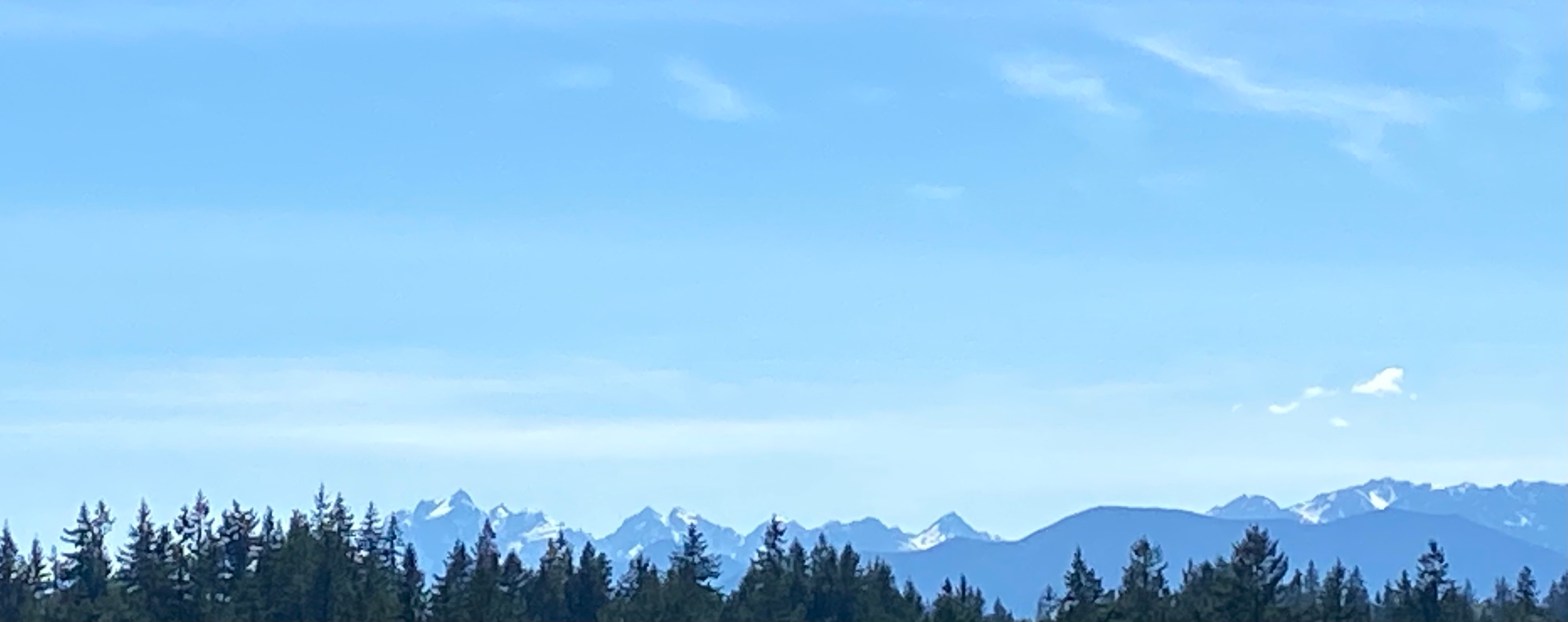
As I open the blinds to the clear view of the Olympic mountain range, I too sing out: Modah Ani! The birdsong, like the shofar, sounds as a spiritual alarm clock. And with open hearts, our voices of praise join in the chorus of creation.

I love this poem by Harriet Kofalk as an expression of Modah Ani:

Awakening

in a moment of peace

I give thanks

To the source of all peace

as I set forth

into the day

The birds sing

with new voices

and I listen with new ears

and give thanks

nearby

the flower called Angel’s Trumpet

blows

in the breeze

and I give thanks

my feet touch the grass

still wet with dew

and I give thanks

both to my mother earth

for sustaining my steps

and to the seas

cycling once again

to bring forth new life

The dewdrops

become jewelled

with the morning’s sun-fire

and I give thanks

you can see forever

When the vision is clear

in this moment

each moment

I give thanks

Yesterday, late Shabbat afternoon, I walked with my dad around the neighborhood and happened upon a red-headed woodpecker. It was hilariously pecking a stop sign. As we approached, it continued its curious drumbeat. At first, the entertainment was simply that the woodpecker didn’t know better, but after we lingered for a while, it appeared our red-headed friend was watching our reaction too, perhaps even suggesting that we human beings are the curious ones. We are the ones wrestling with what it means to “stop”, to pause the churning wheels of machinery.

David Abrams writes: “To touch the coarse skin of a tree is thus, at the same time, to experience one’s one tactility, to feel oneself touched by the tree. And to see the world is also, at the same time, to experience oneself as visible, to feel oneself seen” (The Spell of the Sensous, p.68).

As I offer thanks this early morning, I do so for the growing awareness that my body is part of the land’s body, that my song is part of this great symphony—that it is not only me perceiving the world, but that the red-headed woodpecker and the red cedar and all the forest Life, are praying too, with continuous Breath.

Shabbos

We must renew our acquaintance with the sensuous world in which our techniques and technologies are all rooted. Without the oxygenating breath of the forest, without the clutch of gravity and the tumbled magic of river rapids, we have no distance from our technologies, no way of assessing their limitations, no way to keep ourselves from turning into them. We need to know the textures, the rhythms and tastes of the bodily world, and to distinguish readily between such tastes and those of our own invention. Direct sensuous reality, in all its more than-human mystery, remains the sole solid touchstone for an experiential world now inundated with electronically-generated vistas and engineered pleasures; only in regular contact with the tangible ground and sky can we learn how to orient and to navigate in the multiple dimensions that now claim us.—David Abram, The Spell of the Sensuous

The village

We use the word “resiliency” often in describing our capacity to cope with change, to face reality. Resiliency is mentioned in describing the tools that can help us continually develop and draw from a reserve of mental, physical and spiritual strength.

I tuned in yesterday to a week-long summit on trauma and resiliency with speakers from all over the world. Dr. Peter Levine and Dr. Bessel van der Kolk spoke of somatic practices — movement and song—that can be a tremendous source of healing in the wake of trauma. Dr. David Treleaven described the way trauma “shrinks our window of tolerance” and mindfulness work can be a source of expansive healing. Dr. Ron Siegel talked about the power of relationships to help regulate our nervous system, to help us evolve and grow in response to impermanence.

My children’s first grade school year draws to a close this week and have been reflecting a lot on our village. Just as Dr.Ron Siegel describes—it’s a system of relationships that help regulate and wire us in a whole variety of ways. And as the second week of sabbatical unfolds, I am beginning to understand resiliency from the old growth forest in this way:

The change in temperature from walking on road to the old growth forest is quite noticeable. The concrete generates heat, the light is more blinding, the sound of my feet against the ground a bit sharper. Then, the forest path begins and the coolness wraps around me like a tallit, the air is rich with nutrients, and my feet are cushioned by the carpet of pine needles. In time, the fire of stress on my nervous system is calmed and the coolness of nature’s sanctuary invites me to dwell, time and again.

Perhaps now I will call our village, our pod, our community which has been such a source of blessing, our forest. And yes, we are opening a bottle of champagne (and sparking apple juice) to celebrate the last day of school!

…Your stories are our welcome night sign

Of stop and rest and sky and stars

and forgotten sleep where we wake again

To find we are surrounded, embellished,

Frightened, nourished,

Sheltered, restored, rejected and inhabited

By—how shall I say your name?

Wood, trunk, branch, leaf,

Boreal harmony of green in-breath,

My hands clapping, eyes opened,

Mouth attempting the song

Of your unspeakable gifts and grace

Again and again—the full hidden

Not to be said, mysterious

and utterable name of your full breath. Tree.

-David Whyte, Fire in the Earth

The Grand Forest

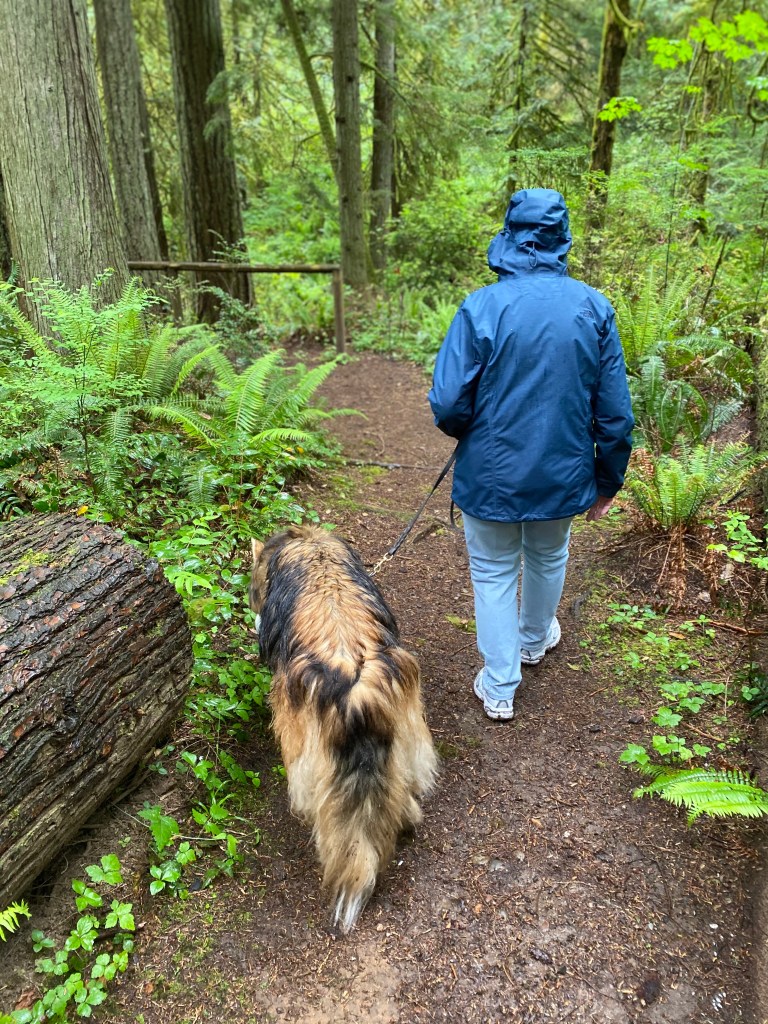
We began walking in the rain which had been steadily falling all morning since I woke up at 5am. The rain was light enough that with the proper gear, I hardly noticed, unlike a good old Texas downpour. 

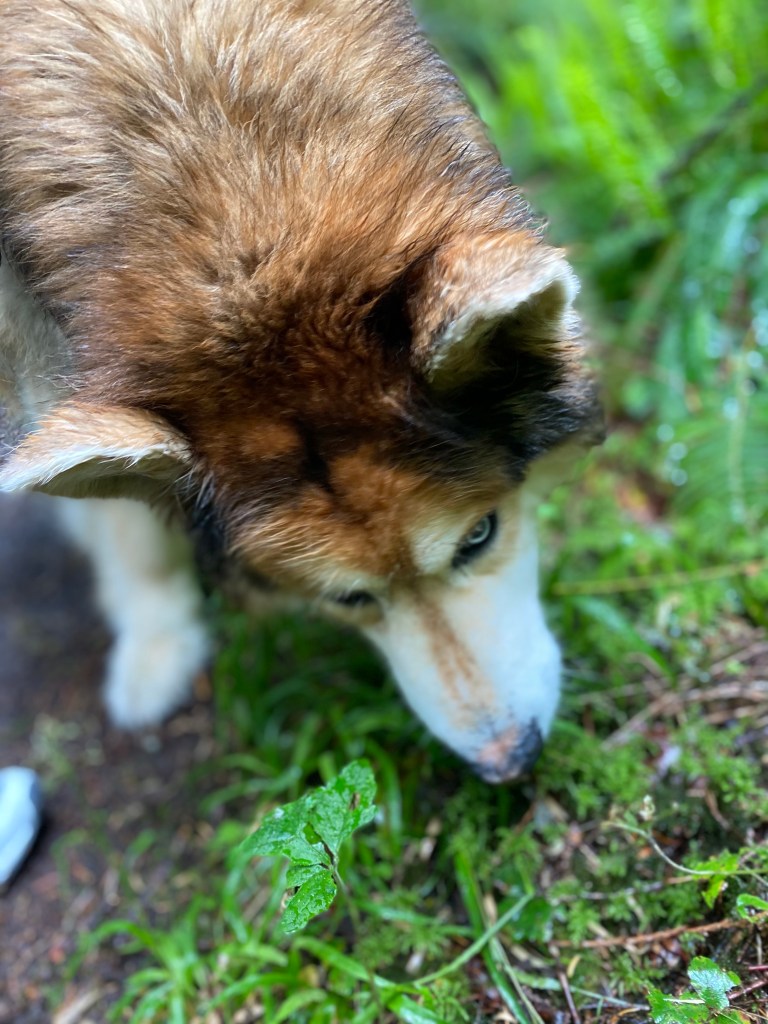
I was blessed to walk with a woman who has lived on Bainbridge Island for over 50 years. Her 12 year old husky mix, Macaw, was right by her side and I followed the two of them for three hours. Time stood still with the delight of accompanying such a wise, curious and spirited soul.

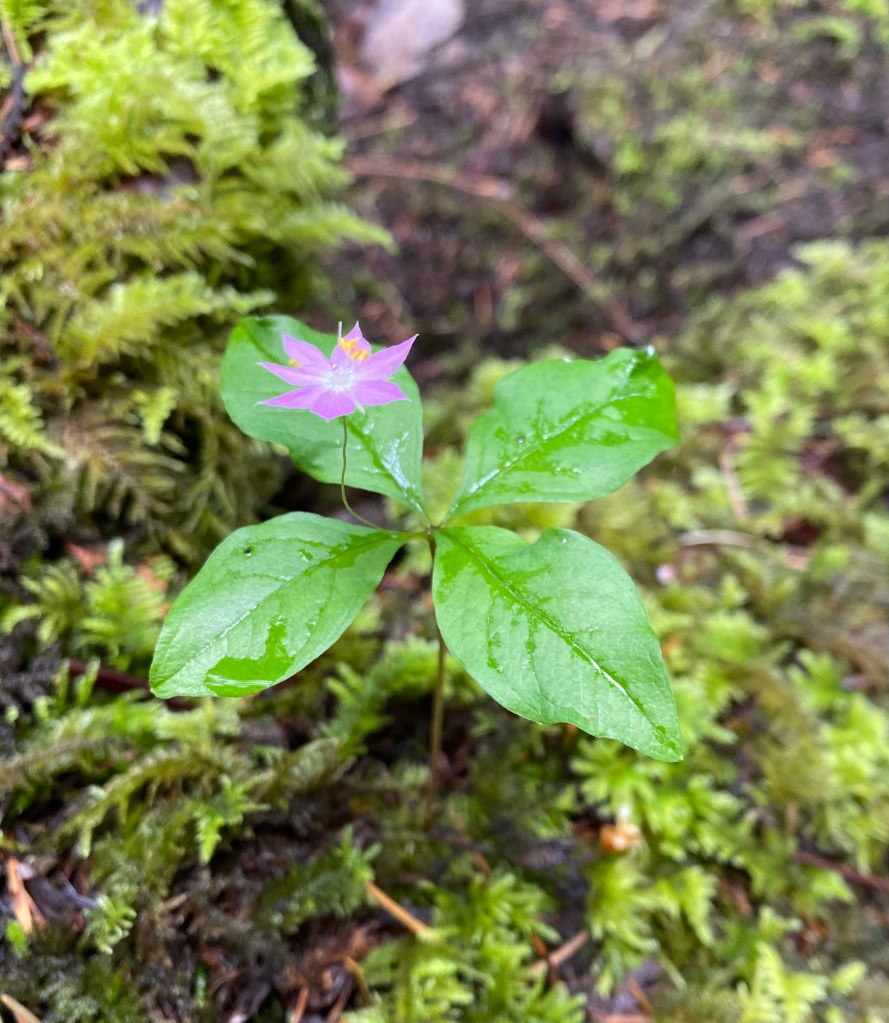
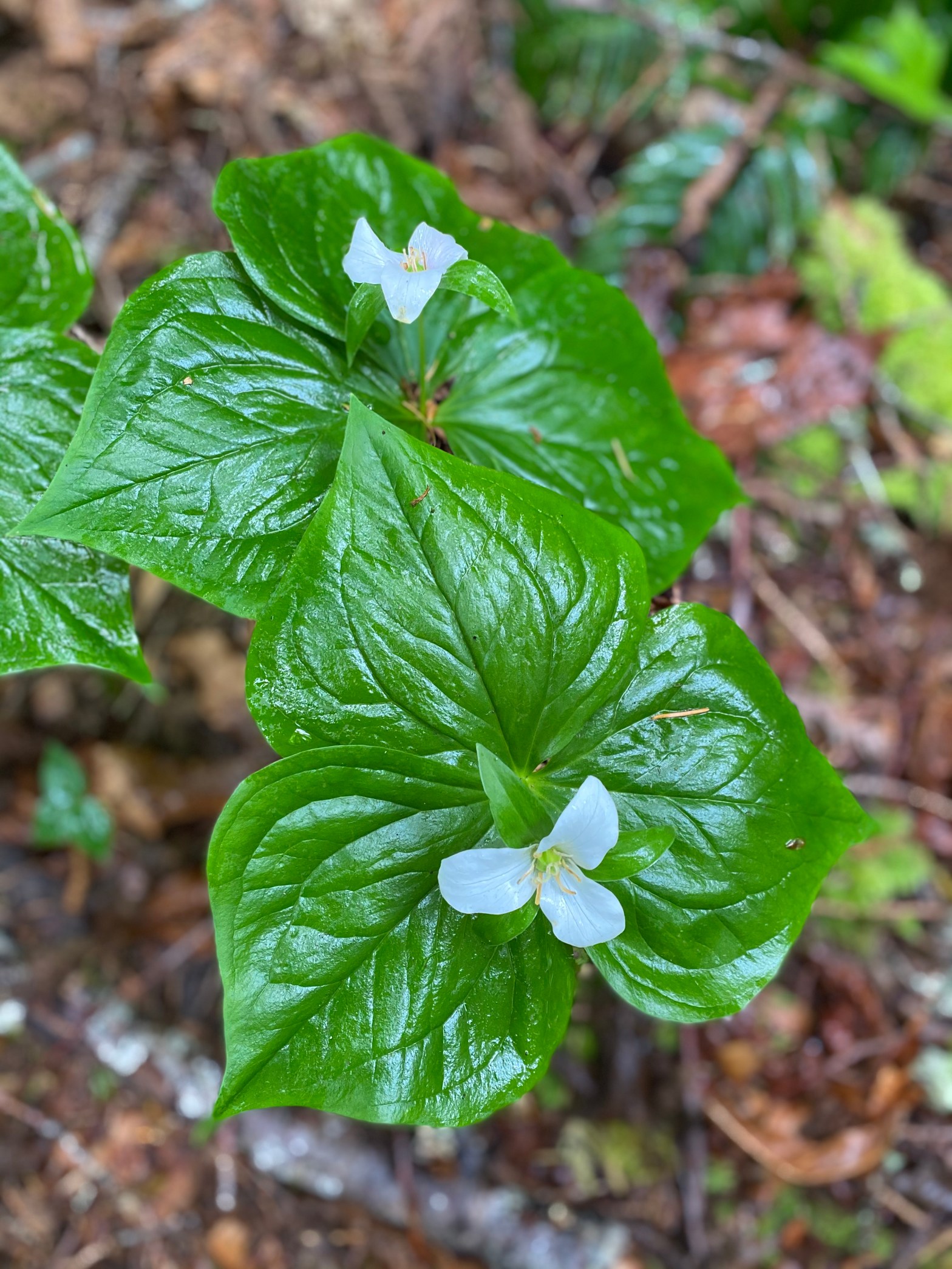
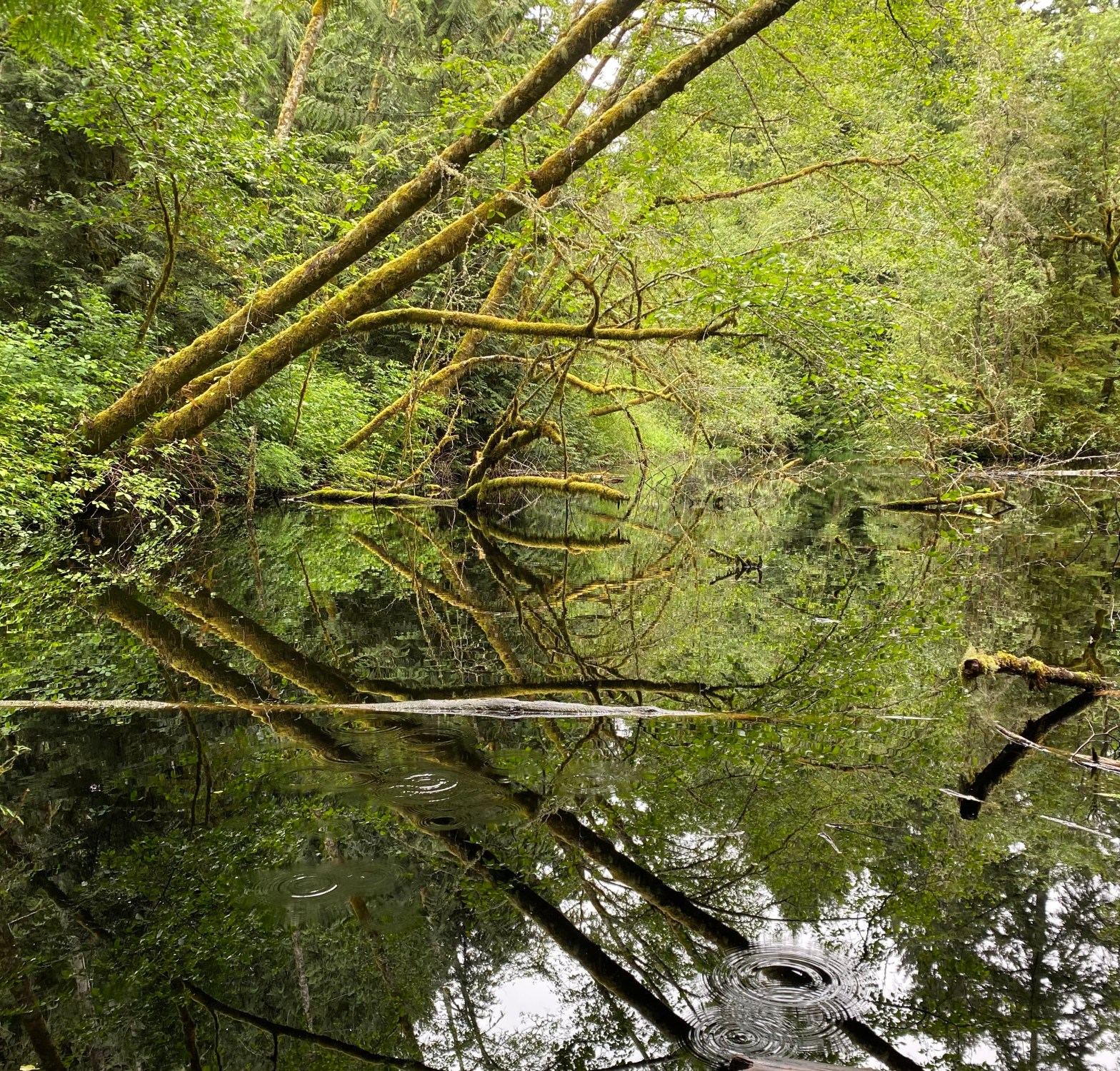
We discovered a few trillium flowers, wood ducks, a pond with water as still as glass, a whole variety of trees and ferns. The ferns covered the forest floor like a carpet of lush green. Her feet knew the trails of the Grand Forest like the voice of a dear friend. 

And while the flora and fauna wove into our conversation, filled our vision, and delighted our senses, we mostly talked about our lives — about trauma and loss, memory and legacy, regrowth and healing. Although we are of different generations, with different backgrounds and experiences, there was also so much we shared. Over the hours, a rooted sense of connection and loving appreciation emerged.

A forest is grand not only because of the tree’s heights and the birds soaring above, but because of the deep wells of memory that allow healing to take root over time. Because of the pathways of stillness and warmth even on a cold rainy day that bridges time and hearts.

Labyrinth

As we so often find in ancient folklore, the Caileach offers us a cyclical metaphor for life, one in which the energies of spring arrive again and again, nurtured by the deep retreat of winter. We are no longer accustomed to thinking in this way. Instead we are in the habit of imagining our lives to be linear, a long march from birth to death in which we mass our powers, only to surrender them again, all the while slowly losing our youthful beauty. This is a brutal untruth. Life meanders like a path through the woods. We have seasons when we flourish and seasons when the leaves fall from us, revealing our bare bones. Given time, they grow again (Wintering, Katherine May).

We found a labyrinth in the woods. A simple clearing with stones placed carefully, expanding out in countless circles. After a few minutes of attempting to navigate the path, the kiddos said—“Look, you can just jump over to the next level.” Jump, jump, jump! And so a opportunity to explore a lesson we learn from childhood through adulthood, as Katherine May captures above in her book Wintering—there are no short cuts in our lives, from season to season. But there is also the truth that given time, we grow again.