Prior to October 7th, before the horrors of that dark day, over the two and a half decades since I lived in Israel during the second intifada, the word “peace” felt on the best of days, a fragile dream, and on the worst of days, tone deaf. Our people have experienced generations of upheaval and trauma. Since Israel’s inception, amidst tremendous innovation and growth, there have been countless conflicts and wars. And while I still so desperately want peace, if I hear the word in the context of Israelis and Palestinians, the hairs on my neck stand on end, my anxiety rises, and I wonder, how will this hope ever become our reality?
It may be an imperfect metaphor, but when I reflect on the trauma my body, mind and soul endured through my cancer treatment, there’s a way to work with the trauma, to reclaim life amidst ongoing uncertainty, there are spiritual practices and healing paths, but there is never a true sense of closure. “All is good now? You are past it?” I’m often asked. “Life is a gift” I say, “each day an opportunity.”
Recently, I’ve prayed for peace to bring whatever closure we can endure, because what if peace isn’t the end of trauma? What if it’s creating the conditions for a better future, amidst the narrowest of circumstances?
Something began to shift a bit in me, and I attribute the cracking open of my disillusioned heart to a recent Saturday afternoon at Temple. Through Faith Commons, a Dallas-based, inclusive faith organization committed to promoting the common good, I had the opportunity to hear from Aziz Abu Sarah and Maoz Inon who co-authored a book called The Future is Peace. I’ll share more about them in a moment, but first, a bit of background.
During their Dallas visit, Maoz and Aziz were joined by Natali Levin Schwartz, Director of Impact and Policy Research from The Alliance of Middle East Peace. Natali was born in Russia, was raised in Israel where she studied Political Science at Tel Aviv University and now lives in the US. Natali described a network of 200 organizations working to create a better future, among which are Aziz and Maoz’s organization called InterAct International. She spoke about Hand in Hand, serving thousands of Jewish and Arab students and ten thousand involved community members, which comprises six campuses of integrated, bi-lingual schools, a rarity in Israel. I remember visiting a Hand and Hand school in the Galilee a few years after the organization began and was moved to tears during that visit. Natali reminded me that such efforts have grown, not diminished.
Natali described an “ecosystem” of youth programs, women’s leadership development, economic partnerships, health organizations, environmental projects, circles of families who have experienced horrific loss, and more. Some are working solely within Israel and others across borders, and we often don’t hear about this ecosystem which is resilient and stubbornly pushing on through the rugged terrain of a terribly entrenched conflict. Some are places Temple members have visited as part of a congregational trip, including the Educational Bookshop in East Jerusalem, a vibrant community where you can find Hebrew, Arabic, English books all on shelves in one place and readers in dialogue with each other.
Maoz and Aziz’s efforts are a more recent addition to the ecosystem. They have worked in the tourism industry for years, crossing paths along the way before tragedy brought their broken hearts together. Aziz is originally from East Jerusalem and lost his older brother, Tayseer, when he was ten years old. Tayseer was accused of throwing stones at Israeli soldiers during the first intifada, was arrested, beaten and died from internal bleeding. Maoz grew up in the Gaza envelope and his parents lived at Netiv HaAsara, right at the border with the Gaza Strip. Maoz writes: “Our father’s body was so badly burned, it would take 14 days to identify his remains among the ashes and rubble of our childhood home. Of our mother, nothing remained.”
Decades after first meeting due to their shared profession, Aziz reached out to Maoz upon hearing that his parents were killed on October 7th. They decided to do what has become a core part of their lives—to travel and tell the stories of their shared home, but to do so amidst some of the bloodiest and most heart wrenching of times. They decided to do so in a time when revenge stretches out in all dimensions. With honesty, candor and heart, they model what it means to actively make a choice—to create hope in each step they tread together so as not to drown in their sorrow or hatred.
One reviewer of their book writes, “the achievement of Aziz Abu Sarah and Maoz Inon’s short but immensely poignant account of a shared journey across Israel and the West Bank is that it remains true to the horror while refusing to be defeated by it. It is raw with pain and rage and yet bravely insistent on the imperative of hope” (NYTimes review). I couldn’t agree more after hearing Aziz and Maoz speak and after reading the book, as I was immediately brought into the sincerity of their stories and united mission.
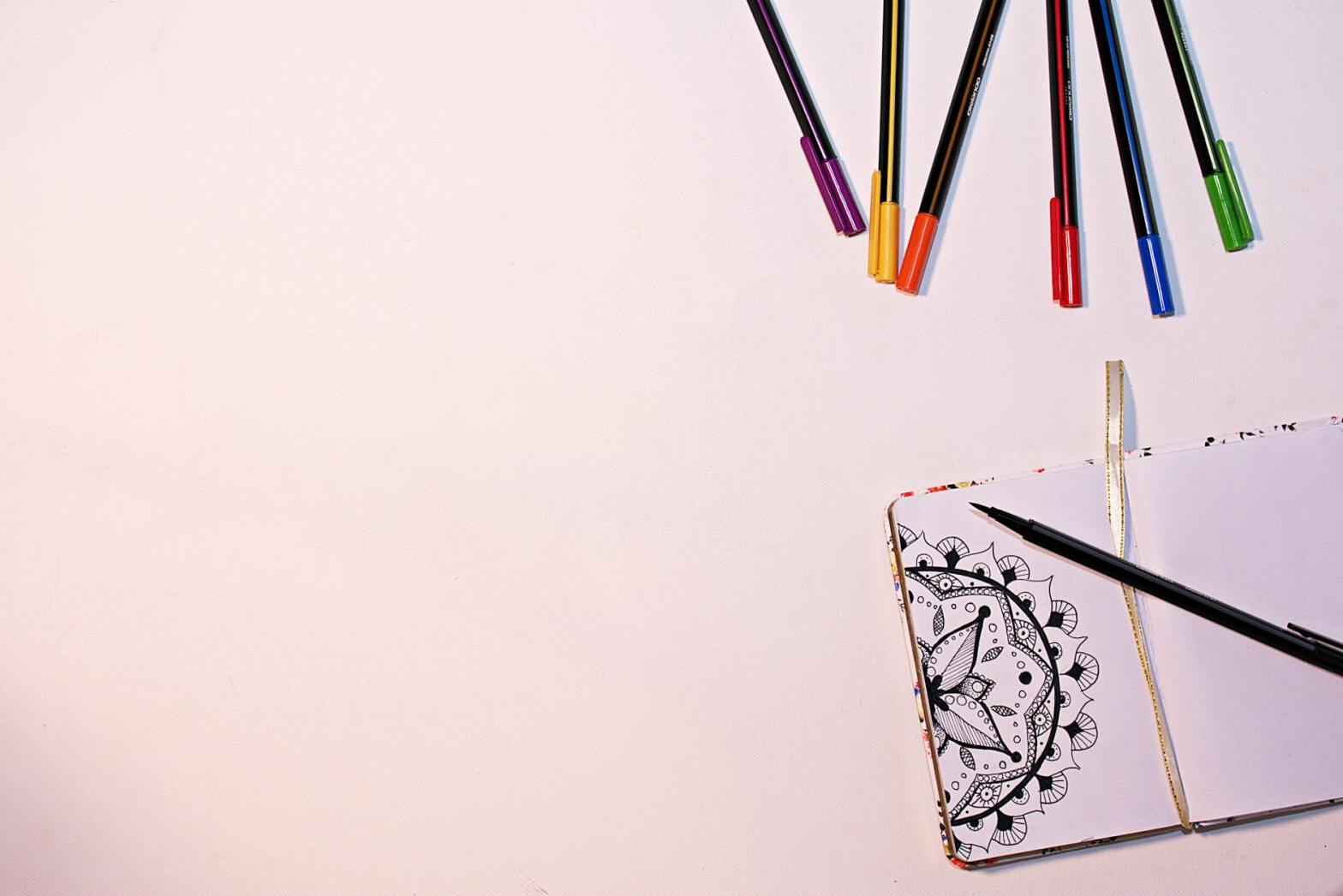
At one part of the talk, Maoz shared that his mother was an artist and made beautiful mandalas, which are geometric configurations of spiritual symbols. Her art studio, adjacent to their home on Netiv HaAsara, was miraculously saved. She painted thousands of mandalas but there was only one she gave to Maoz in 2016. Maoz confessed he never really took the time to read the blessing on the mandala gifted to him until after she died, but when he did, it went straight to the core of what he felt called to in the wake of such grief. On the mandala she painted: “All our dreams can be fulfilled if we have the courage to chase them.”
Her words reach into the heart of things and remind us of the power we might feel in the promise of all that can yet be. Her mandala creation reminds me of the oldest prayer of our people, The Priestly Benediction:
May God bless you and keep you.
May God shine God’s light on you and be gracious to you.
May God turn God’s face towards you and bring you peace. (N 6:24-26)
The Priestly Benediction, Birkat Kohenim in Hebrew, or the Priestly blessing, is a threefold prayer that we recite at sacred life moments—a baby naming, bnei mitzvah, wedding, or anniversary as we did tonight—and parents recite this blessing over their children on Shabbat evening.
The Priestly Benediction appears in this week’s Torah portion, Parashat Nasso, offered amidst the constant change and upheaval of the desert journey. After chapters outlining purification rituals and offerings, God instructs Aaron and his sons, the priests, to bless Israel with these holiest of words. The prayer we say today is exactly the one written in our Torah text, and over time, we hear the power and the meaning in new ways.
On this Shabbat, I read the ancient words like this:
When you despair amidst the narrowest of straights, know I am beside you.
When you feel in your grieving hearts “All our dreams can be fulfilled if we have the courage to chase them,” I will illumine your path.
When you, My people, made in My image, turn to one another, you will see My face.
Blessed with the power to create a better future,
May our fragile hope strengthen into an abundant source of peace.