Nestling myself
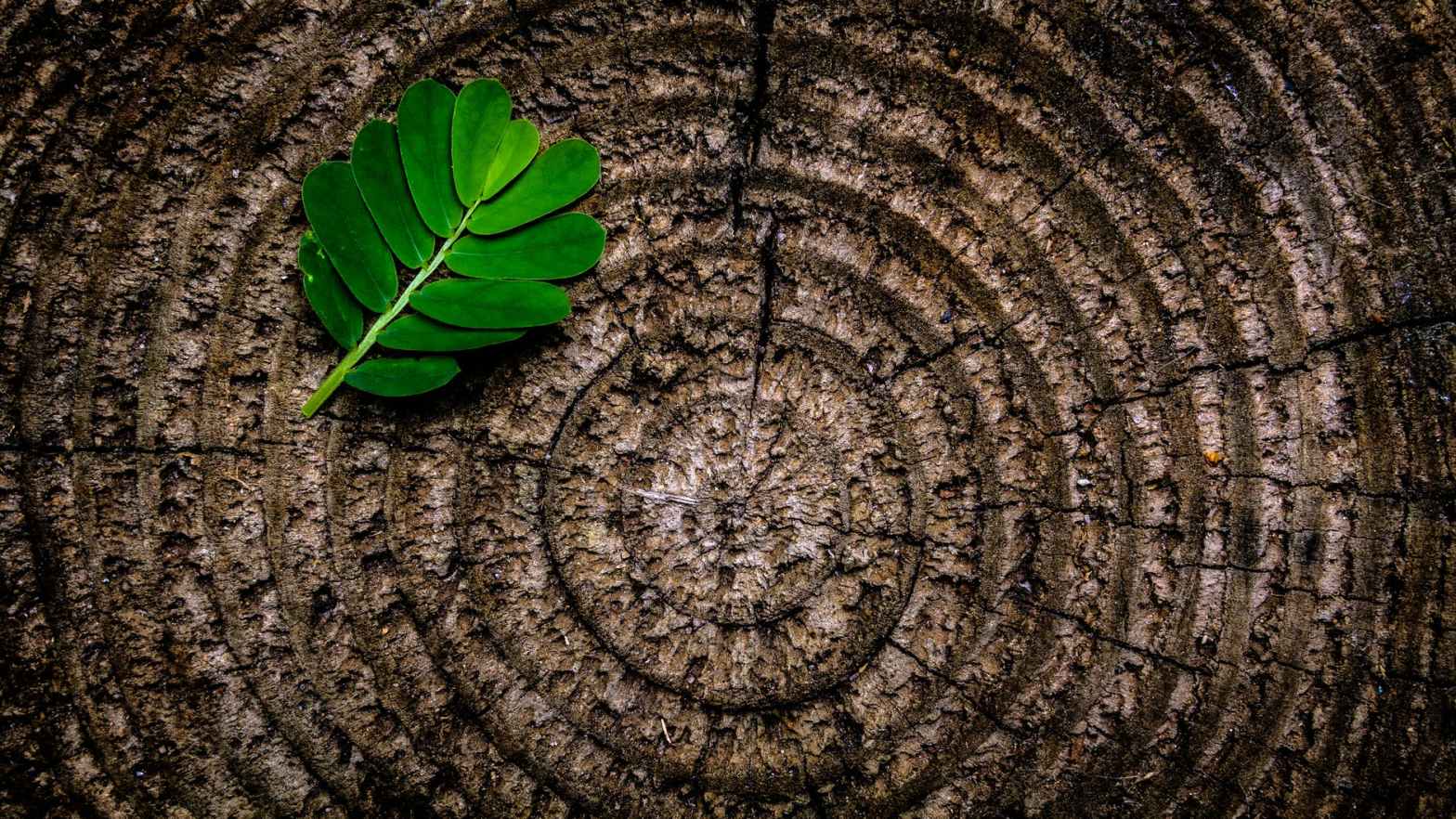
into the pine and moss
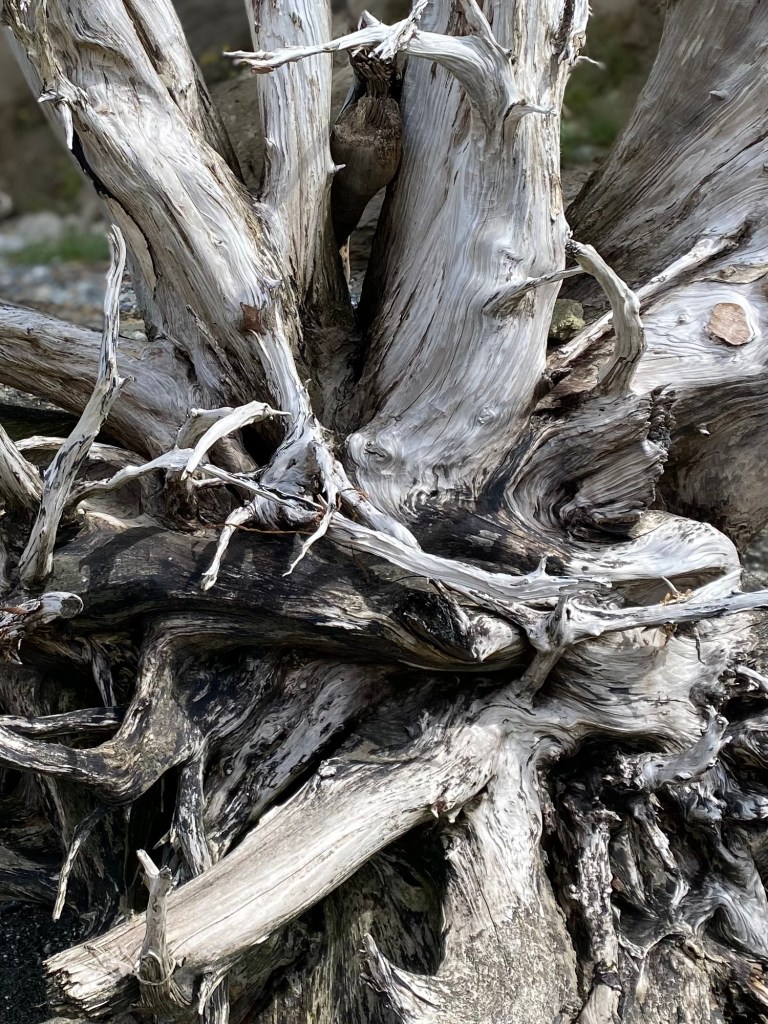
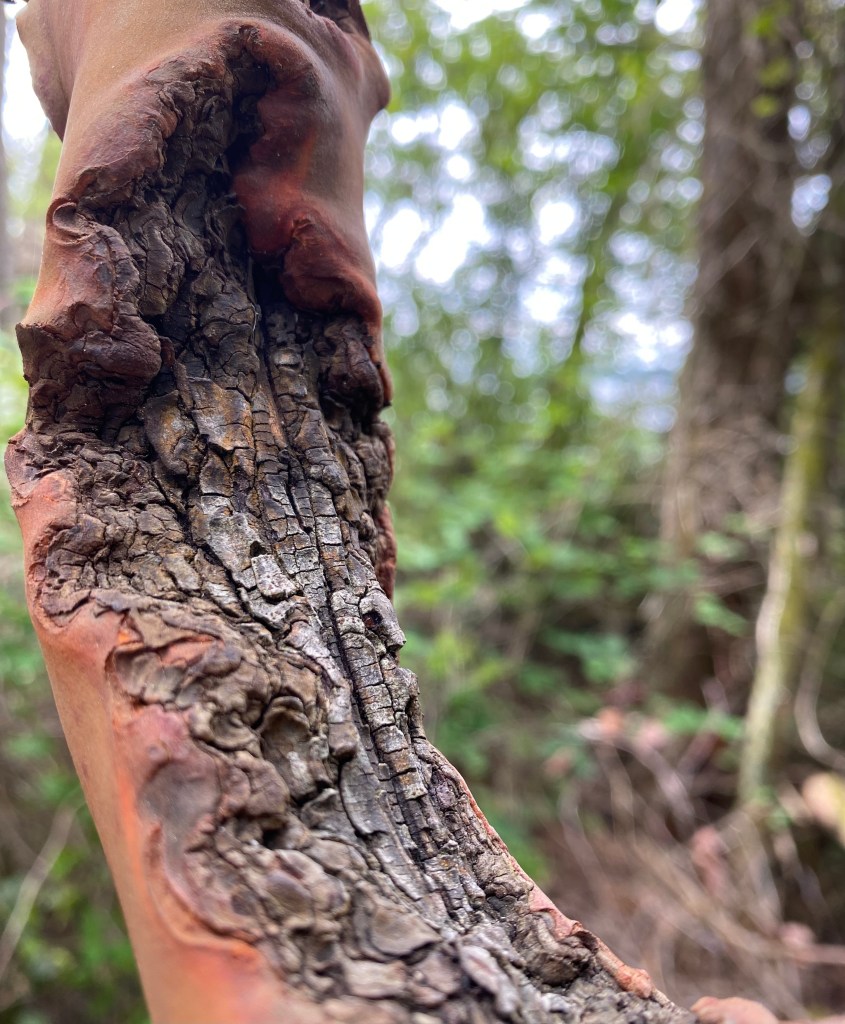
base of your trunk
I raise my Nalgene that runneth over
To you, Mother of the forest.
Today, I whisper
Let’s celebrate another ring!
And my birthday wish-
Released into the wooded wonder
Like a seed pod
Floating through
The cool air
With hope and gratitude,
With a promise
to return.
Magnificent blaze
River Light (Late Migrations by Margaret Renkel)
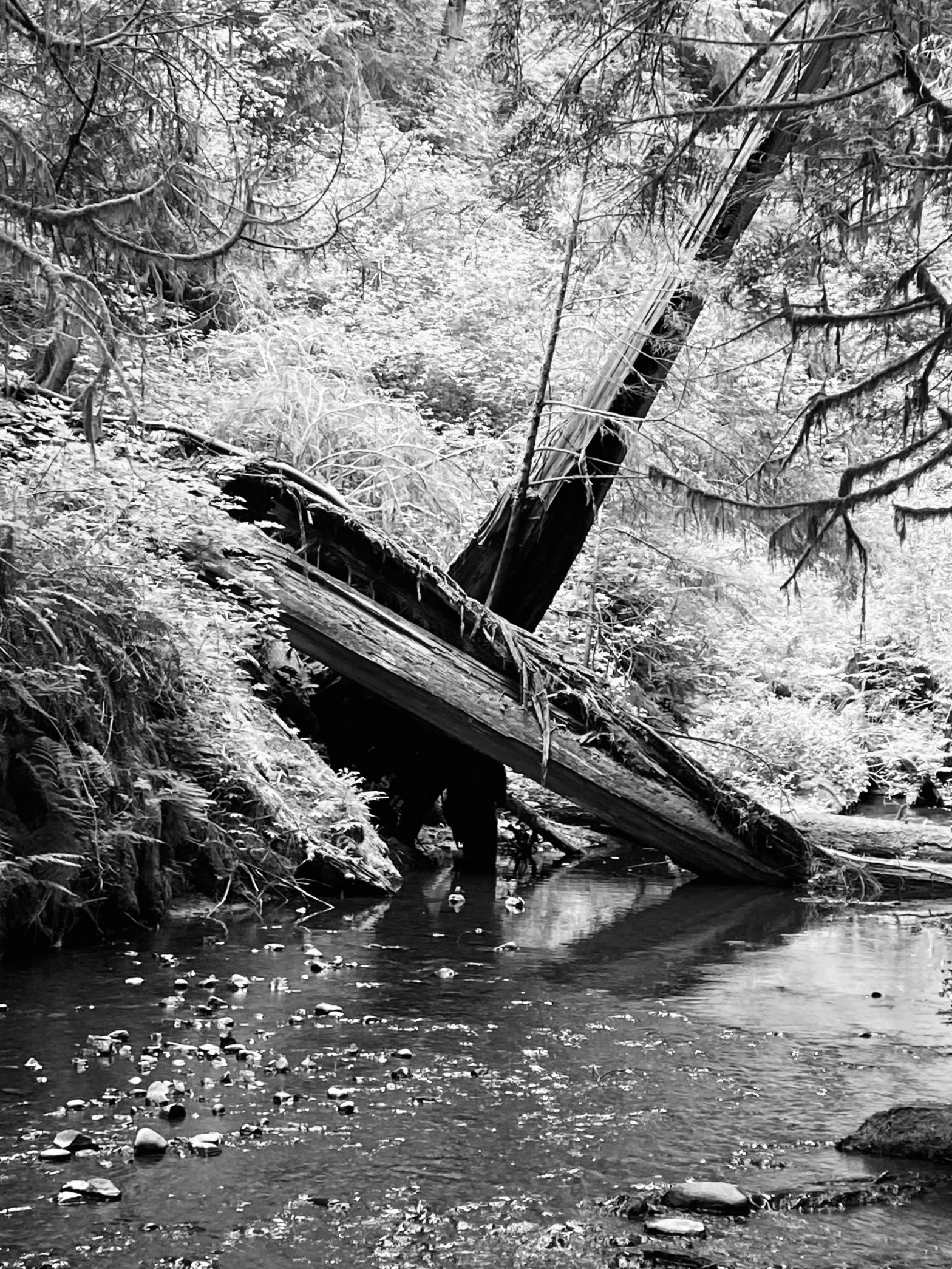
I try to imagine what it must have been like for the first human beings who moved through this dark forest: to glimpse a flare of light on moving water, to step out of the shadows of the close trees and see the sun flashing on a broad river. To see air and water and light conjoined in a magnificent blaze. That first instant must have felt the way waking into darkness feels—not knowing at first if your eyes are open or closed.
In that instant, the river is not a life-giving source of water and fish and passage. In that instant, it is not the roiling fury that can swallow whole any land-walking, air-breathing creature. It is only itself, unlike any other thing. It was here long before we were here, and it will be here after we are gone. It will erase all trace of us—without malice, without even recognition. And when we are gone to ground and all our structures have crumbled back to dust, the river will become again just the place where light and water and sky find each other among the trees.
The Grands
Your grandeur
quietly resides
in us—
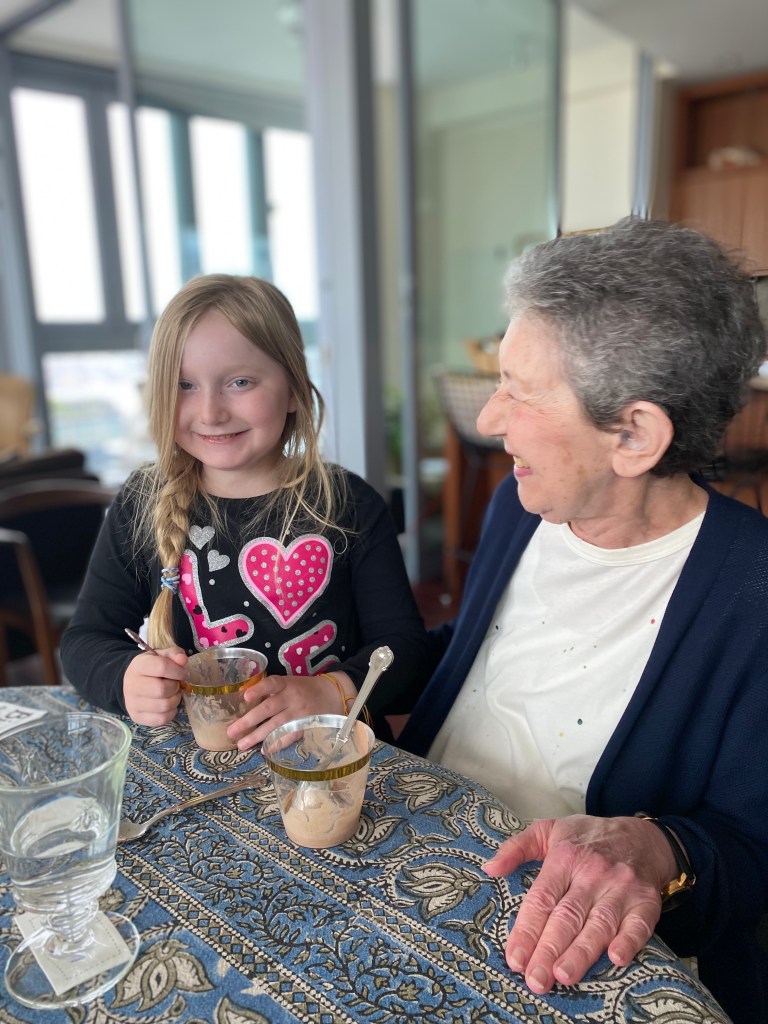
In love note whispers and doses of ice cream,
Piles of sticker books and bandaids,
Patient nods through endless fairy tale inventions.
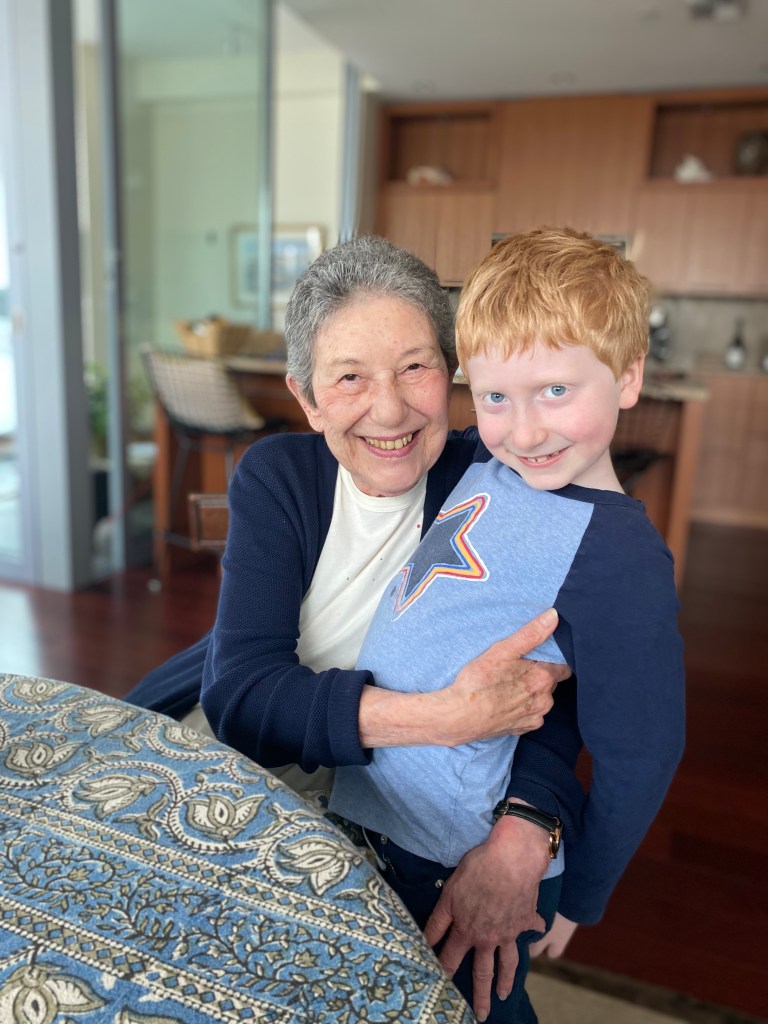
Stretching across the topography of generations,
You hold tears like raindrops rolling off pine branches.
You send sap strength to our roots reaching miles
Beyond water ways and flight patterns.
Your grandeur
will ever grow
in us.
Week Four
Smell the flowers
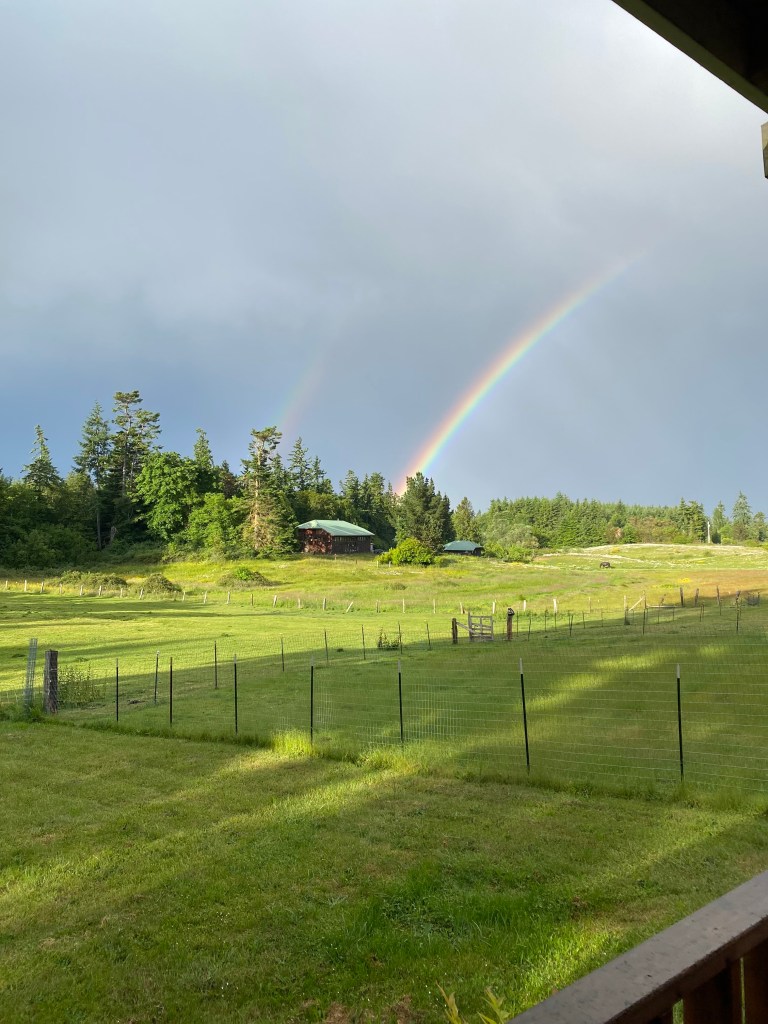
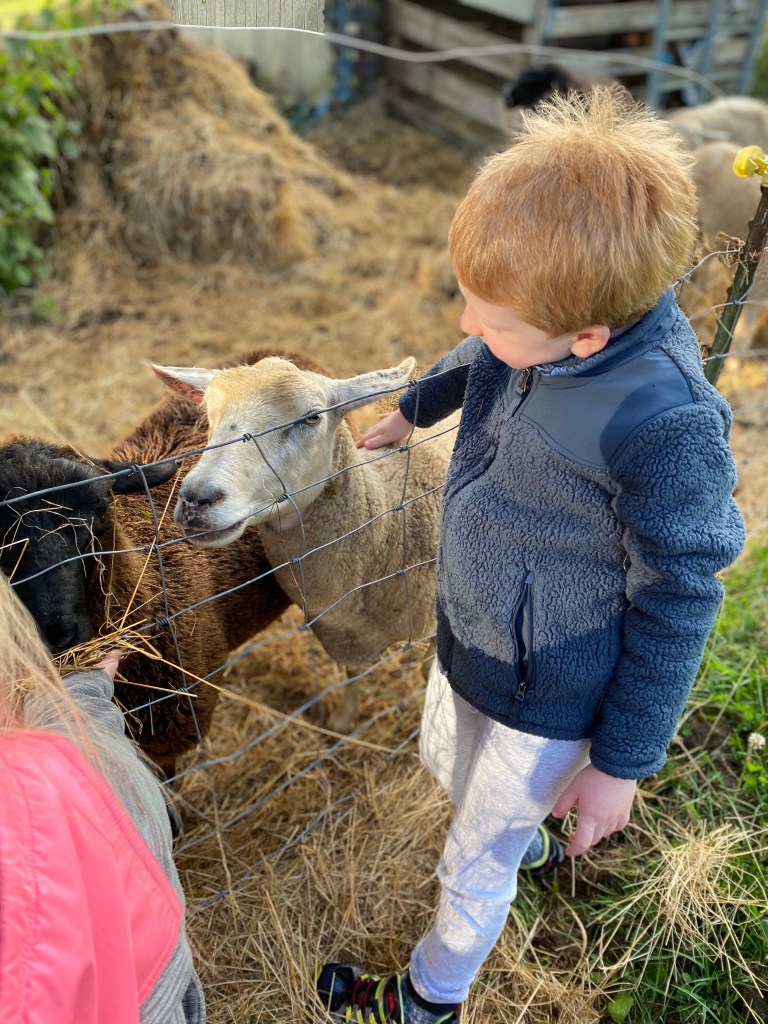
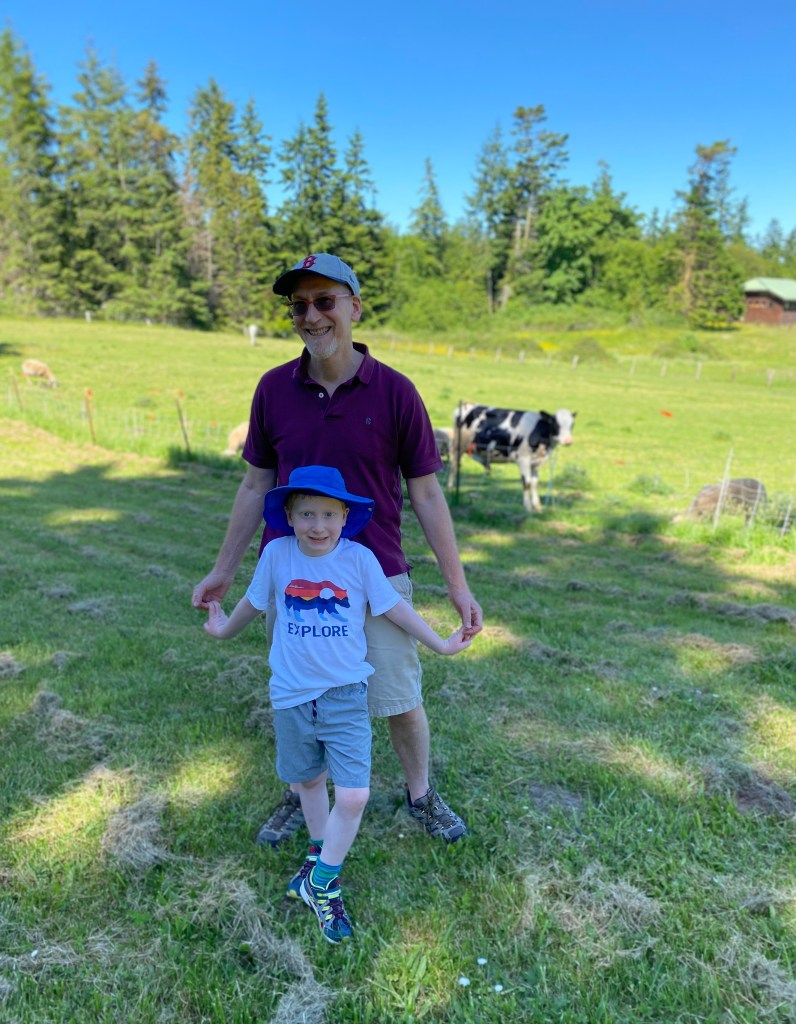
A tractor is humming with solemn duty — one of the goats must be buried before nightfall, before the coyotes descend. As I watched the farmhand carefully haul the goat from the adjacent field, the flock of sheep, a whole menagerie of beings, seemed to gather as a minyan in focused attention as their companion departed.
The farm is peaceful in early light, afternoon rain, and evening sleepiness. This place is a labor of love. But there is a ragged toughness too—rough hands and leathered skin, toiling and turning the soil with tools. There is loss and birth, winters of grey and biting salty wind, then the bursting of color with spring and the summer days with endless light.
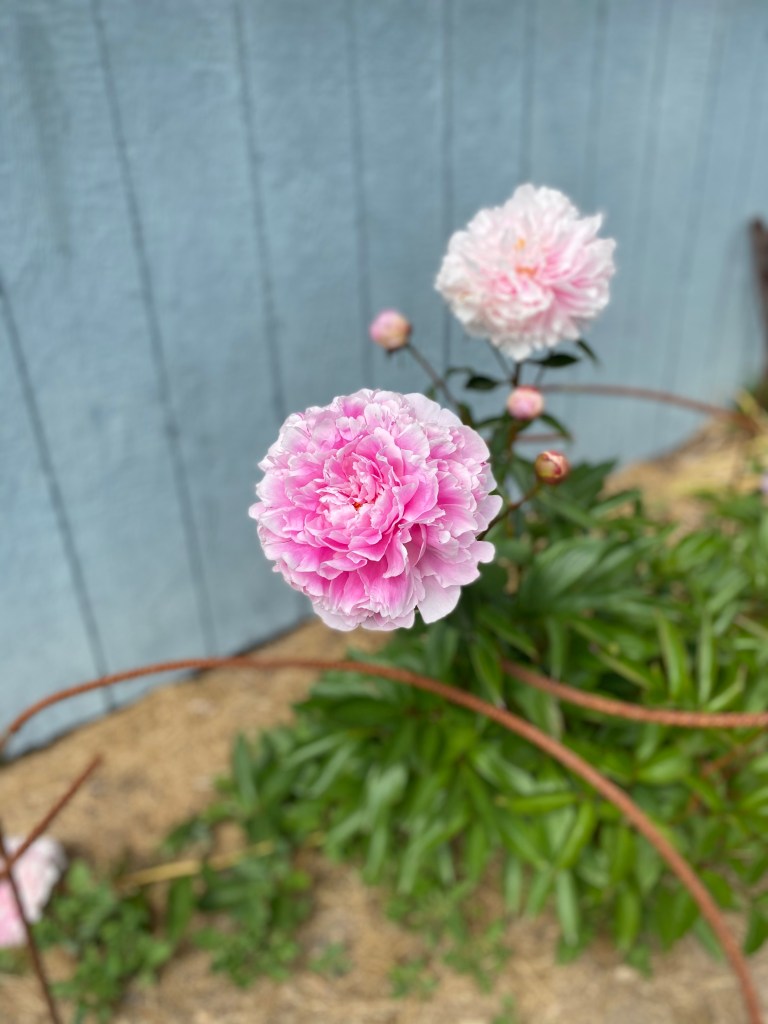
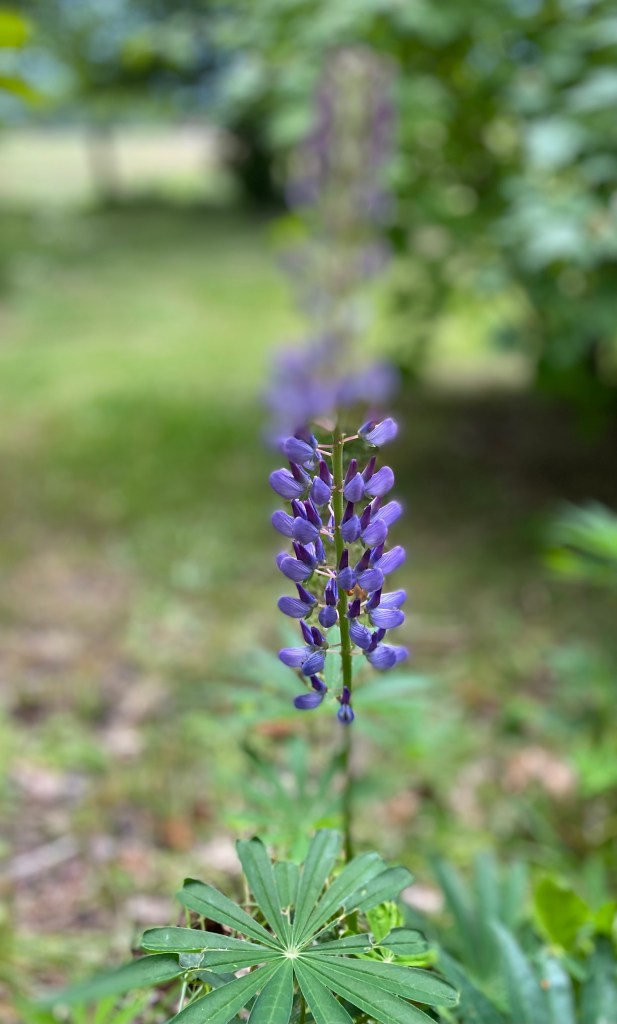
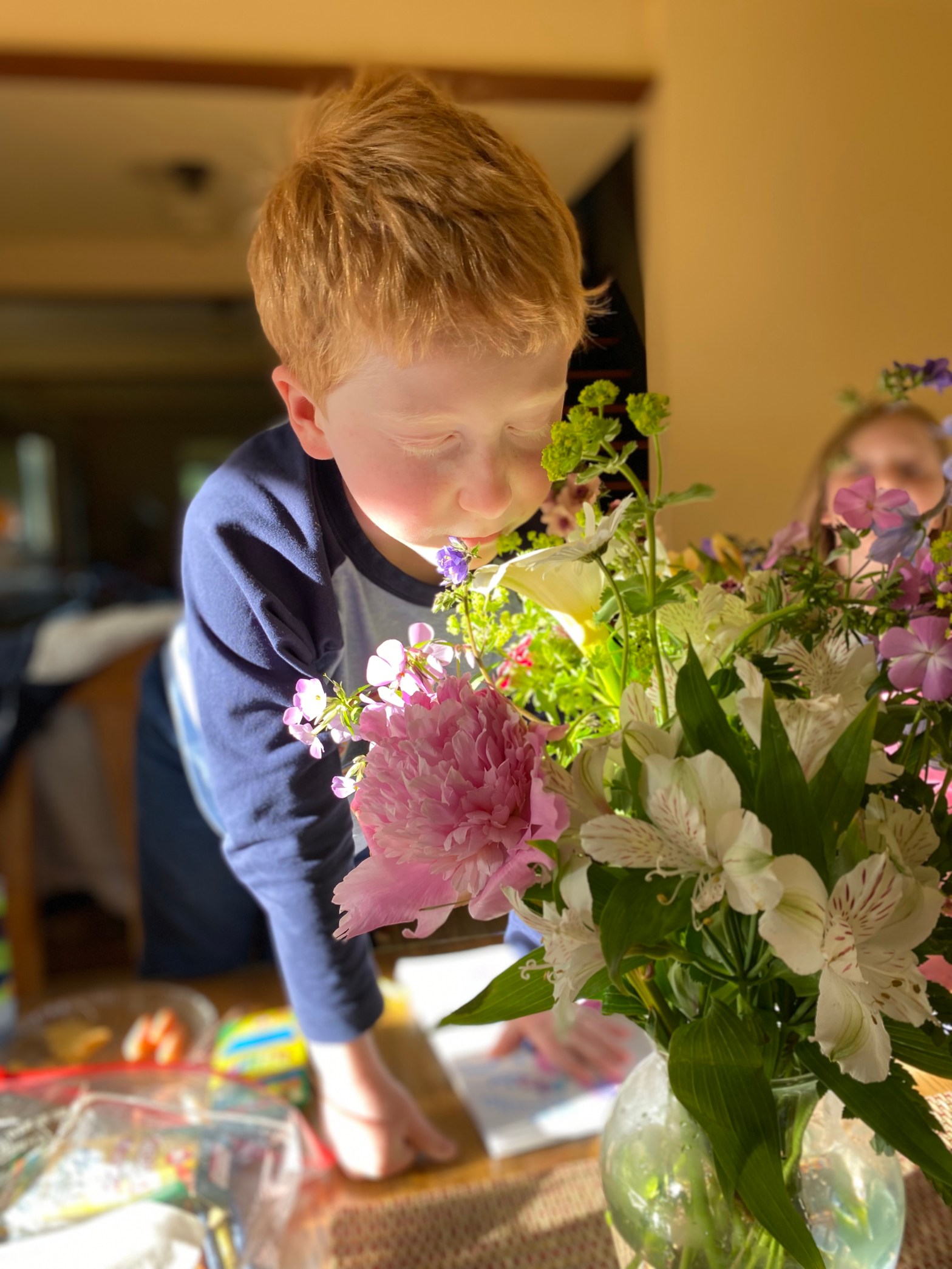
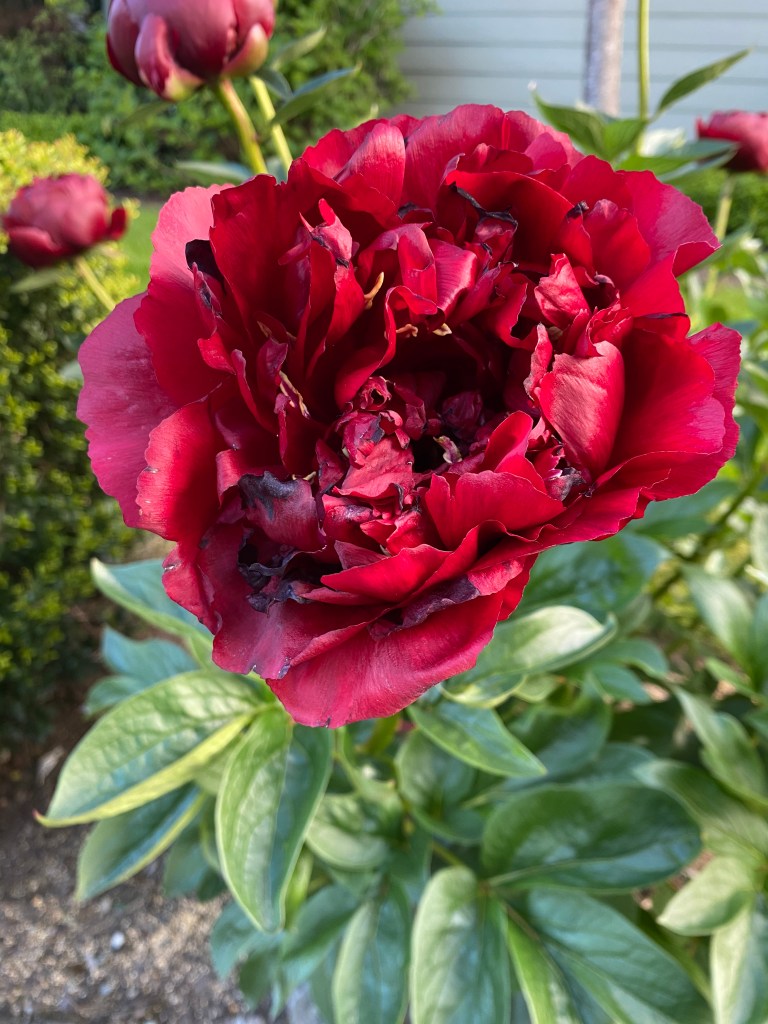
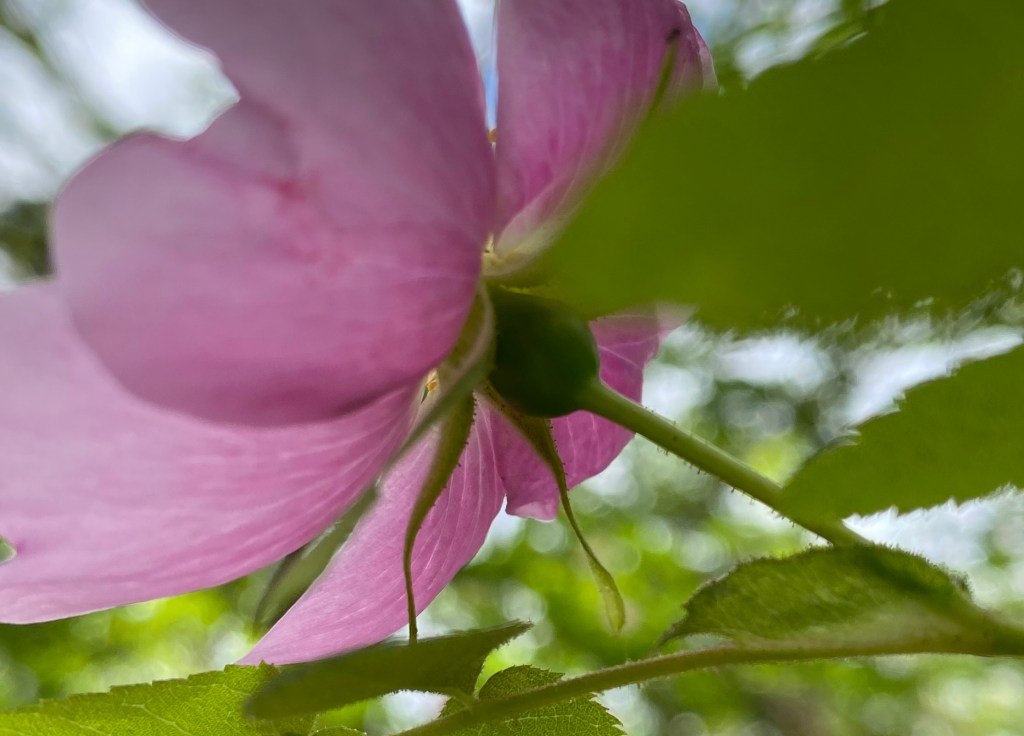
Just before the tractor began its morbid movement, my son was nestling his face in fresh cut flowers, smelling each one and commenting on the different scents. Yes, I thought. As the saying goes (as cliched as it is) remember to smell the flowers, amidst this fleeting life. Don’t just admire them from afar—investigate and delight, protect and bless!
Lord of the springtime, Father of flower, field and fruit, smile on us in these earnest days when the work is heavy and the toil wearisome; lift up our hearts, O God, to the things worthwhile—sunshine and night, the dripping rain, the song of the birds, books and music, and the voices of our friends. Lift up our hearts to these this night and grant us Thy peace. Amen.—W.E.B Du Bois
Week three
Remembering infinity
For those moments we know our name is only Your name—Ein Sof—infinite as the desert’s dust and the sea’s sand. W.S Merwin says it all in this poem, Far Along in the Story:
The boy walked on with a flock of cranes
following him calling as they came
from the horizon behind him
sometimes he thought he could recognize
a voice in all that calling but he
could not hear what they were calling
and when he looked back he could not tell
one of them from another in their
rising and falling but he went on
trying to remember something in
their calls until he stumbled and came
to himself with the day before him
wide open and the stones of the path
lying still and each tree in its own leaves
the cranes were gone from the sky and at
that moment he remembered who he was
only he had forgotten his name
Farmhouse poetry
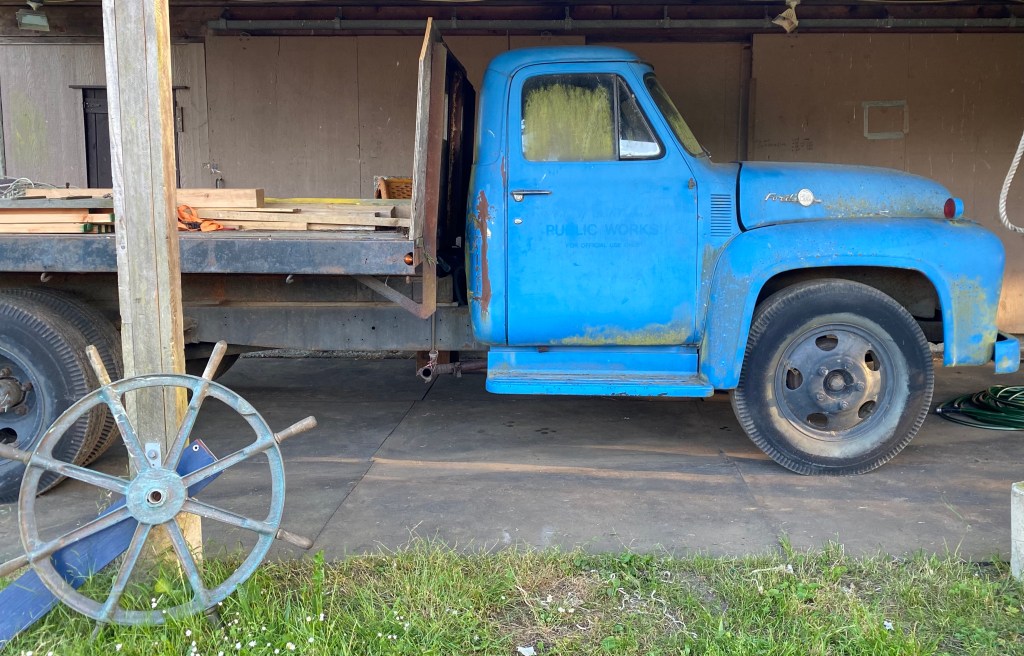
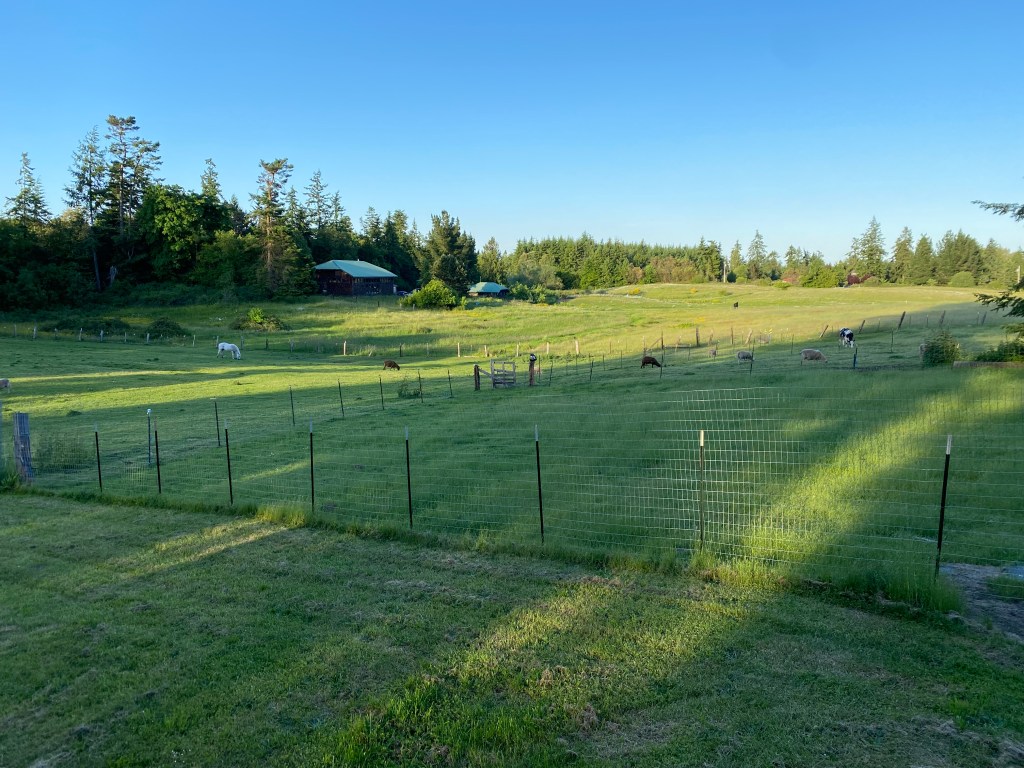
We moved into a farmhouse on Marrowstone Island for ten days as Airbnb Herzog shifts to welcoming my brother, sister in law, and delicious niece and nephew. It’s been well over a year and a half. My nephew just turned one and we haven’t met him in person, which is a stark contrast to the physical presence I’ve felt at milestone moments for my niece, especially the gift of meeting her hours after her birth. And yet, the ties of love and wonder are deep across the miles. I just can’t wait to take in the details of these people I love in a way that Zoom and FaceTime can’t quite capture. My heart is alive with the feeling of anticipation as we await their arrival.
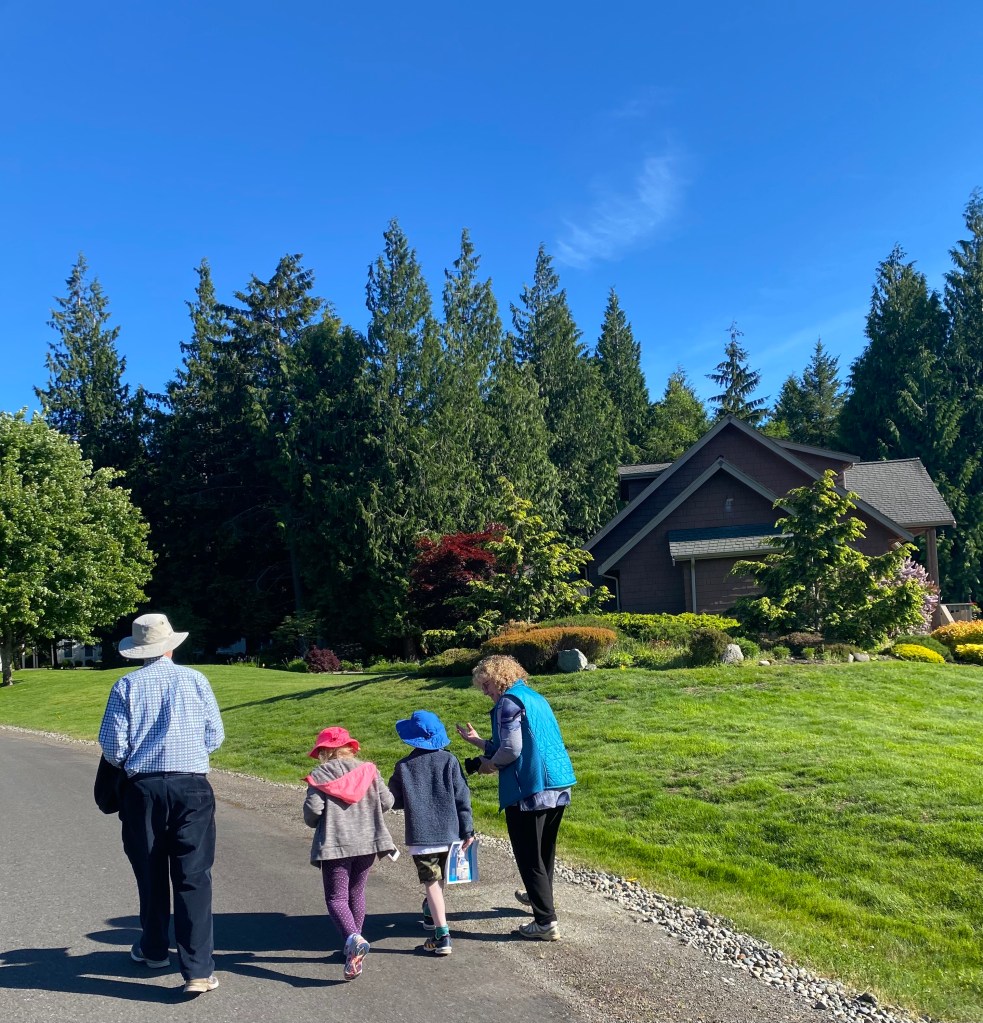
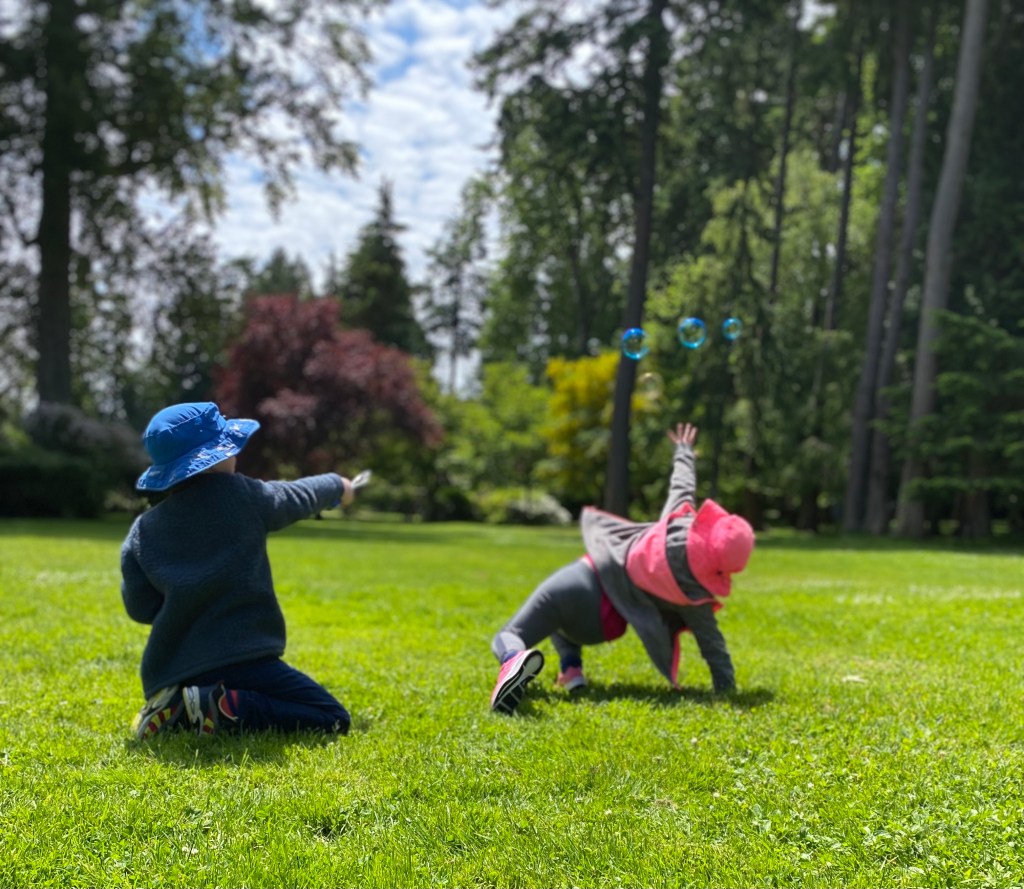
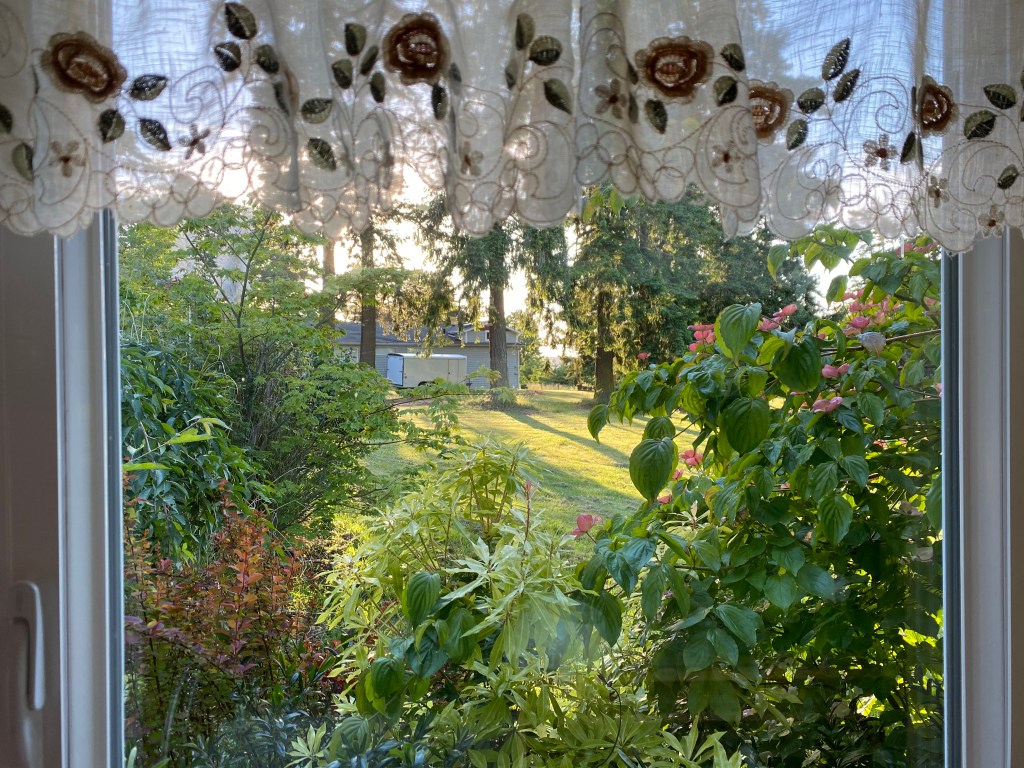
And as we wait, the four of us are settling into the sounds and play of light on the farm—the rooster crow, the porch swing creak, the movement of shadows on the pastures. The stately trees and birdsong, the view through the kitchen window, the owner’s warm hospitality, all are beckoning to us—breathe in the present moment, slowly, slowly.
Although it is set in the winter months, this piece by Ted Kosser spoke to the poetry of walking farmland roads:
Just as a dancer, turning and turning,
may fill the dusty light with the soft swirl
of her flying skirts, our weeping willow—
now old and broken, creaking in the breeze—
turns slowly, slowly in the winter sun,
sweeping the rusty roof of the barn
with the pale blue lacework of her shadow.
Bugs in a bowl
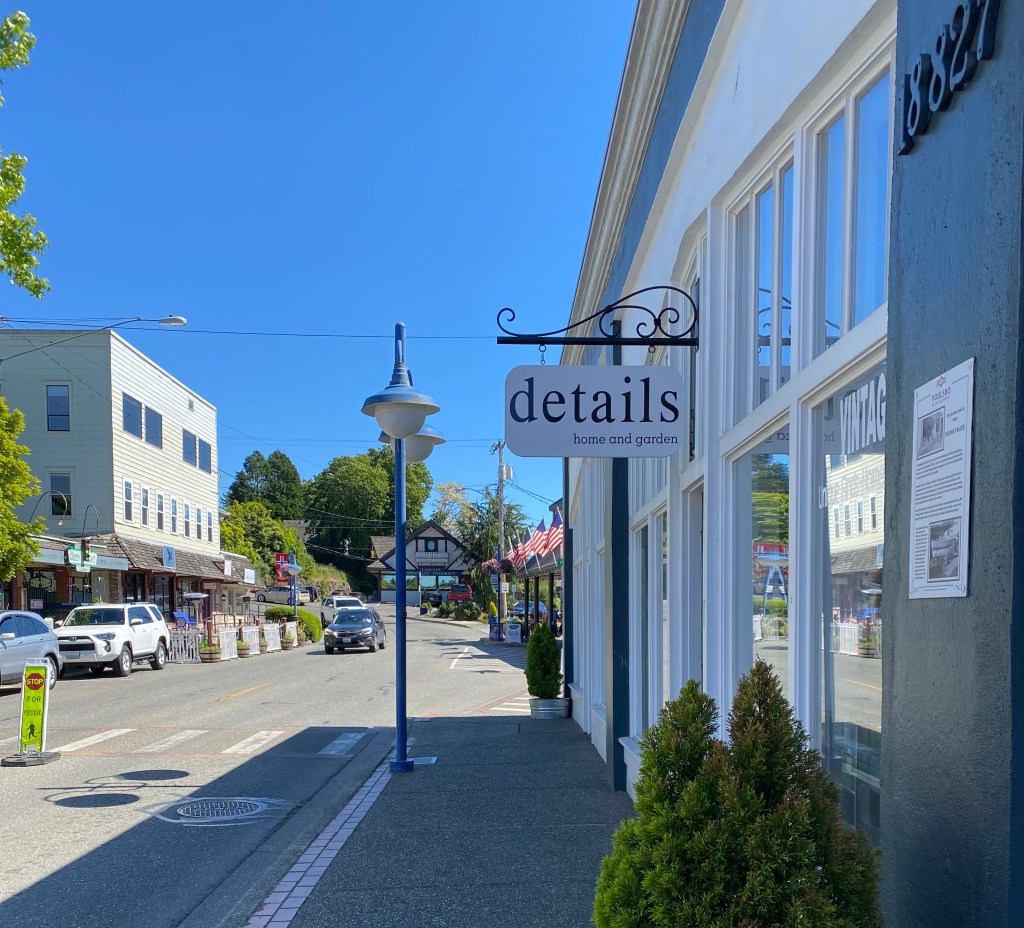
I love independent book stores and found myself perusing one in the historic downtown of Poulsbo, WA. Sometimes it feels like the books choose me, which is what seemed to happen when I picked up Buzz Words—Poems About Insects. We’ve heard several squeals these past weeks from the kids—an ant, a spider, an…ahhh, what’s that!? They are our neighbors, residing in nature with us, I often say, and yet, memories of wasp stings and spider bites do invoke compassion when they dash inside or up the trail.
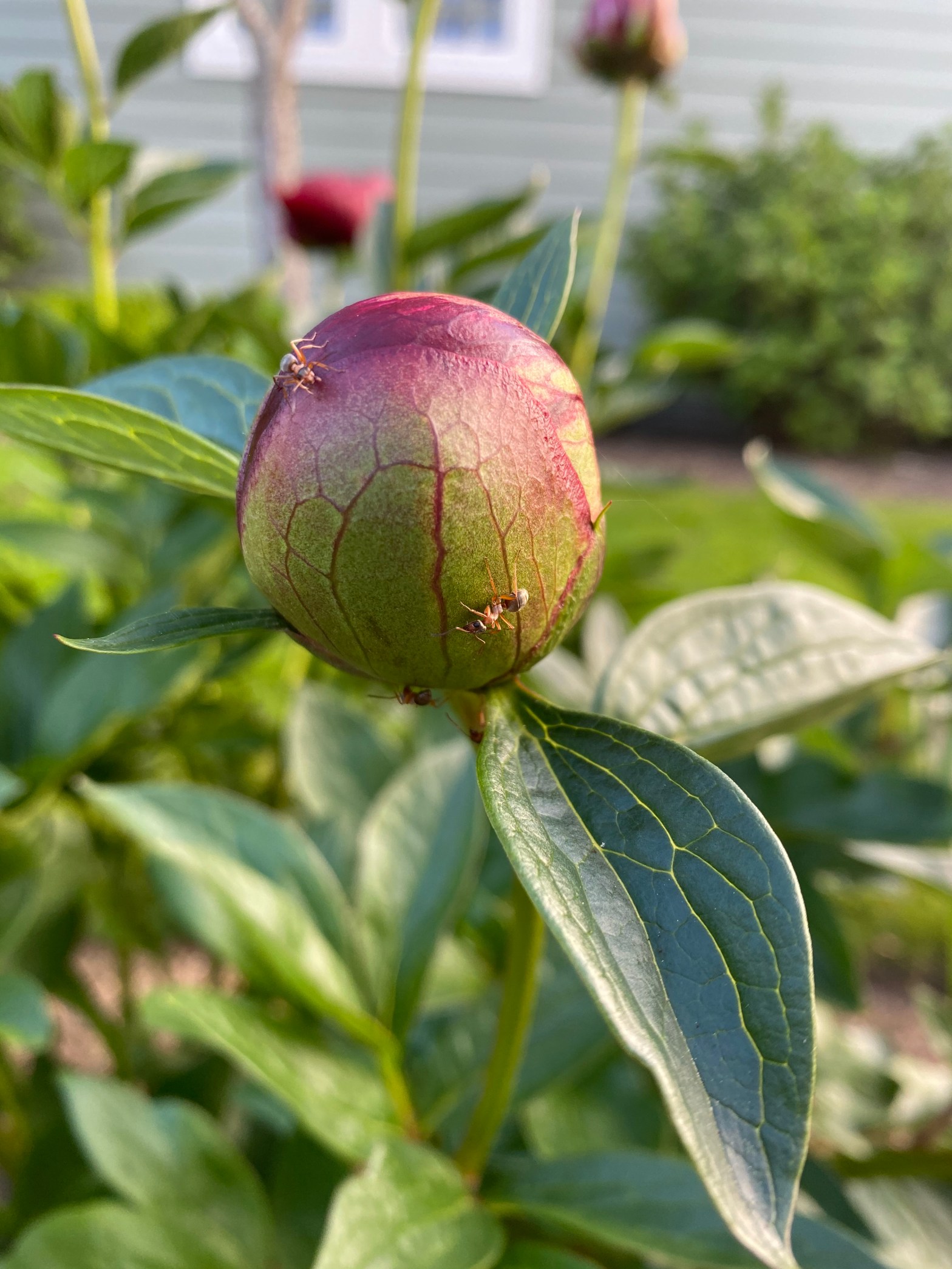
The cover is smooth and elegant, the size, a perfect fit in the small black bag of notecards I had just purchased from a local artist’s collective. I opened to the first poem and laughed in delight, then felt horror at the next, then delight again. Here are two of my favorite so far, and a picture of clever ants sojourning on a flower bud at evening time:
BUGS IN A BOWL
Han Shan, the great and crazy, wonder-filled
Chinese poet of a thousand years ago said:
We’re just like bugs in a bowl. All day
Going around never leaving their bowl.
I say, That’s right! Every day climbing up
The steep sides, sliding back.
Over and over again. Around and round.
Up and back down.
Sit in the bottom of the bowl, head in your hands,
Cry, moan, feel sorry for yourself.
Or. Look around. See your fellow bugs.
Walk around.
Say, Hey, how you doin’?
Say, Nice bowl!
—David Budbill
ON THE GRASSHOPPER AND CRICKET
The poetry of earth is never dead:
When all the birds are faint with the hot sun,
And hide in cooling trees, a voice will run
From hedge to hedge about the new-mown mead;
That is the Grasshopper’s—he takes the lead
In summer luxury, — he has never done
With his delights; for when tired out with fun
He rests at ease beneath some pleasant weed.
The poetry of earth is ceasing never:
On a lone winter evening, when the frost
Has wrought a silence, from the stove there
Shrills
The Cricket’s song, in warmth increasing ever,
And seems to one in drowsiness half lost,
The Grasshopper’s among some grassy hills.
—John Keats
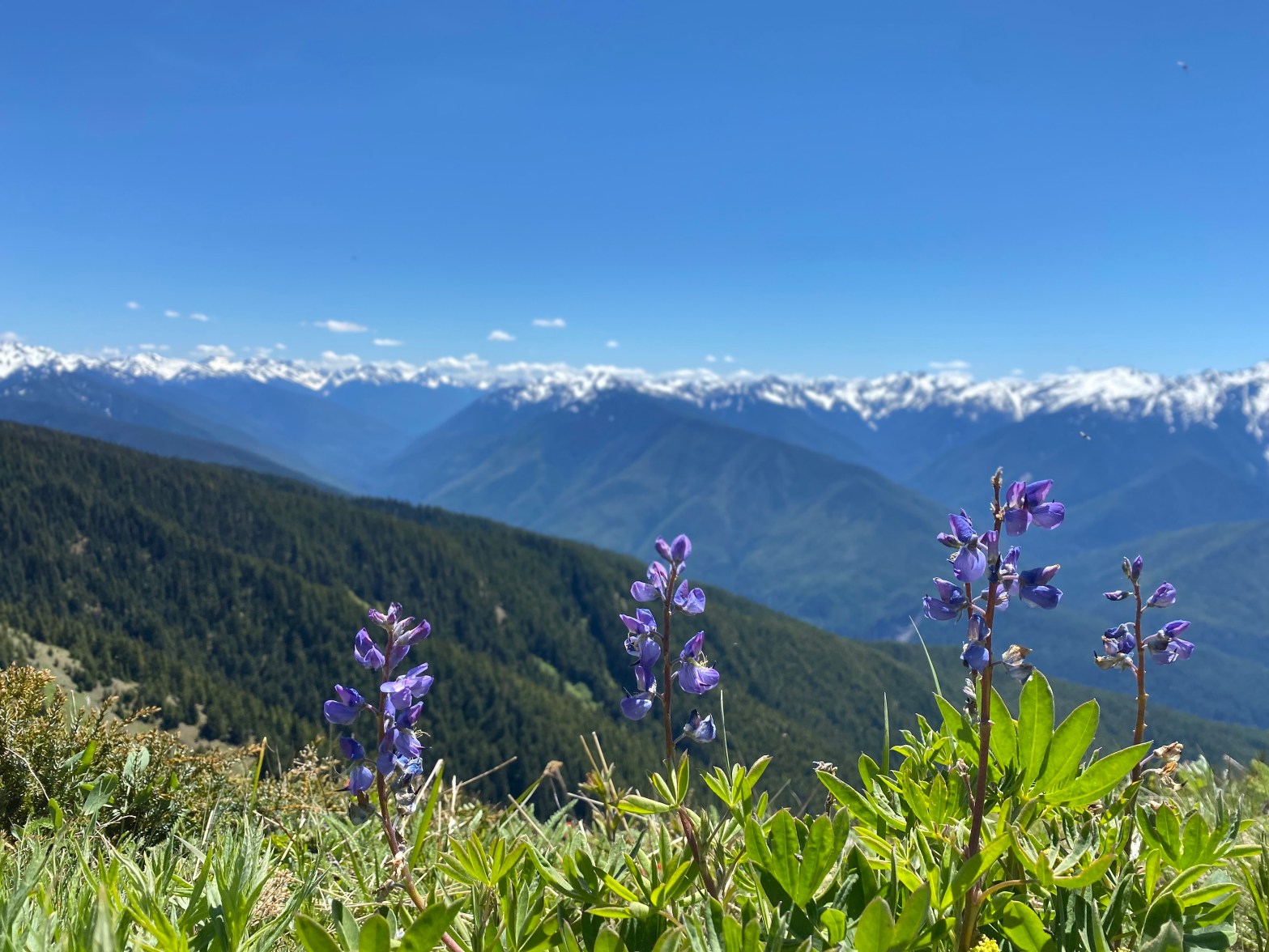
Ma’ariv Aravim
There’s no diva in the choral dusk-
Croaking frogs and evening birdsong
Dogs howling across the bay
Equally join in conversation and praise.
Patiently, Her paint-brushed sky
Wraps tree crowns
Like silken prayer shawls
On majestic bodies of sap and bark.
Together we roll with time and currents of light
Into darkness, darkness into light.
Walking slowly, the gates open,
As I make my way home to Your heart.