Tree pose

Rosh Chodesh tov!

It’s the last day in the month of Shevat and we stand on the brink of double Adar. Adar is the month of Purim, a time of increasing joy (Talmud Taanit 29a). In a leap year, we add an extra month of Adar (our twins were born in Adar II in 2014!).

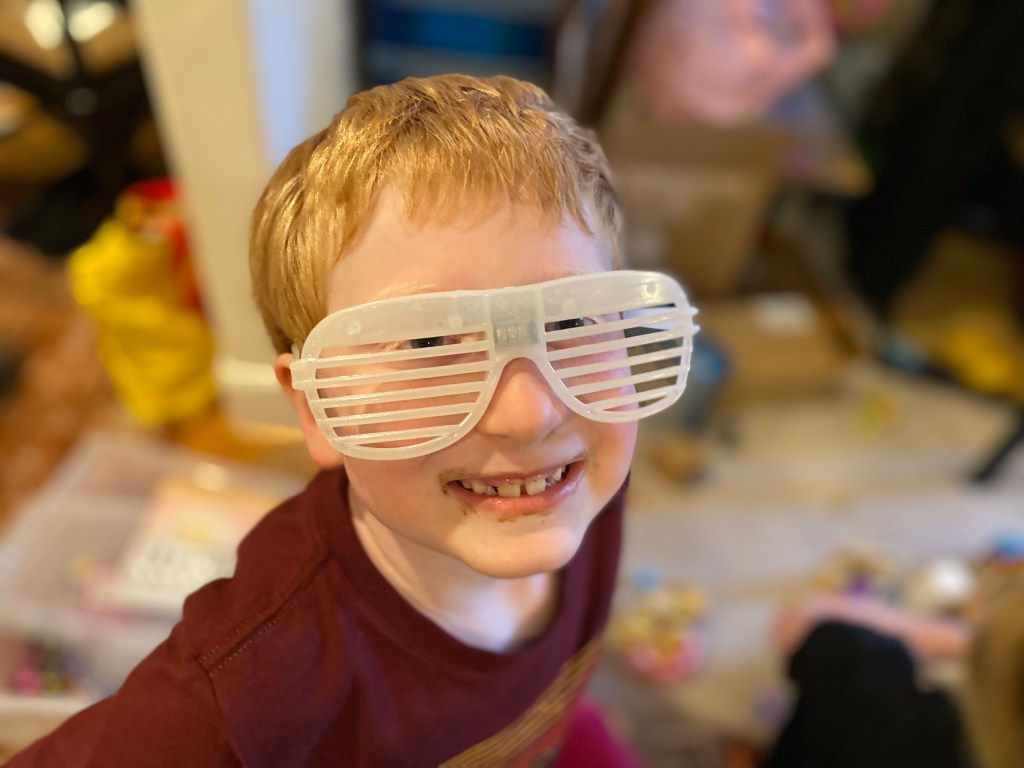
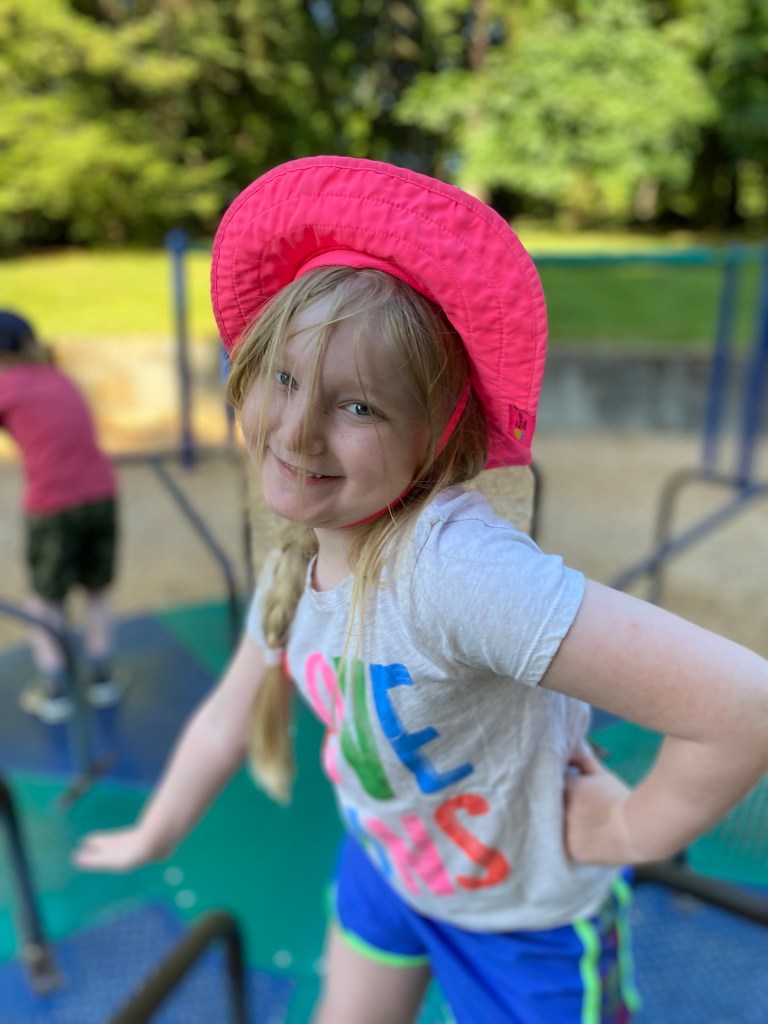
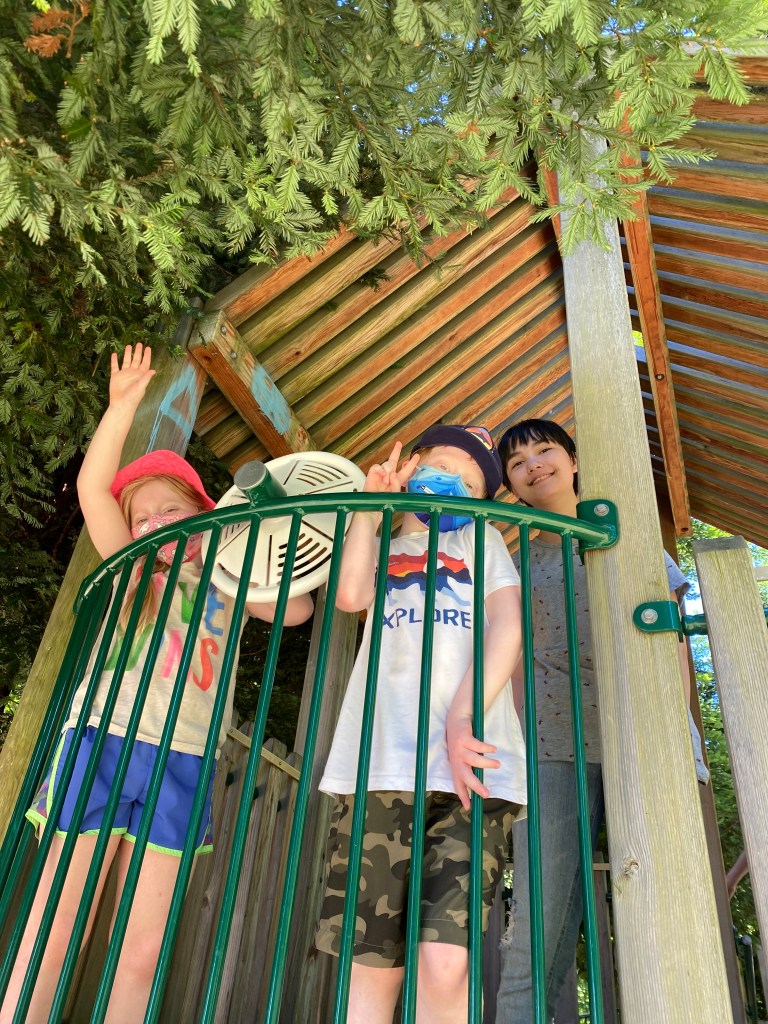
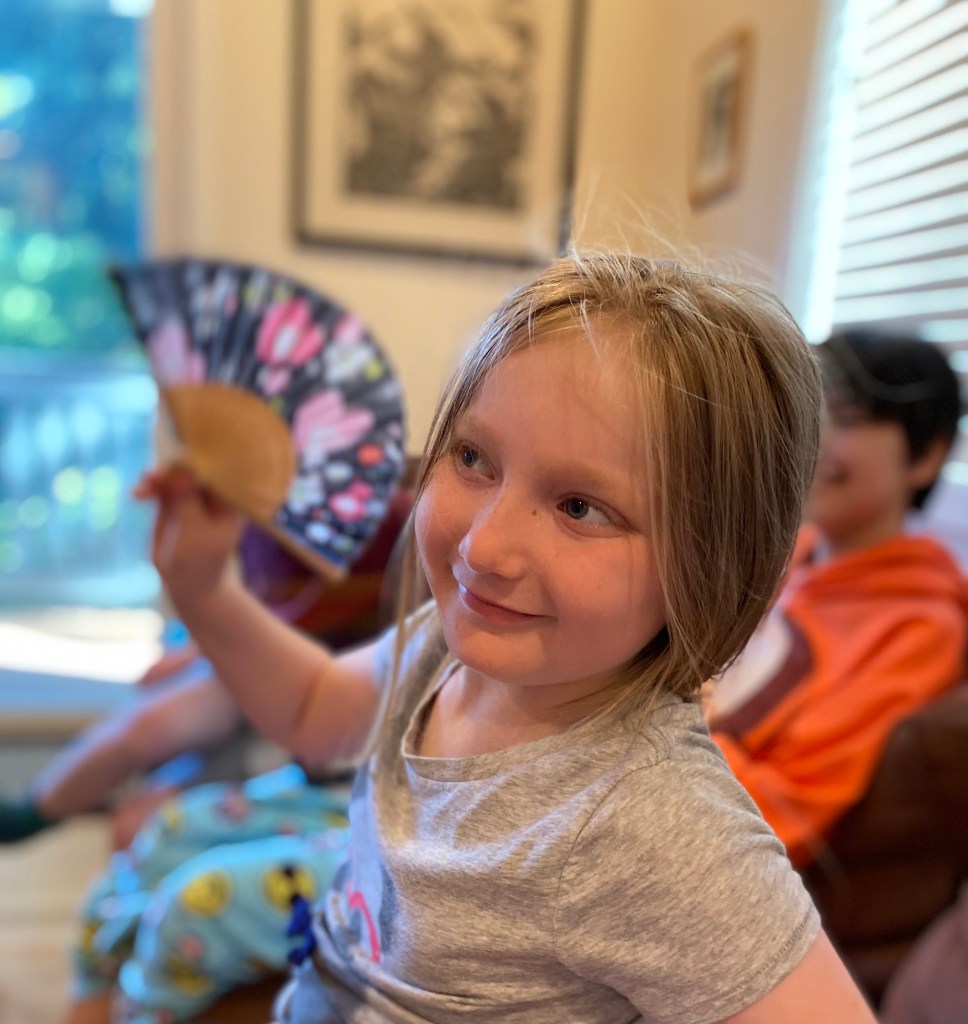
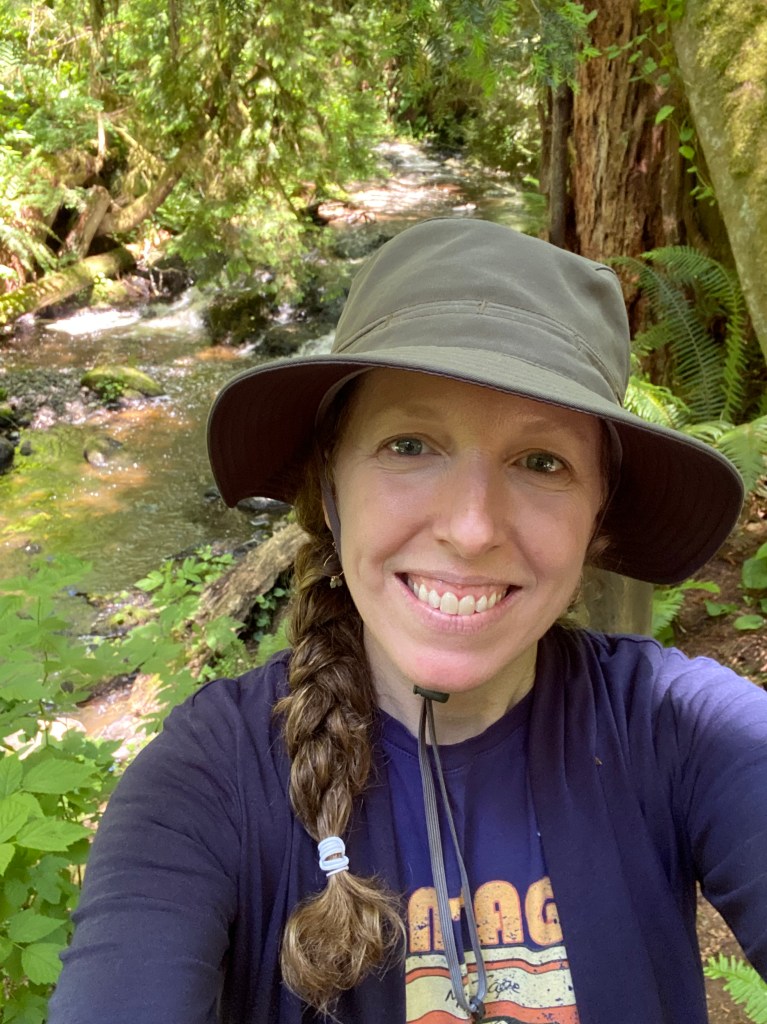
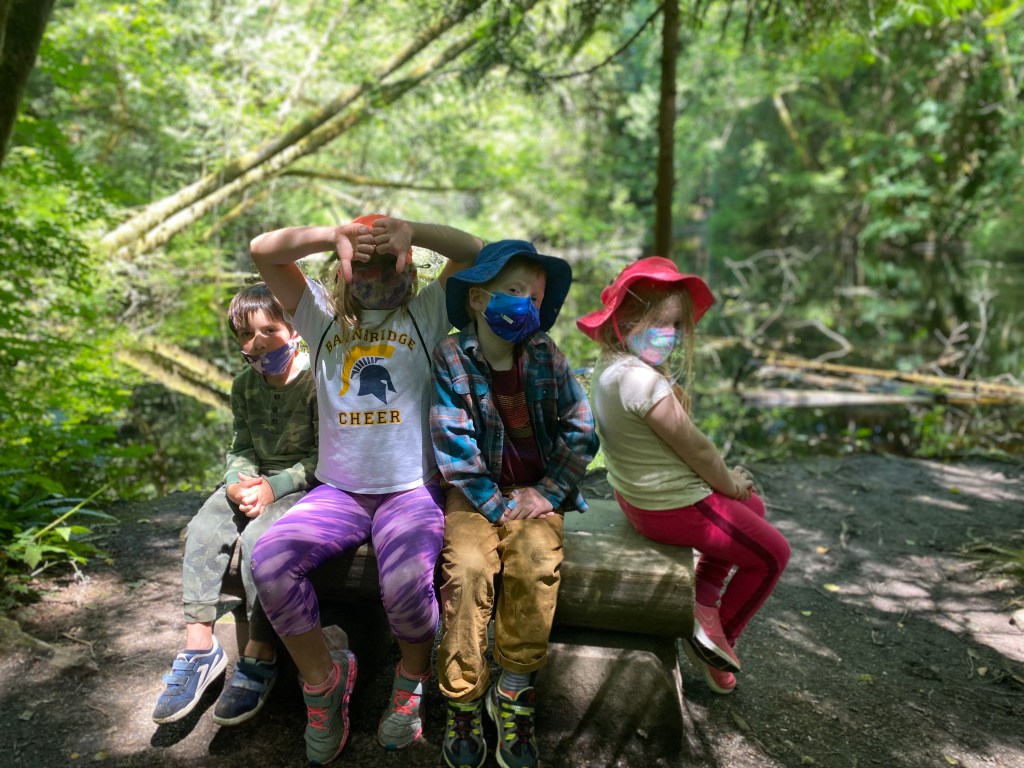
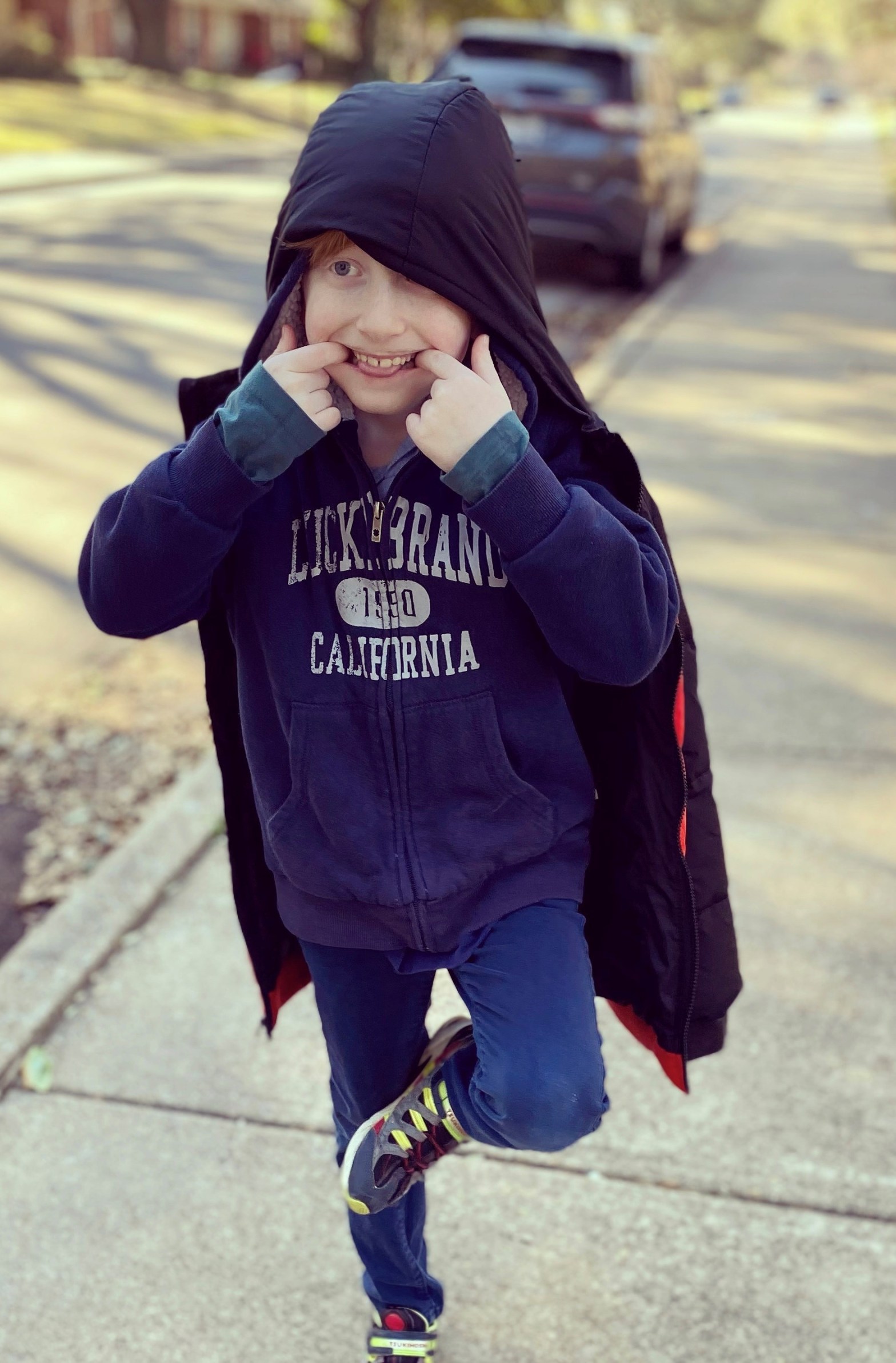
I took this picture on Tu’bShevat, the birthday of the trees, the beginning of spring in Israel. The moment captured speaks to me still–the careful balance of tree pose, the strain and concentration required, combined with the hilarity of wonder and irreverence. We desperately need both, to hold the seemingly contradictory as one!

A teacher of mine quoted Rabbi Nachman of Bratzlav within the context of the recent trauma in Colleyville, when my colleague Rabbi Charlie and his congregants were held hostage. We might translate Rabbi Nachman this way: “The world is a narrow bridge. The most important thing–the essence of life– is not to be afraid.” And here is another way we can pray this timeless wisdom: Life is a narrow bridge–and amidst the fear, let sparks of joy arise in our hearts. This will allow the earth to rise under our feet.

As signs of spring’s joy emerge within the darkness of winter, I pray we find strength and purpose as we hold the balance. And amidst it all, may joy buoy our souls, as we seek healing within ourselves and the world.

Wholeness

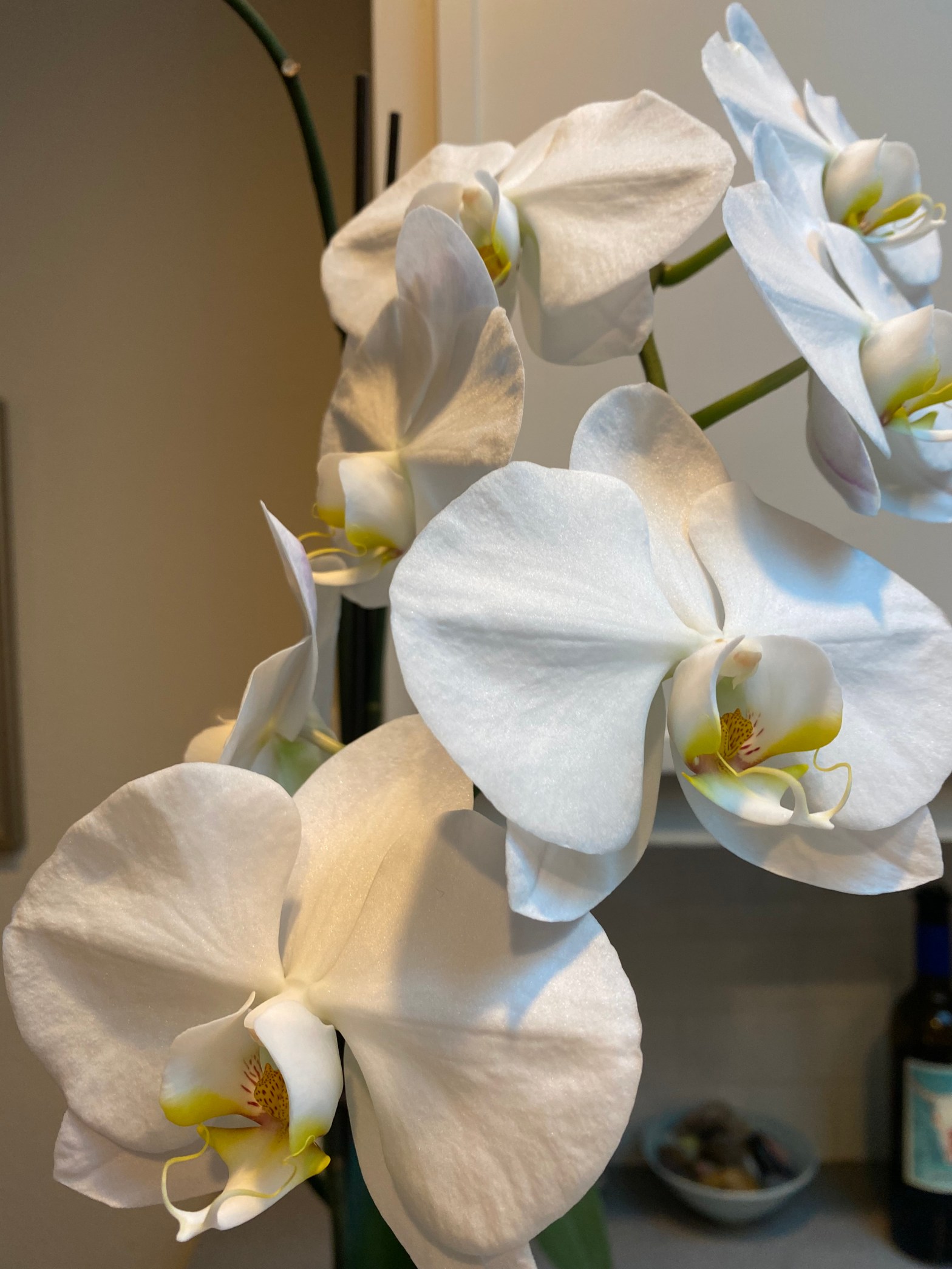
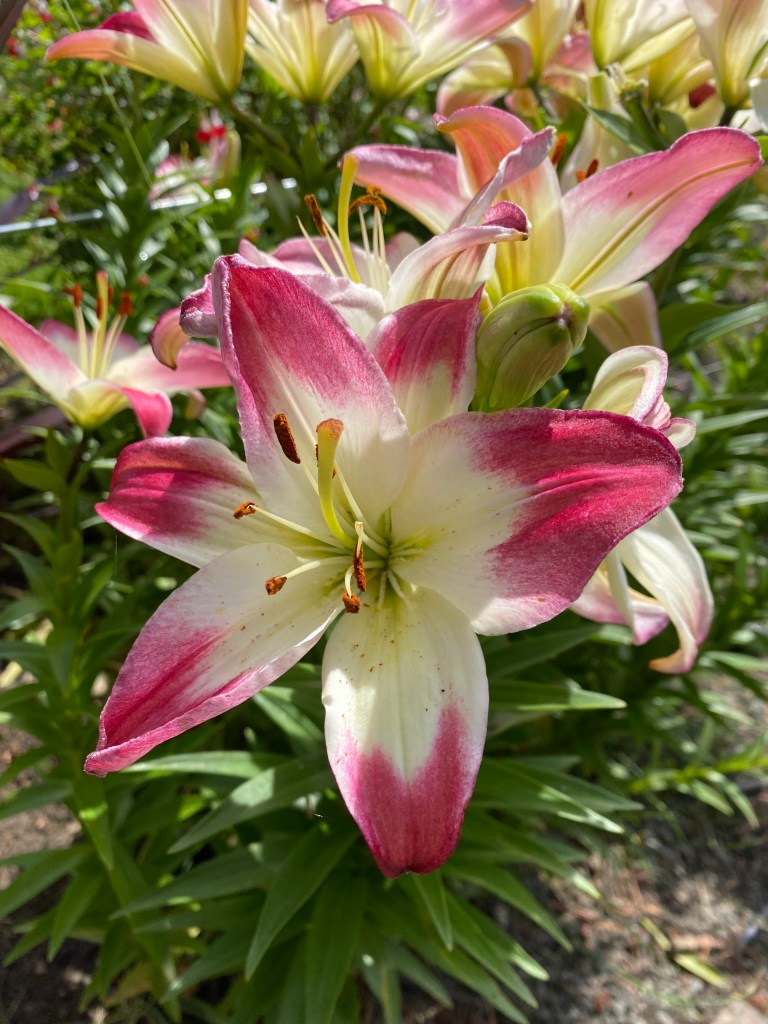
The orchids in our kitchen have blossomed during the month of Elul. As the days approached the New Year, I found myself pausing to look at these beauties, each one examples of simple unfolding elegance. They seem to shimmer with joy! The blossoms observe our daily coffee cups steaming with promise, the ding of the toaster, butter slathered on crisp bread, our hollers to bring dishes to the sink, the bursts of laughter and arguments, practicing High Holy day melodies while cleaning pans and glasses, tears over the twists and turns of pandemic living.

One morning it occurred to me that I should count the number of blossoms on the arching stem. Seven. Seven represents wholeness in Judaism. Shabbat, the seventh day. The seventh sabbatical year. Seven circles to begin a wedding. And so on. What a powerful reminder for 5782, I thought. Wholeness amidst all the heartache. Wholeness amidst shattering realities—freedoms lost, a society torn. The orchids stand, as nature does, for all that is woven together, systems bound by connection and growth.

May nature’s timeless Divine message remind us of all that is possible—healing, beauty, wholeness—with each day we are blessed to live on this earth.

Words

The rain this morning pours from the gutters and everywhere else it is lost in the trees. You need your glasses to single out what you know is there because doubt is inexorable; you put on your glasses. The trees, their bark, their leaves, even the dead ones, are more vibrant wet. Yes, and it’s raining. Each moment is like this—before it can be known, categorized as similar to another thing and dismissed, it has to be experienced, it has to be seen. What did he just say? Did she really just say that? Did I hear what I think I heard? Did that just come out of my mouth, his mouth, your mouth? The moment stinks. Still you want to stop looking at the trees. You want to walk out and stand among them. And as light as the rain seems, it still rains down on you.—Claudia Rankine, Citizen-An American Lyric

*the following is an excerpt from my sermon on Parashat Devarim:

When I provide guidance to an engaged couple, I often say that their wedding ceremony is celebrated in a day, a very special day for sure. However, what they are really building is a marriage, God willing, for years to come. So, I say, let’s talk about the journey of your souls. I know you’re talking a lot about things, logistics—color scheme, table settings, and flower arrangements. Let’s talk about the words of your ketubah, your marriage document, a spiritual contract.

It is very tempting to focus solely on the material world—sometimes it is necessary, sometimes fun, sometimes stressful, and sometimes a distraction. “Things” are part of what help define us. Things trigger memories, are offerings of gratitude, and can make our lives more convenient.

This Shabbat we begin the Book of Deutermony, or in Hebrew, DevarimDevarim can be translated as “things” but most often, as we find in the opening of Deuteronomy, as “words”—Eleh Hadevarim asher diber Moshe el kol Yisrael b’ever haYarden—These are the words that Moses addressed to all Israel on the other side of the Jordan. These are the words that Moses said as he recalled the most essential stories and values and lessons learned that will carry the House of Israel into the future. 

Words matter.

We all know the childhood saying, “Sticks and stones may break my bones, but words will never hurt me.” At first it was a helpful adage in that we can choose how to respond to words that try to cut us down. We DO have power and agency to define our thoughts and feelings in the face of another person’s hurtful actions. 

On one level, the sticks and stones saying may still be useful. However, I am not convinced, because over time, we know micro-aggressions and bullying can have a serious impact on our mental wellbeing. And on a communal level, the saying doesn’t hold up either. Words really can corrode and undercut our core institutions.  Words can build up and words can destroy. Just think about the rabbinic story which explains the destruction of the Jerusalem Temple, a dark moment in our history we mark [this] evening for Tisha B’Av, the 9th of Av.

It is written in the Talmud (BT Gittin 55b) that a Jerusalemite hosted a large feast. A messenger was supposed to invite the host’s friend named Kamtza. Instead, the messenger mistakenly invited Bar Kamtza, the host’s enemy. When Bar Kamtza showed up at the feast, the host kicked him out and embarrassed him. In retaliation, Bar Kamtza devised a scheme that made the king believe that the Jews were rebelling against the empire. The king decided then and there that the Temple must be destroyed. The hatred between Kamtza and Bar Kamtza and the words of deception that followed caused great trauma and ruin. 

As our Tisha B’Av story reminds us, words can be used to distort reality and can be used to tear down the very bedrock of our society, from the past, well into the present. One current challenge to our democratic bedrock centers around the claims of voting fraud, which election officials have shown are baseless. Voting is a right and a sacred act, and all of us want to make sure elections are run with integrity. However, the bills proposed in Texas, (in the spring legislative session and now the current special session) and in many states across our country, are designed to limit access for eligible voters and increase organized intimidation of voters and election officials.  The Reform Movement has long been on the front lines fighting to foster and preserve rights for all though advocacy, education, and community organizing. At Temple, we’ve learned and evolved in our local and statewide work, through the incredible leadership of congregants and staff, in partnership with organizations like Texas Impact and the League of Women Voters. Many have worked tirelessly and the efforts continue (join our Temple Responds Facebook page for updates on action steps!).

Words can be used to distort reality and to tear down the bedrock of our society. But words are also powerful instruments for change. Words convey values and essential truths. Words are the sacred tools that lay the foundation for our private homes and our public houses of democracy—and they can be part of the healing that builds them back up.

The power of words to be a healing force that transforms our souls and rebuilds our world is deeply embedded in our tradition. As noted in Etz Hayim (p.981), Moses’ speech that begins the book of Devarim, of Deuteronomy, harkens back to a time early in Moses’ life when he was first called by God—Moses said—I am not an “ish devarim” (Ex 4:10)—I am not a man of words. Forty years later, after a desert journey which brought him to his knees and to the heights of revelation, Moses now begins, Eleh hadevarim…These are the words.

These are the words of commitment to a future that is just. These are the words of commitment to a future that is holy. These are the worlds of commitment to a future that is in our hands to build.

Torah unfolding

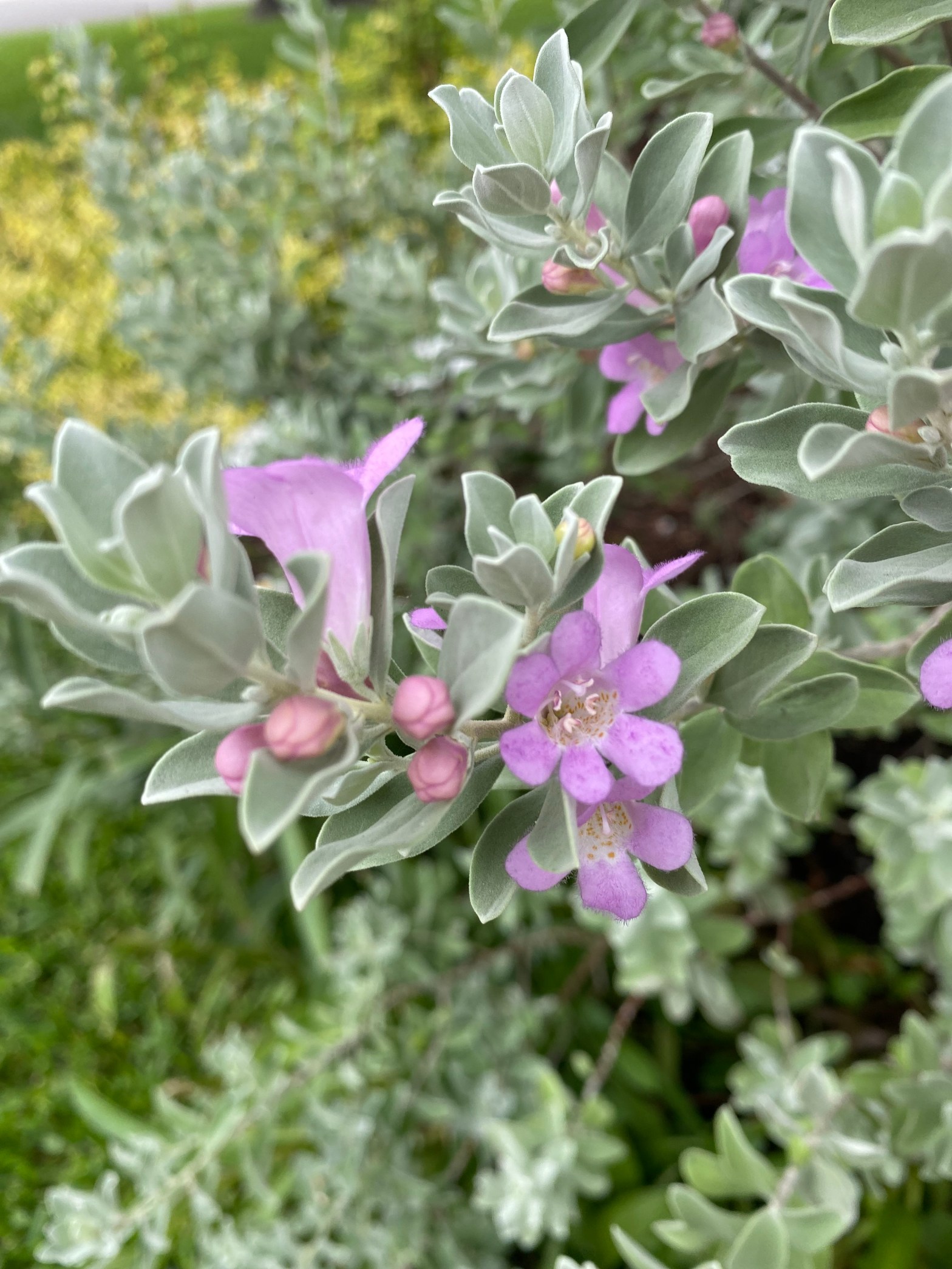
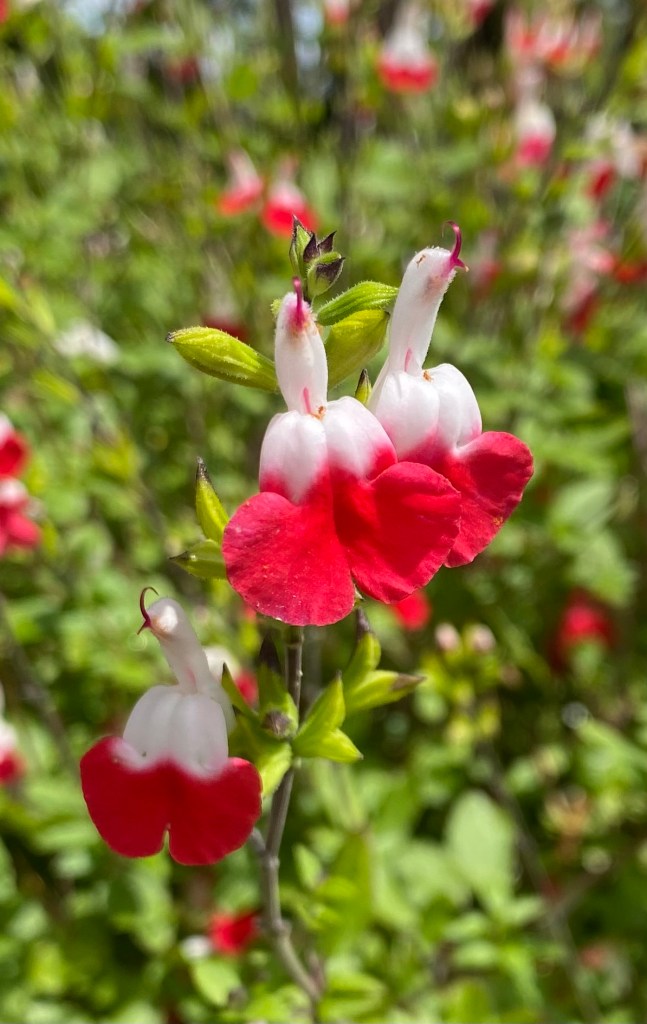
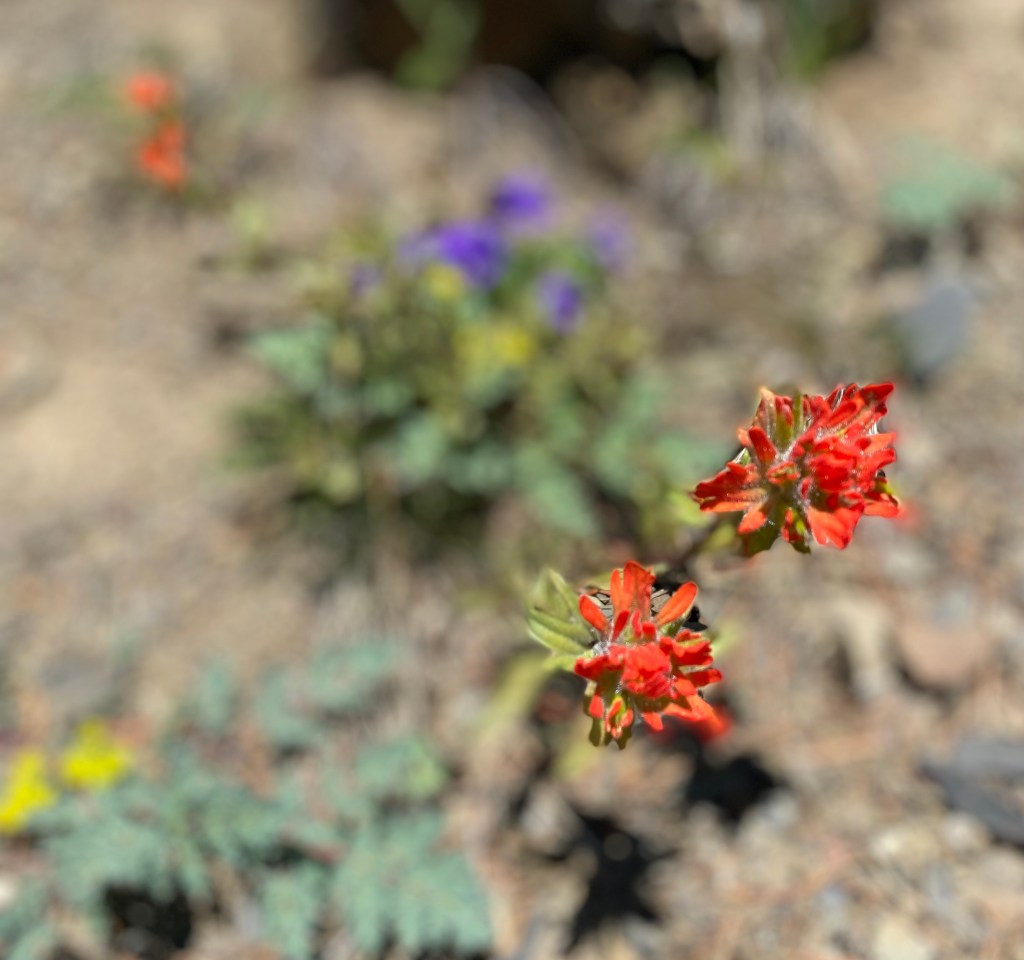
*picture of Texas sage in bloom, a hearty plant that made it through the Feb freeze; the following reflections are selections from last night’s sermon

The ebb and flow of Jewish time speaks in the language of the spirit. What I mean is that it is very possible to feel that within the changing seasons and months there is a deeper wisdom coaxing us along–“remember this”, or “discover that”, or yes, you are experiencing this because, well you are Jewish, and you are human.

Today the Hebrew month of Tammuz ends, and the month of Av begins this evening. Av is the darkest month, unfolding during days that are brilliant with blinding summer light. The month of Av begins this Shabbat, but we have been moving towards Av before it even officially commenced, starting on the 17th day of the month of Tammuz, which fell this year on June 26th

The 17th of Tammuz is recorded in our tradition as the day Moses broke the tablets when he descended from Mt.Sinai and saw the people Israel dancing around a golden calf. And it is the day the Romans breached the walls of Jerusalem. The 17th of Tammuz is the start of a three-week period leading up to Tisha B’Av, the ninth of Av, when we mark the destructions of the Jerusalem Temples and other traumas befallen our people. 

We are now in the middle of the three weeks, which in Hebrew is called bein hametzarim, translated as “within the straits”, or “within the borders.” These borders defined by the lead up to the 9th of Av, suggest some kind of limits and, perhaps, order–amidst loss, amidst life’s uncertainty, amidst shattering pain, amidst trauma, then and now.  

Some form and order are essential, especially when our world spins off kilter, when our hearts break, when chaos seems to reign. Within our bein hametzarim, form and order can emerge, when we know that a meal will be delivered to our doorstep. When we say the words of the Kaddish to our best ability with a certain frequency and holding the sturdy prayerbook in our hands as they shake. Within our bein hametzarim, form and order can emerge, when we place a vase of peonies by the window every Friday because peonies were her favorite. When we walk the neighborhood loop each day, even if the thunderclouds are gathering in the sky, because hearing the birdsong is a reminder that we are alive. Bein hametzarim. Narrow straits, limits, and a longing for order. 

And yet, the desert journey as recounted in this week’s Torah portion, Masei, speaks to a kind of spontaneous unfolding.

We need that too. 

Not in the acute phases of grief or disruption, but along the way, our tradition reminds us that spontaneous unfolding, allowing new, surprising, creative potential to emerge, is not only essential for the soul’s journey, it’s part of our healing.

Rabbi Mordechai HaCohen, from his volume Al HaTorah, wrote: “once the Torah was given it became timeless and cut loose from any one place: every moment is its moment and every place its place.”* In other words, Torah cannot not be bound or set within narrow limits—it was there, unfolding, with each stop of the desert trek, and the Israelites carried it with them as a kind of compass, from the pain of Egypt to the promise of freedom. So too for each of us –we live in bein hametzarim, narrow straits with limits, AND vast, open wonder, unfolding with each stage of our evolving life journey. We need order and boundaries—and we need to disrupt them at the same time.

One take-away from my recent period of sabbatical is that there is a benefit to letting journeys unfold with patience—there was some general order and form to my sabbatical days, however the goal was to be flexible and unrestricted enough to respond in the moment.

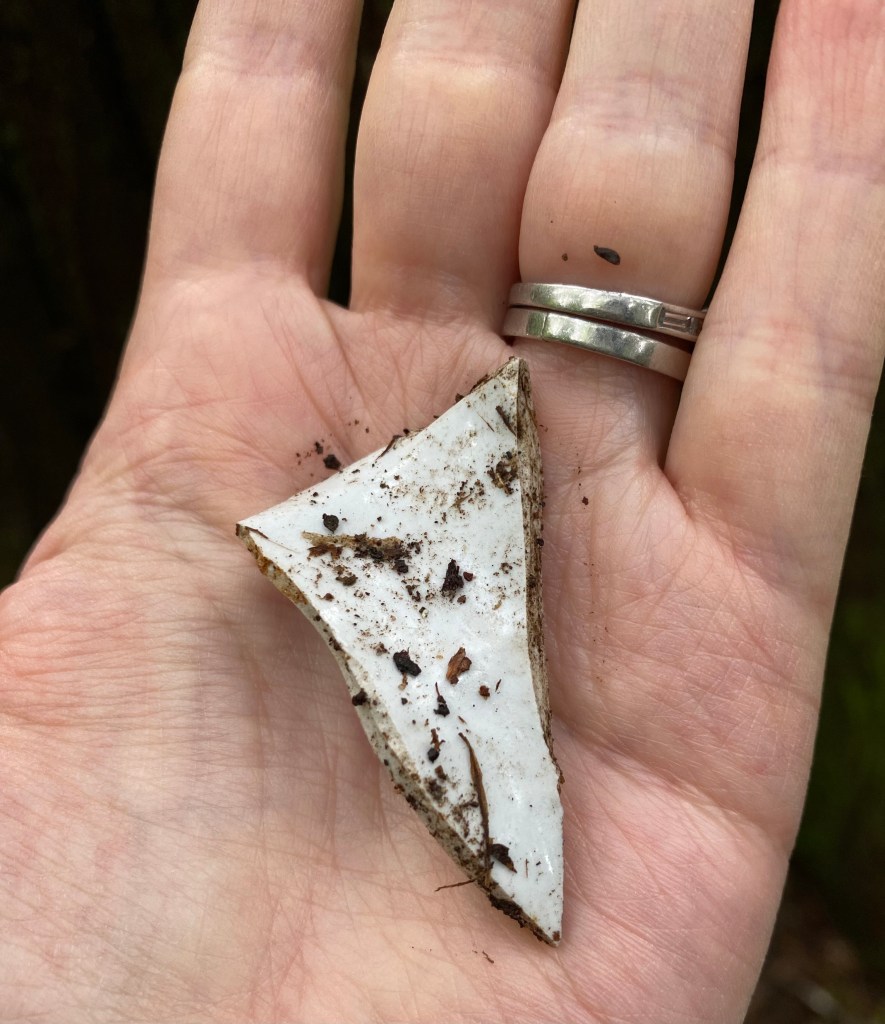
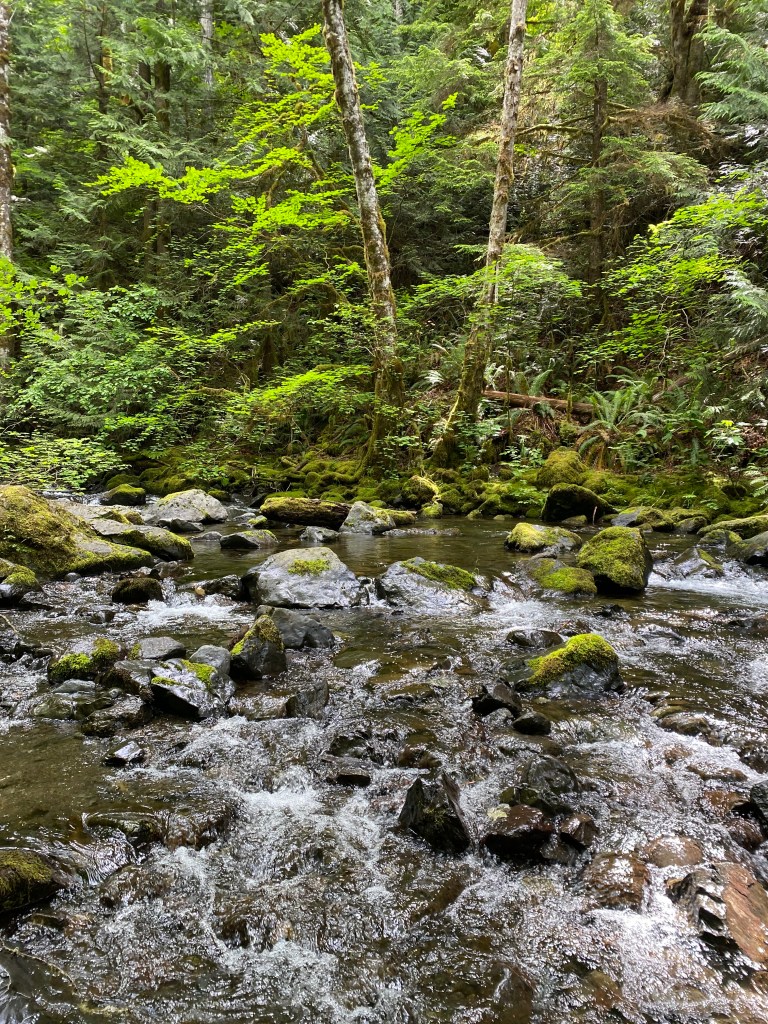
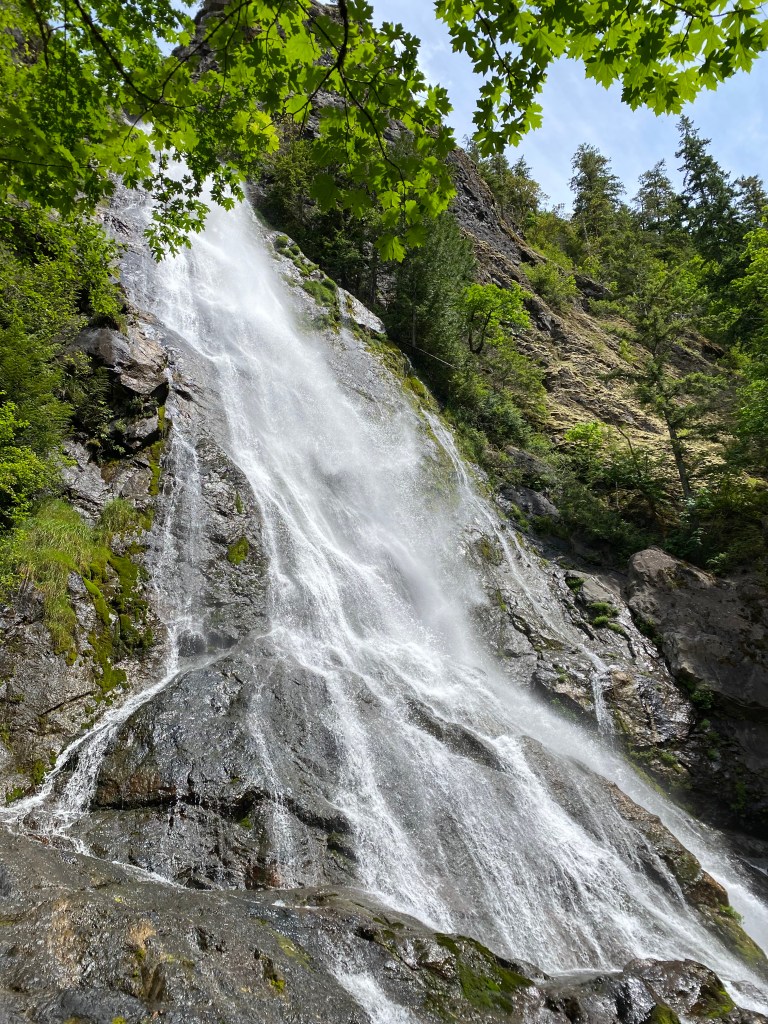
I could share a travel itinerary of sabbatical—18 days in Port Ludlow, 10 days on a farm on Marrowstone Island, 5 days in Seattle—but that hardly captures the feeling of Torah unfolding: like loosing a sense of time and place in the nearby old growth forest. Like my parting ritual of picking up shards of glass and ceramic at the base of the Mother tree. It was a practice that began to create form and order to my days, and yet it emerged quite spontaneously. 

In retrospect, the gathering of shards with the start of each new day speaks of regrowth, all of it rooted in a magnificent intelligence of the One that invites us to remember to choose life with each breath. Bein hametzarim, amidst our narrow straights, always the possibility of growth, guided by the limitless Tree of Life, our Torah.

Parashat Masei is the concluding Torah portion in the Book of Numbers. We conclude one book and make our way to the next, step by step, stage by stage, and we say—Chazak, chazak v’nitchazekBe strong, be strong and may we be strengthened. As the Israelites moved through the 42 different stops along their desert itinerary, they evolved as a community and discovered the laws and values that would define the people of Israel into the future. And we too are strengthened by each other—by our legacy of courage and hope, by the Divine presence that guides our steps. Chazak, chazak v’nitchazekBe strong, be strong and may we be strengthened.

*gratitude to Rabbi Kerry Olitzsky’s commentary of Parashat Masei (myjewishlearning.com)
The eyes of my eyes are opened

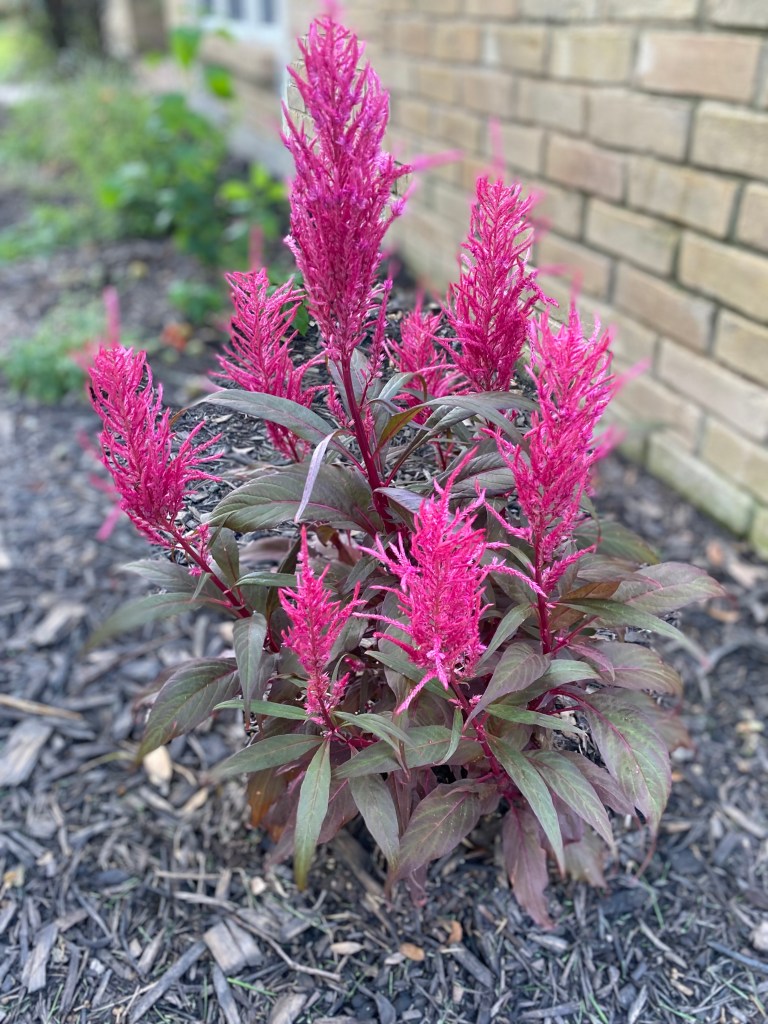
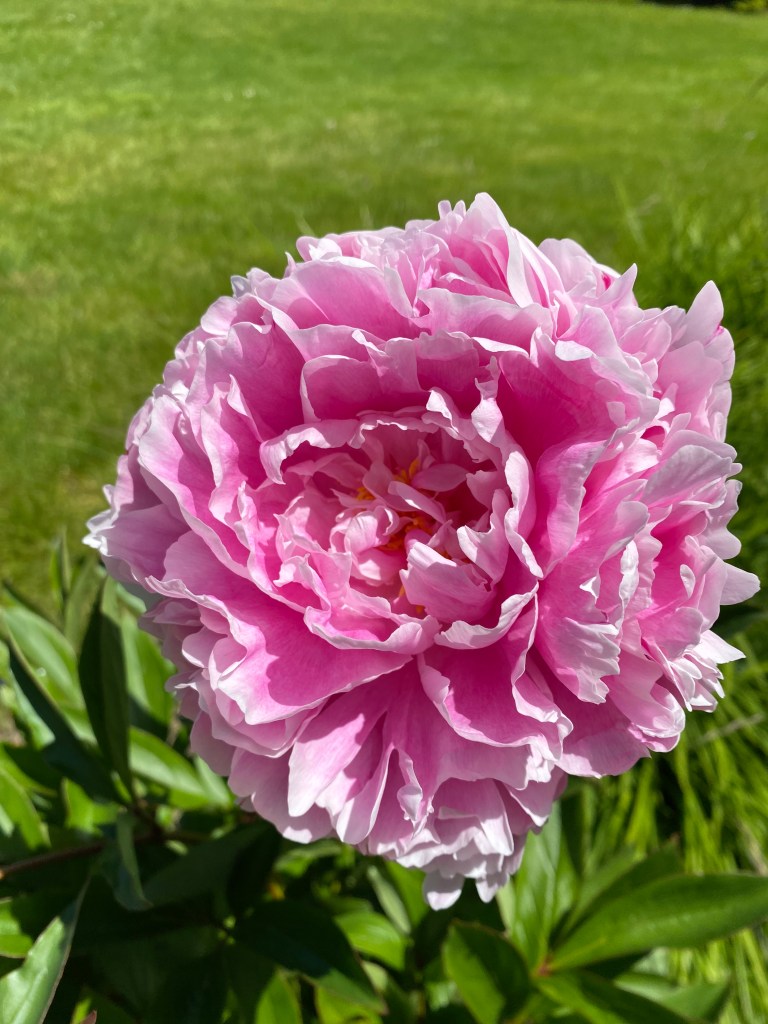
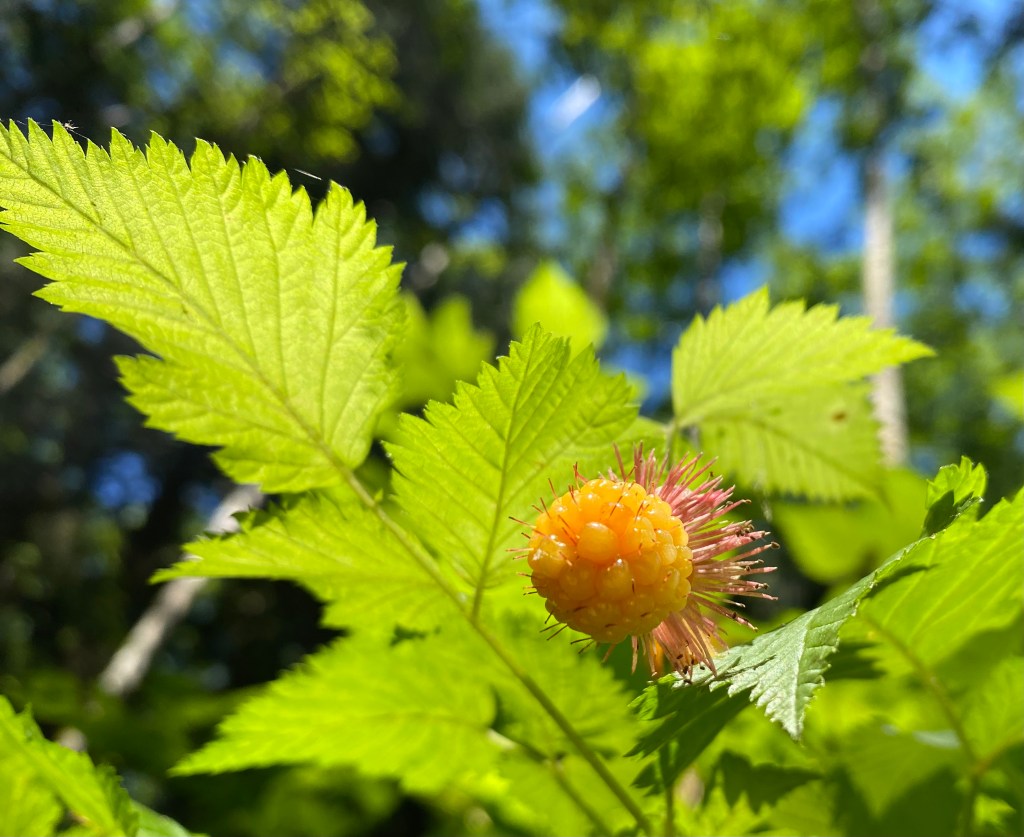
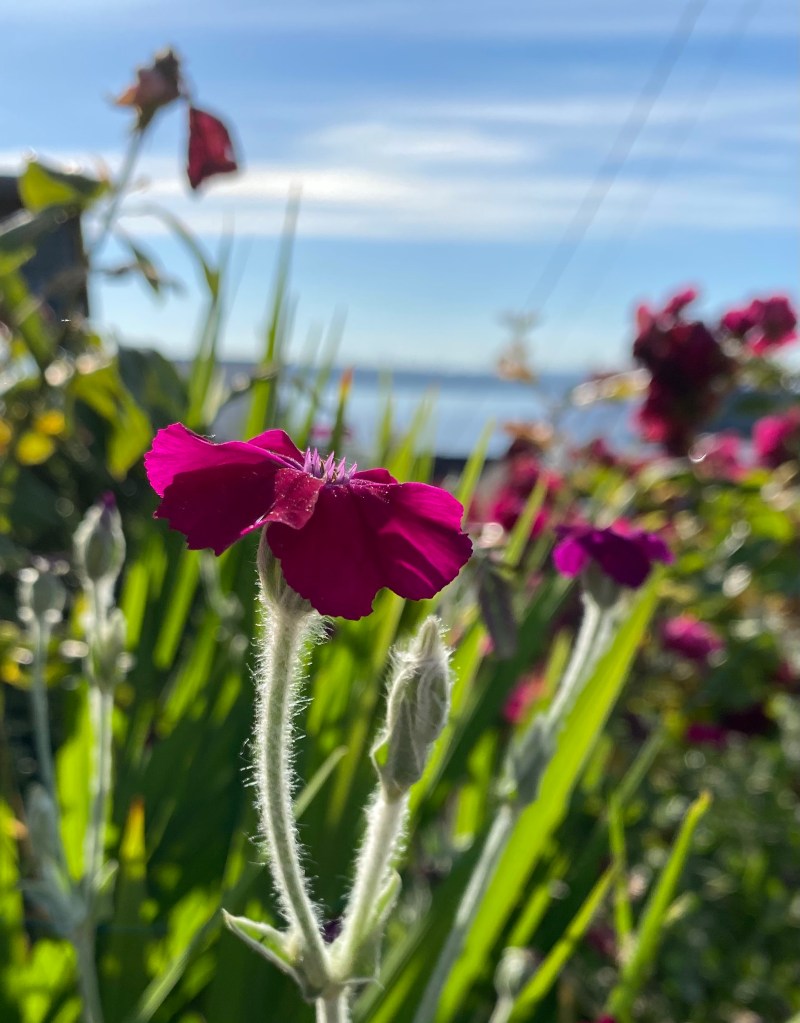
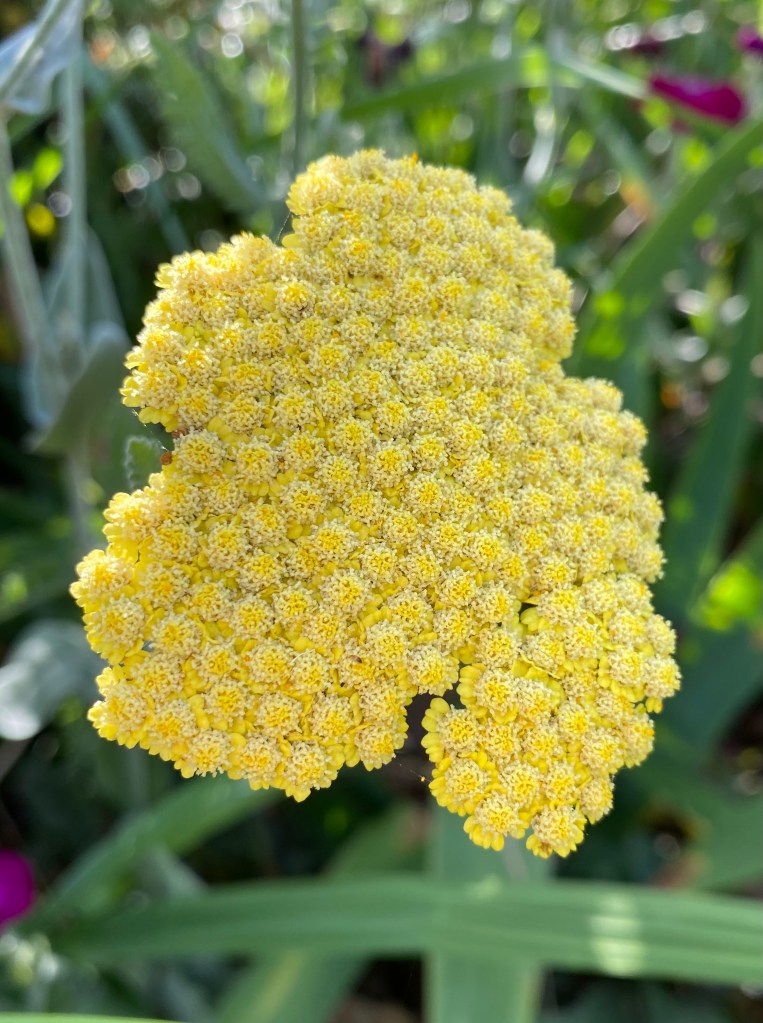
*pictures above from my neighborhood; and the following words were shared in Shabbat services this morning (slightly adapted)
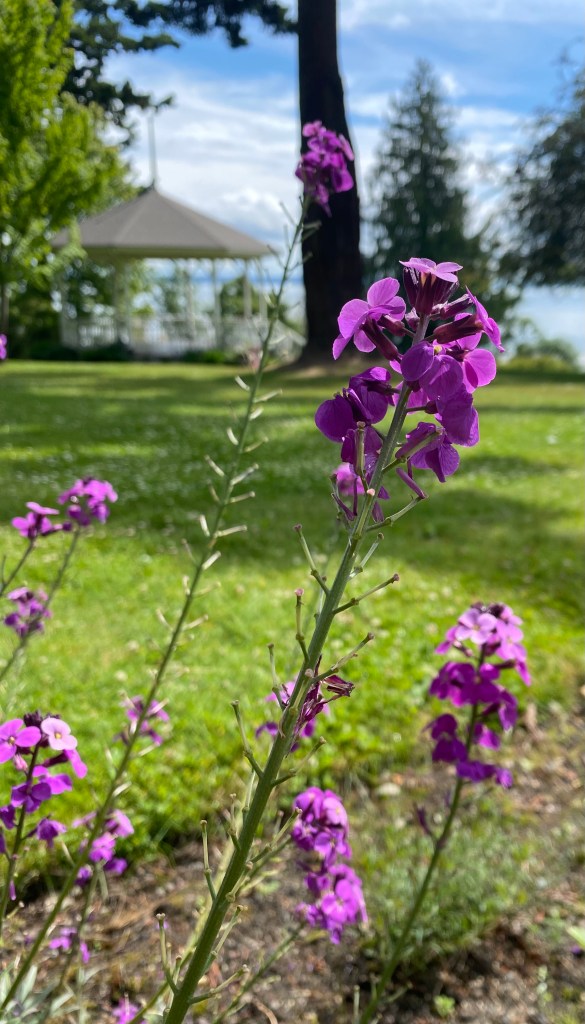
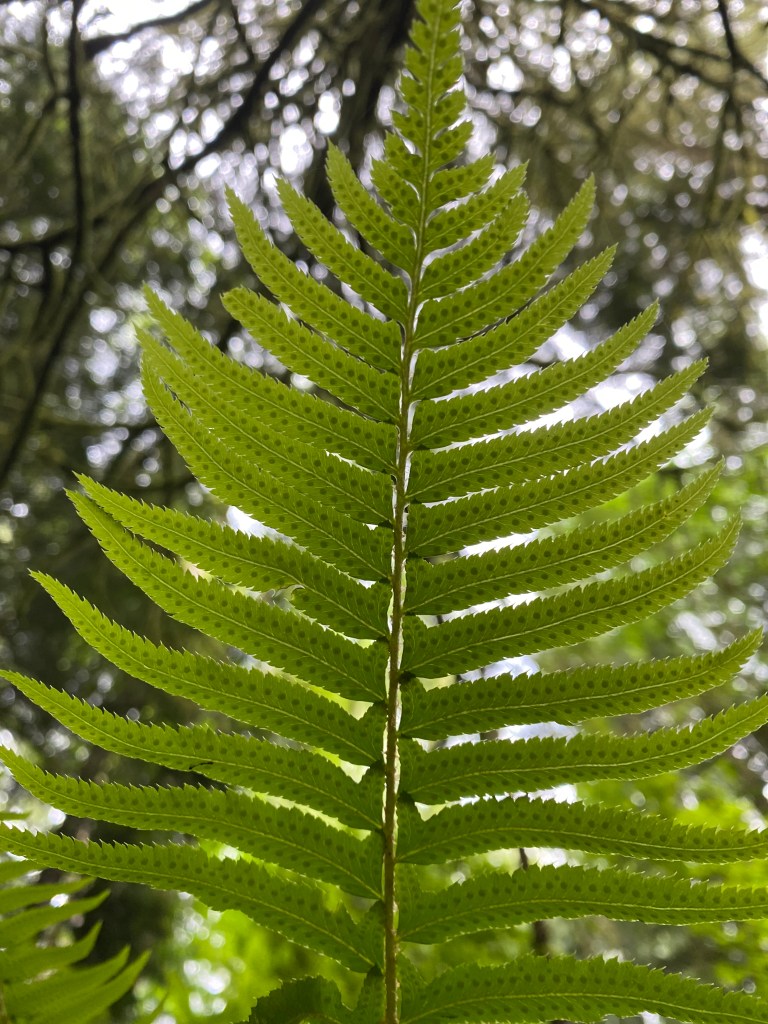
I am holding close a lesson from the gift of sabbatical time – and that is the value of pausing enough to notice details. From the details of a leaf or tree bark or spiderweb, there might just emerge some big idea or wisdom. We often forget, imagining ourselves as possessing a higher intelligence than all creatures — but time immersed in nature certainly balances that perception, reminding us of a vast and incredible intelligence animating the natural world.

I realize I’ve often missed a sacred detail in this week’s Torah portion, Parashat Pinchas – perhaps because it was at the very end of the Torah portion or because ancient rituals surrounding animal sacrifices can feel messy and of the distant past. In preparing for this Shabbat, I lingered a bit to absorb the details of the Sukkot offerings—a total of 98 lambs and 70 bulls! (By comparison, during the week of Pesach, the offering of bulls comes to 16 and other holidays less than that). 

As noted in Etz Hayim: Torah and Commentary (eds: Lieber, Harlow) on these verses, the rabbis were aware that the number of lambs and bulls was staggering. There must be a reason. There must be some big idea or wisdom behind these sacrificial details. According to the Talmud, the 70 bull offerings for Sukkot are thanksgiving offerings made on behalf of the 70 nations. In other words, it is our responsibility as Israel to remind the entire world that gratitude to God is a fundamental expression of our humanity, of our covenantal relationship with the Divine.

I find this a powerful suggestion as to one essential role of faithful people in the world. Our role in remembering the cultivation of gratitude is a critical link in our connection to the One, the Creator of All, the Breath of Life. It is one way we might respond to the questions why be Jewish, why gather here, online or in person on Shabbat and affirm our Jewish values? 

Surely there have been other moments of insight in your lives as to the role of Israel among the nations, as to the way faith in general and Judaism in particular, brings light and healing into the deep fissures of our reality. 

What would you offer on this Shabbat as a response to this question—what is one essential role of faithful people in the world, and particular our role as a Jewish community? In other words, why be Jewish, why be part of a faith community?

I am often asked, “If you had to distill Judaism down to one thing, what would it be?” This question harkens to a classic Talmudic story where a non-Jew asks Hillel to teach him the whole Torah while standing on one foot! Hillel famously replied, “Treat your neighbor as you would want to be treated—that is the whole of Torah.” 

So, metaphorically speaking, standing on one foot, I say “At its best, Judaism is a dynamic conversation that inspires me to act in the world—over time, I realized it was something that I wanted to be immersed in, that I wanted to help shape. For me, Judaism is the path to discover my sacred purpose, and our collective sacred purpose as humanity in relationship with the Divine. Unlike a project deadline, or a graduate school class, there is no exact time frame, no checklist per se, no set curriculum–to find our sacred center takes deep reflection and courage and cultivating practices ancient and new. Judaism invites us to continually check-in with our soul, not only about where we have been, but where we are going.”

Poet e.e cummings says it best in his treasured piece, i thank You God for most this amazing day…

i thank You God for most this amazing
day:for the leaping greenly spirits of trees
and a blue true dream of sky;and for everything
which is natural which is infinite which is yes

(i who have died am alive again today,
and this is the sun’s birthday;this is the birth
day of life and of love and wings:and of the gay
great happening illimitably earth)

how should tasting touching hearing seeing
breathing any—lifted from the no
of all nothing—human merely being
doubt unimaginable You?

(now the ears of my ears awake and
now the eyes of my eyes are opened)

Shards

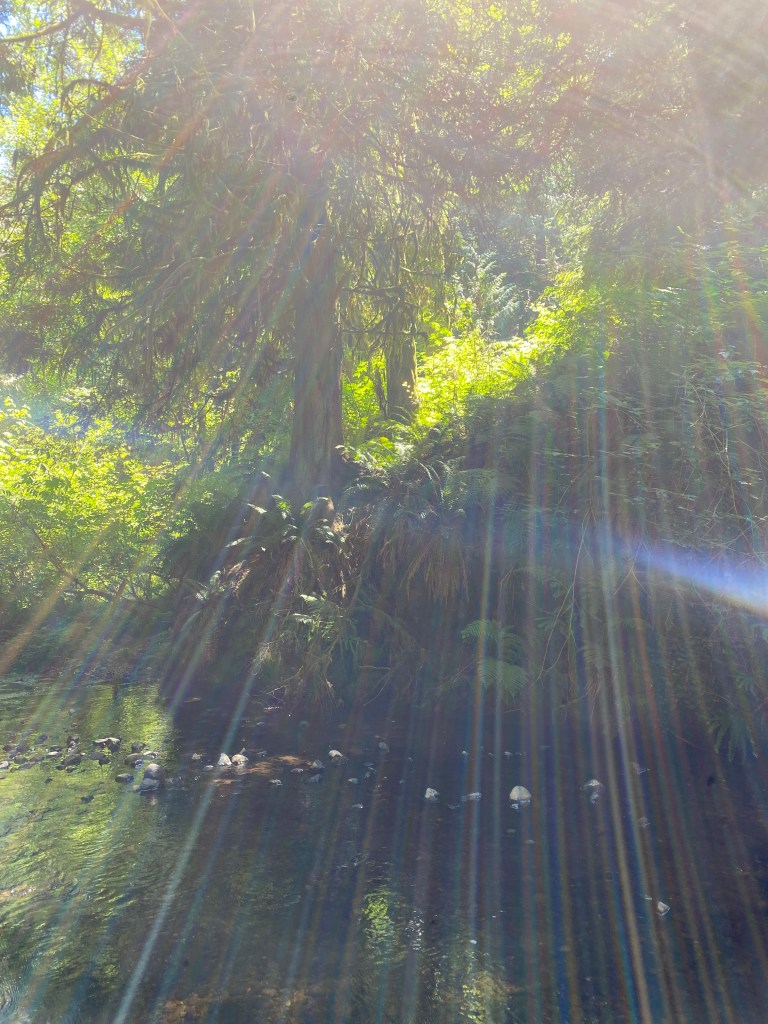
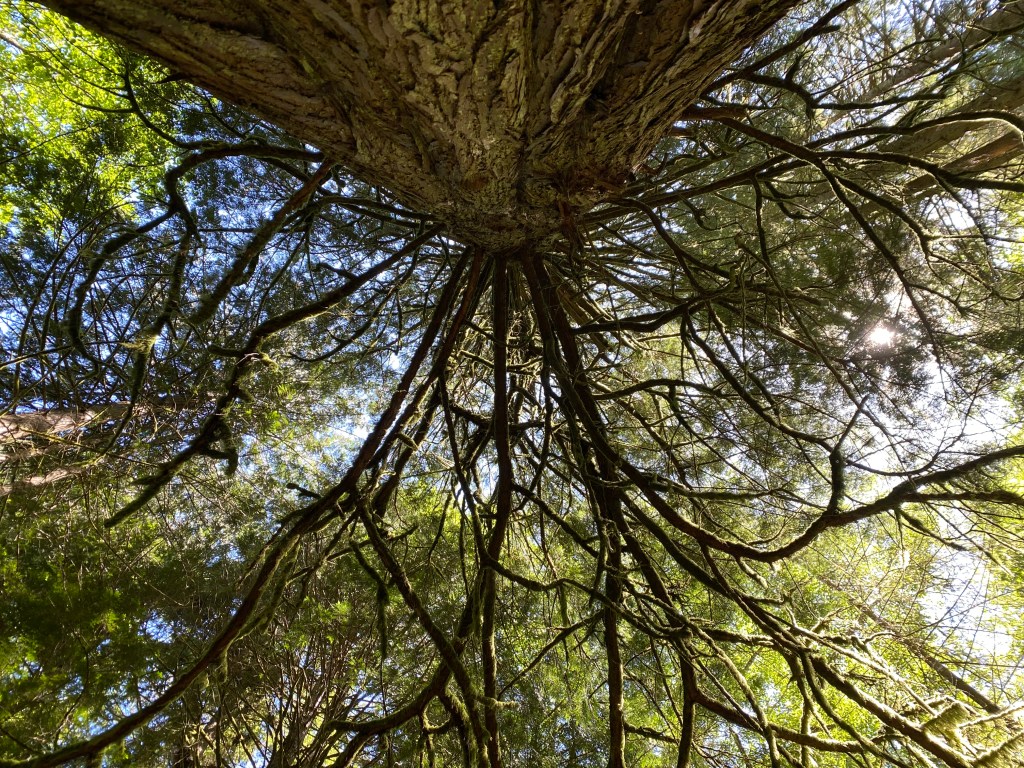
Today I said Shalom—hello, farewell and peace—to the old Western Cedar with which I have felt kinship over these past six weeks.

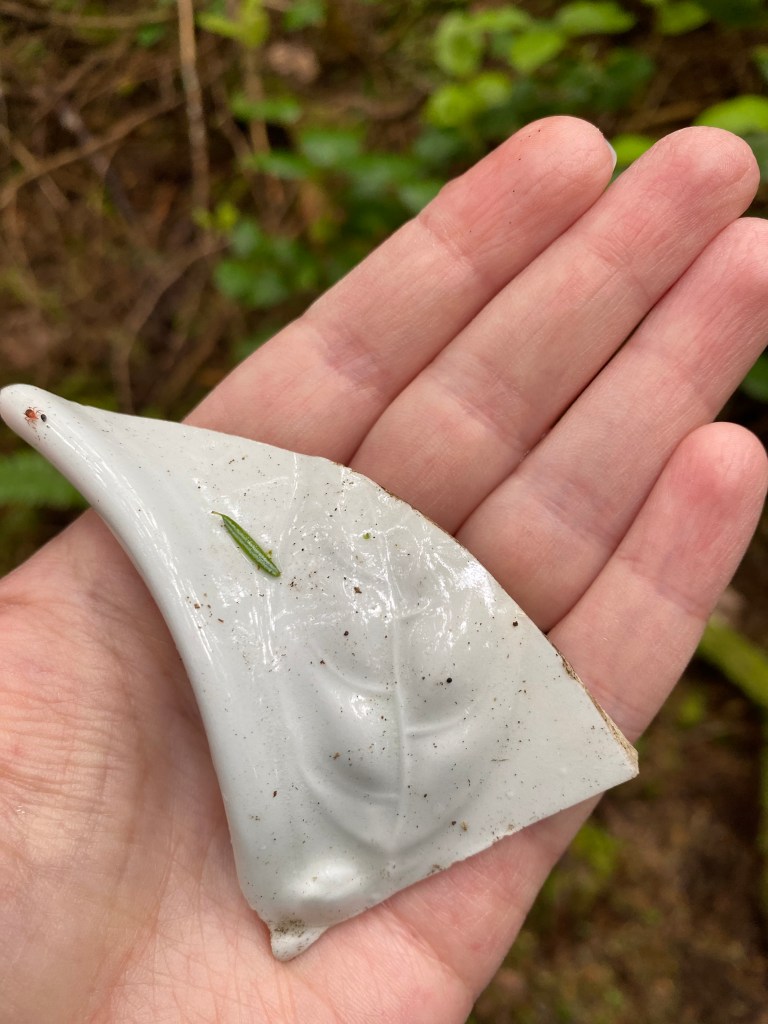
My parting ritual each time, after sitting at her base for a while, is to pick up trash, often a piece of glass or ceramic that had shattered and buried into the soil surrounding her. The sharpness of the object felt so foreign to the softness of cedar bark, moss, or the pine needle carpet. And yet, it felt so familiar too. With each parting ritual, it was a reminder of the Lurianic story of vessels shattering amidst Creation, and through time, the joining together of the shards into greater wholeness.

My extraction of the shards in the old growth forest of Ludlow Falls was more than a physical act—it became the softening of sharp edges of fear and strain, sharp edges of anger and sorrow from the heart of my very being. It is a practice ancient and new. It is a practice that speaks of regrowth. A practice rooted in a magnificent intelligence of the One that invites us to remember stillness is the beginning of listening and creativity. It is a practice I feel called to — to continue the work for myself, with others, all the days of my life.

Summer light

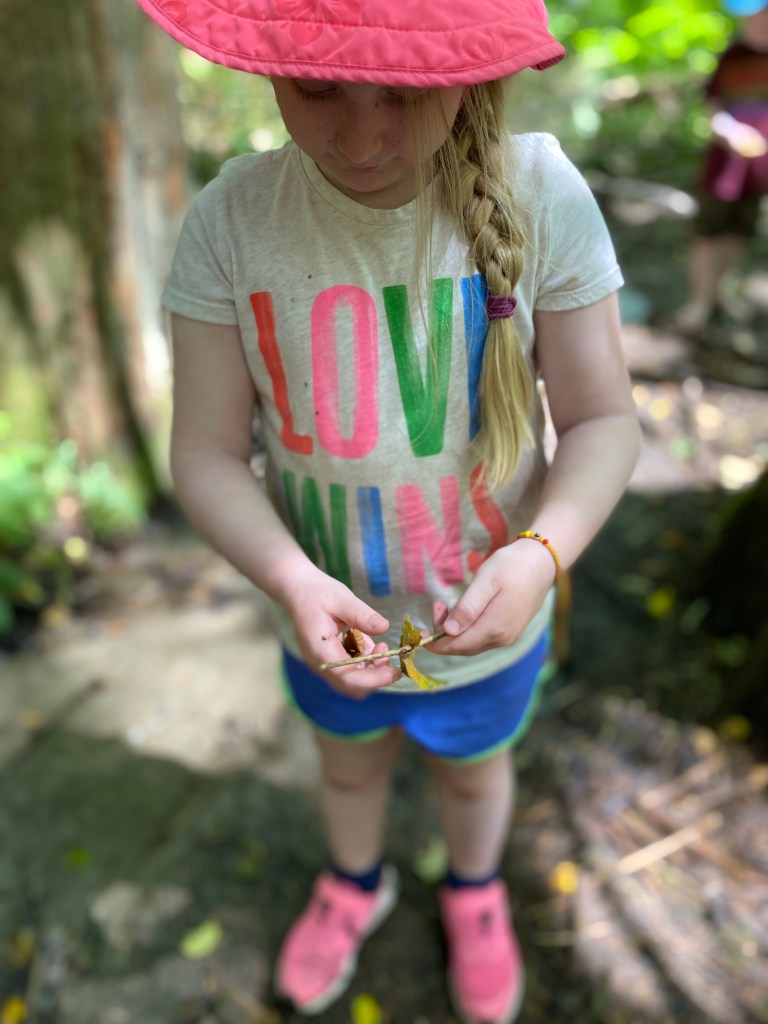
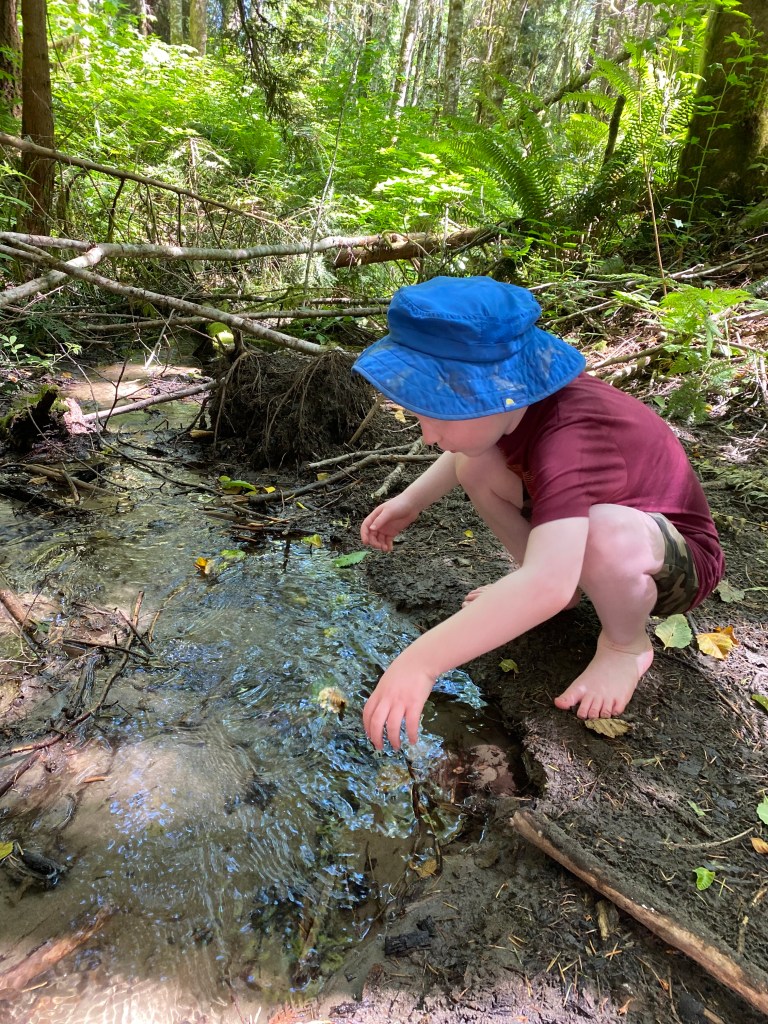
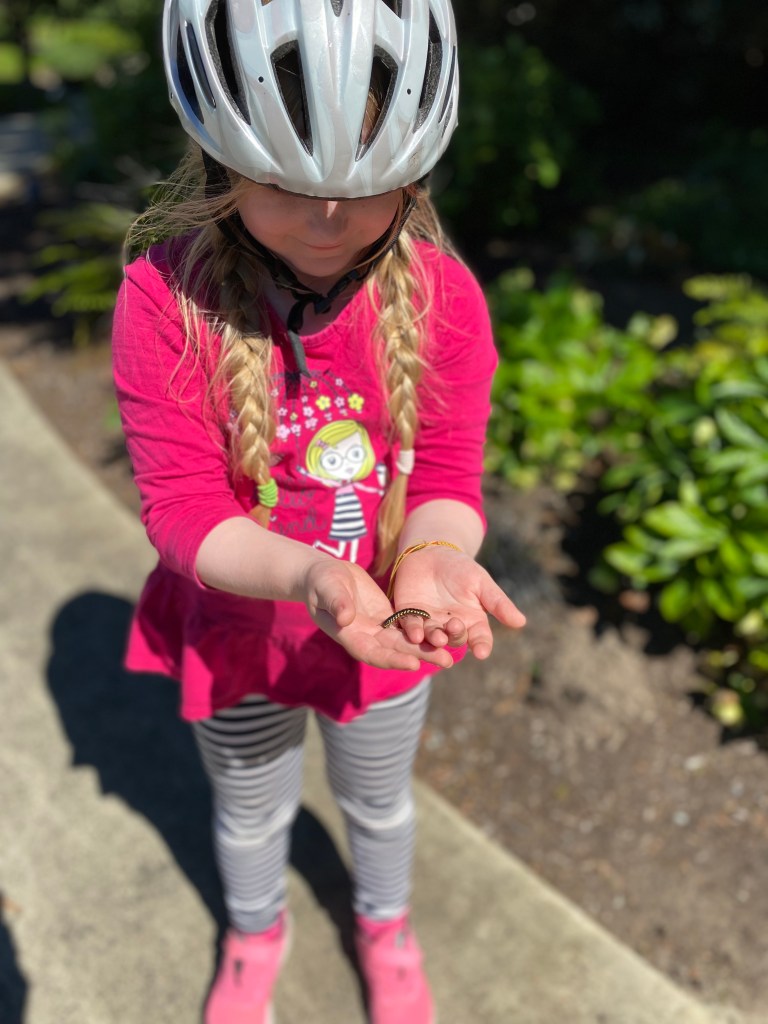
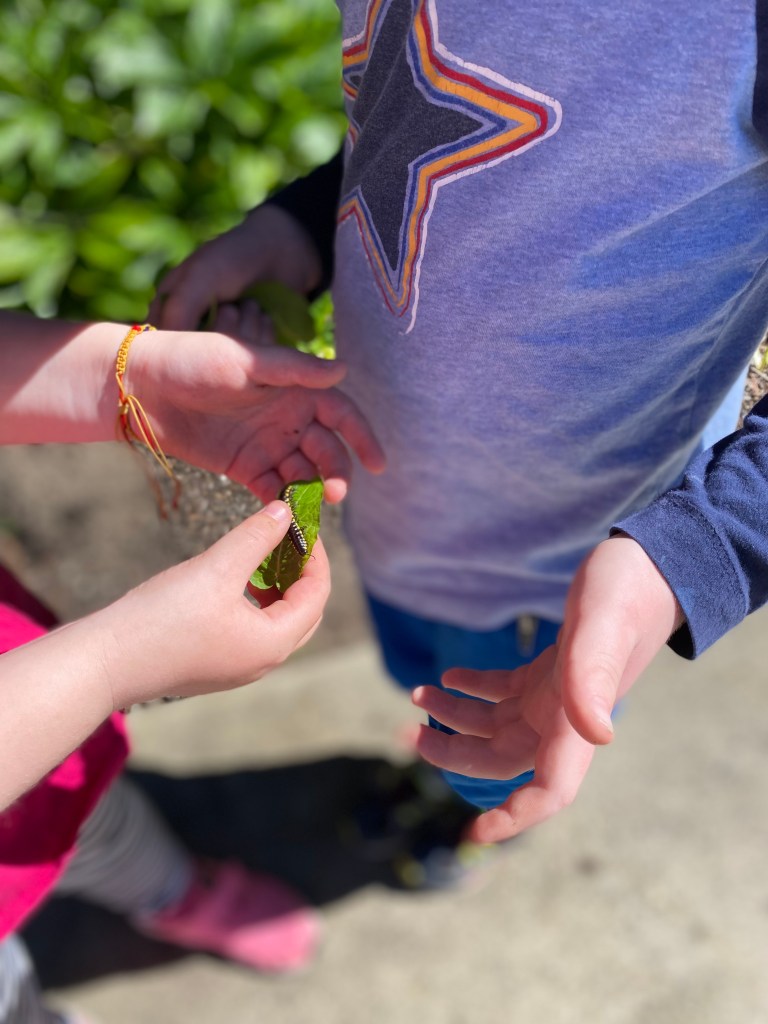
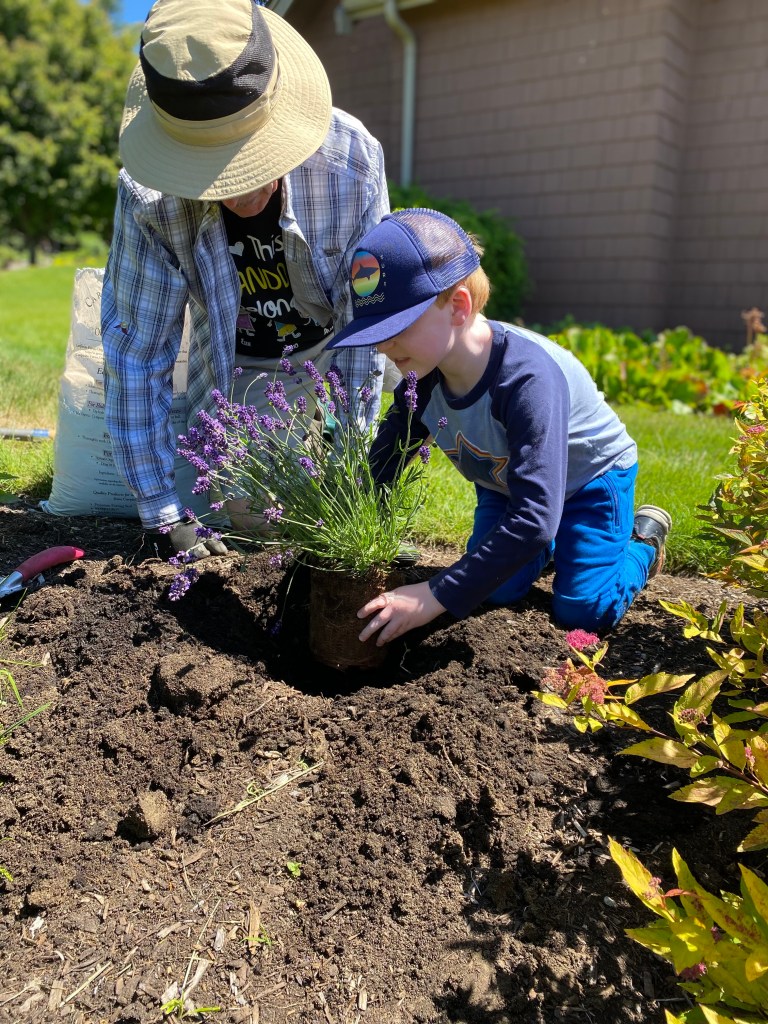
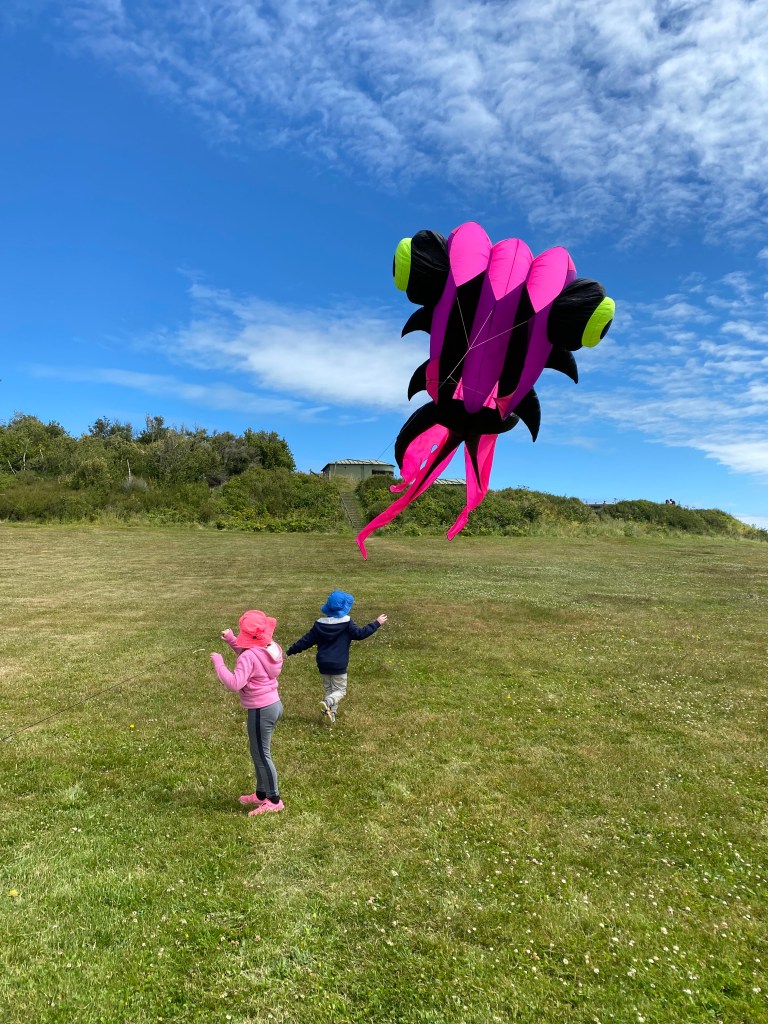
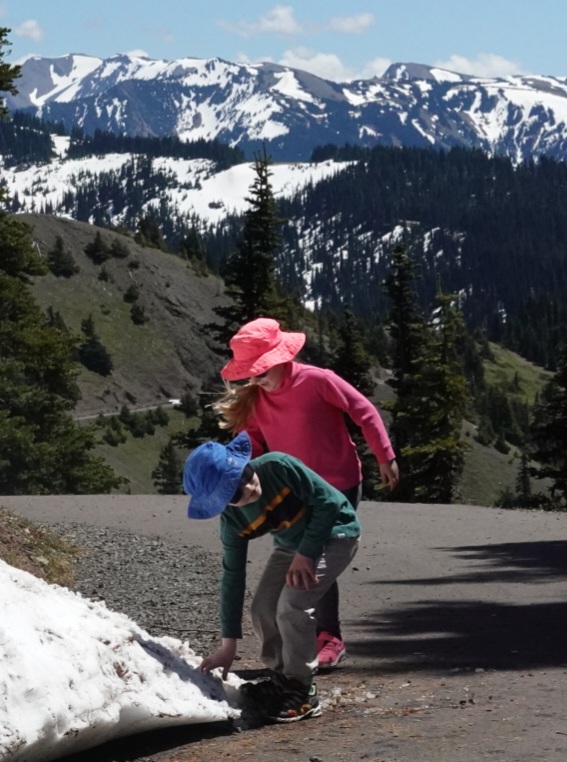
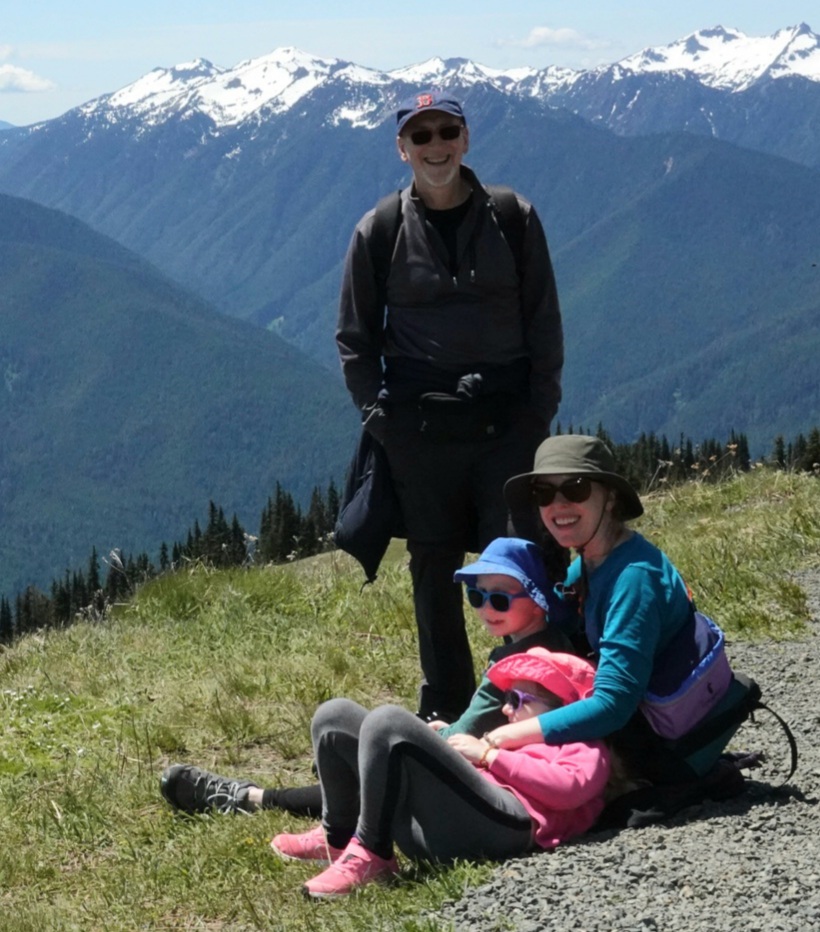
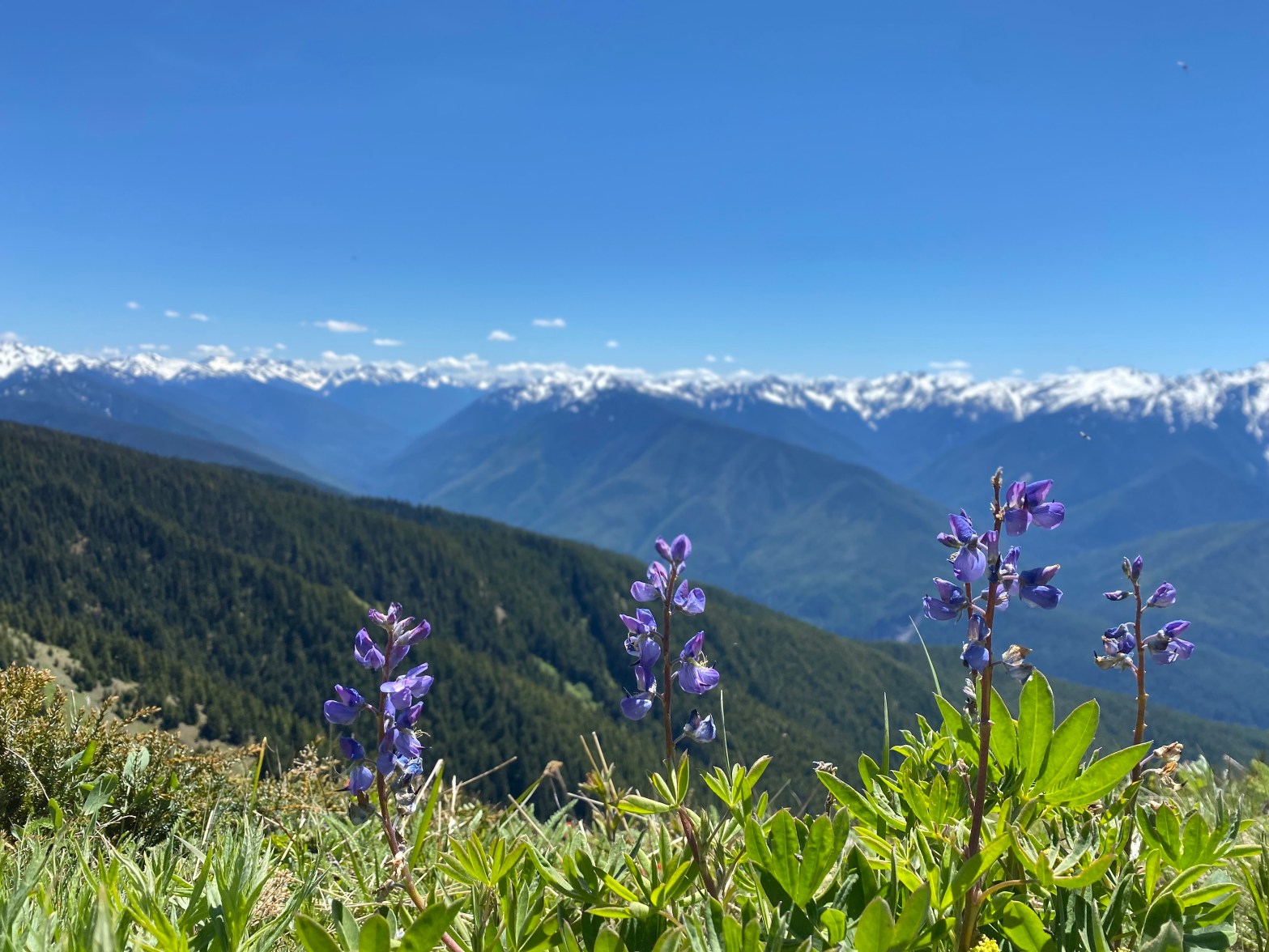
We are celebrating the longest day of the year with muddy toes, leaf boats sailing down shaded creeks, caterpillar pets (Cattie), dancing kites, and planting lavender in the wedding garden (started with centerpieces from our wedding, 13 years ago this August). In this last week of our Pacific NW adventure, we are grateful for summer light, a little extra dose of laziness and local ice cream (Lopez Island chocolate truffle for the win), and most especially, the family and community that supports this restful space in our full lives.

Lean close

My favorite season is spring—until fall arrives, and then my favorite season is fall: the seasons of change, the seasons that tell me to wake up, to remember that every passing moment of every careening day is always the last moment, always the very last time, always the only instant I will ever take that precise breath or watch that exact cloud scud across that particular blue of the sky.

How foolish it is for a mortal being to need such reminders, but oh how much easier it is to pay attention when the world beckons, when the world holds out its cupped hands and says, “Lean close. Look at this!” This leaf will never again be exactly this shade of crimson. The nestlings in the euonymus just beyond the window will never again be this bald or this blind. Nothing gold can stay. —Margaret Renkl, Late Migrations