*sermon for Parashat Matot-Masei 5783
This Shabbat is what we call Shabbat Mevarchim, a Shabbat blessing the upcoming Hebrew month. On Wednesday evening the month of Tammuz ends, and Av begins. Av is the darkest month in our Hebrew calendar, unfolding during days that are brilliant with blinding summer light. In a few weeks we will observe Tisha B’Av, the 9th of Av, when we mark the destructions of the Jerusalem Temples and other traumas befallen our people.
On the surface, this can sound like a bunch of calendar details, however, there are layers of spiritual meaning that emerge particular to this time of year, unfolding in a careful play between darkness and light, narrow passages, and expansive horizons, between brokenness and wholeness. All of this I believe is an invitation to consider the way we experience such realities. How do we navigate the challenges and embrace the joy, often all intermingled together through the seasons of our lives?
Let’s break down some of the details and dynamic meaning, turning for a moment to the ritual of blessing a Hebrew month. Remember, this is Shabbat Mevarchim because we are heading into a week when a new month begins, the month of Av. The prayer, traditionally recited at the Torah service following the Haftorah reading, goes like this:
Our God and God of our ancestors,
May the new month bring us goodness and blessing.
May we have long life, peace, prosperity,
A life exalted by love of Torah and reverence for the Divine;
A life in which the longing of our hearts are fulfilled for good.
It’s a lovely blessing, ending with the declaration of the new month, beginning on such and such day. The language harkens to the prayer for the new year which we declare with shofar calls and a sense of hope.
And yet, what about blessing Av, a month so dark? Blessing for a month when we remember depths of despair and destruction? Perhaps, there should there be some kind of exemption for Av?
First off, Av isn’t associated with all doom and gloom. Out of the Temple’s destruction, there arose creative new Jewish expressions and rituals which ultimately gave rise to the Judaism we practice today. Av is about resiliency and renewal as well. But even back in ancient days, a week after the 9th of Av, our people celebrated Tu B’Av, the 15th day of Av, which could be called a kind of Jewish Valentines Day, sans chocolate and roses. In the Second Temple period, before the destruction of the Temple in 70CE, our ancestors threw a big matchmaking party. Women would dress in white and dance in the vineyards to kick off the festivities and we can just imagine what joy ensued. Tu B’Av hasn’t really caught on here in America as much as it has in Israel, but I certainly encourage you to revive the practice if you feel so moved, within reason of course, as dancing in a vineyard in this Texas heat could be a bit much. Bring water, friends.
I find it so comforting that over time, the month of Av holds both heartbreak and love’s healing balm. Deep sadness and joyful laughter. This was brought home to me in a recent conversation with one of my oncology nurses, Devorah, whom I adore. As she’s preparing me for my weekly infusions and encouraging me through the moments of discomfort, we are chatting about her son’s wedding which falls right after Tisha B’Av. Her dress, the family, the excitement, all in the month of Av. We are speaking about the promise and joy of love in an infusion room which holds raw pain as well.
Darkness and light, narrow places and expansive horizons. Yes, somehow, we are encouraged to offer a blessing, to bless this month of Av which holds it all.
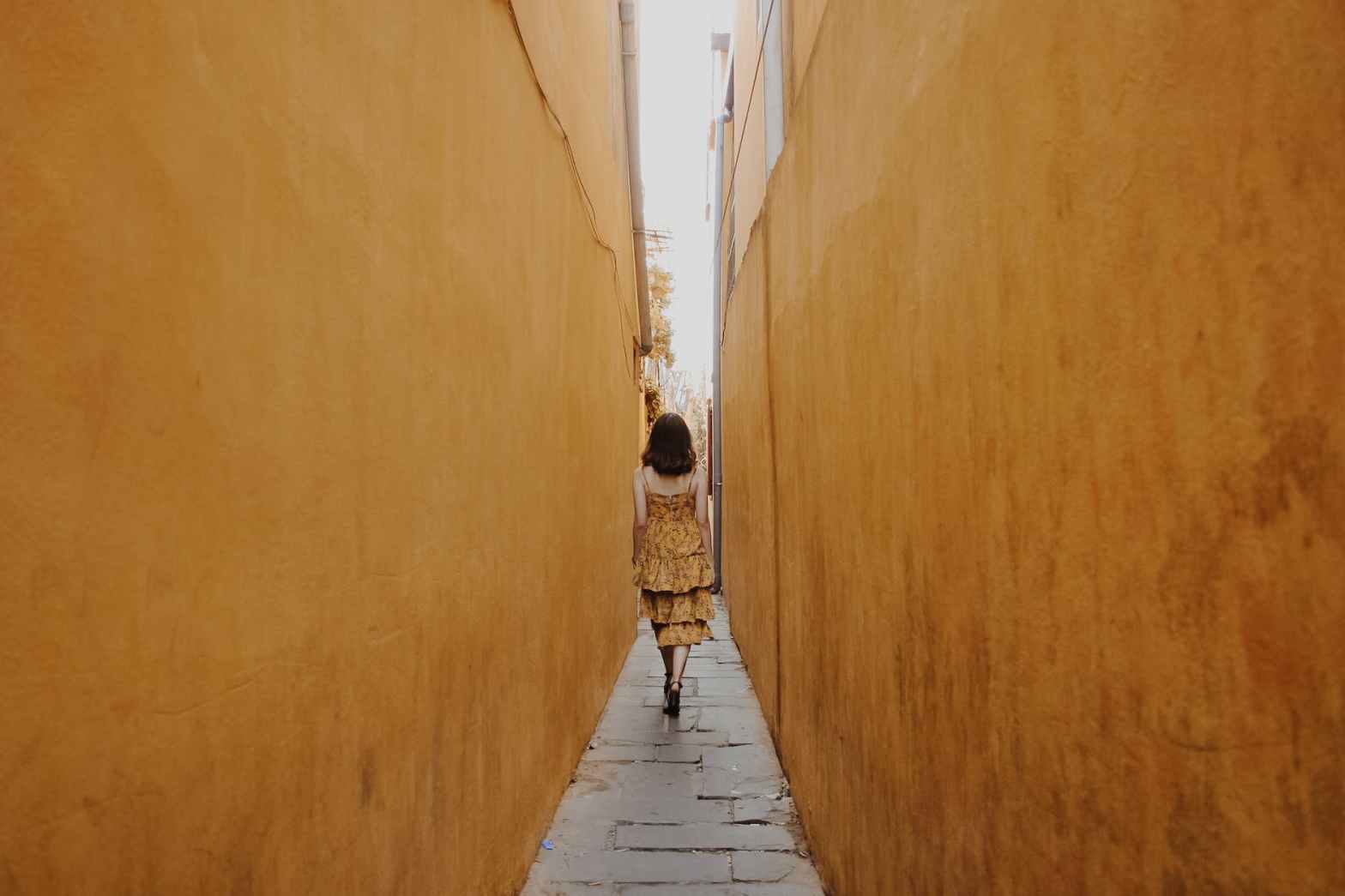
While the month of Av begins this coming week, we’ve been moving towards Av before it even starts. On the 17th day of the month of Tammuz, which fell this year just a few days after the brilliant July 4th fireworks, we entered a three-week period leading up to Tisha B’Av. We are now in the middle of the three weeks, which in Hebrew is called bein hametzarim, translated as “within the straits”, or “within the borders.” Within the narrow place.
The language itself suggests some kind of limits amidst loss and life’s uncertainty, amidst shattering pain and trauma, a deep longing for order and repair. And, simultaneously, there is in this narrowness the stubborn, breathless movement towards hope. Bein hameitzarim is like a birth canal, just as the Israelites were birthed through the narrow place of Egypt–Mitzryim in Hebrew—which shares the same root at bein hameitzarim. Like the Israelites crossing the waters of the Sea, we are passing through a time over July and August, making our way to the horizon of change and renewal leading up to the High Holy Days. This is a time of formation and spiritual reflection, which if we begin enough ahead of time in attunement with the Jewish calendar, adds a sense of depth to our High Holy Day practice. We live in bein hametzarim, narrow straits with limits, AND vast, open wonder, unfolding with each stage of our evolving life journey.
There are, however, some things without limits.
Rabbi Mordechai HaCohen, from his volume Al HaTorah, wrote: “once the Torah was given it became timeless and cut loose from any one place: every moment is its moment and every place its place.”* In other words, Torah cannot not be bound or set within narrow straits—it was there, unfolding, with each stop of the desert trek, and the Israelites carried it with them as a kind of compass, helping them navigate through the residual pain of Egypt to the promise of freedom.
You may remember that I spent sabbatical time two years ago in the Pacific Northwest and would often meditate at the base of a particular Western Cedar I discovered on a special hike in the neighborhood. I would lose a sense of time and place in that old growth forest, and the Mother Tree, as I call her, became a centering part of it all. I haven’t left her there. When I find myself in a narrow place, most recently through the steps of cancer treatment, I recall moments of peace and places that have brought me joy. Again, I am sitting at the base of the Mother Tree. A kind of compass, like our Eitz Chayim, the Tree of Life, that followed the Israelites through all the many stops in the desert.
What has been a compass for you? Or what can you imagine becoming one for you in your life?
Perhaps it’s a person or a place, a poem or a ritual, a particular practice that bein hametzarim, amidst our narrow straights, brings the possibility of growth.
Parashat Mattot-Masei are the concluding Torah portions in the Book of Numbers. We conclude one book and make our way to the next, step by step, stage by stage, and we say—Chazak, chazak, v’nitchazek…Be strong, be strong and may we be strengthened.
As the Israelites moved through the 42 different stops along their desert itinerary, they evolved as a community and discovered the laws and values that would define the people of Israel into the future. And we too are strengthened by each other, By our legacy of courage and renewal, by the Divine presence that guides our steps, through darkness and light, from the narrow places to a horizon of hope.
Chazak, chazak v’nitchazek…Be strong, be strong and may we be strengthened.
*as translated from myjewishlearning.org article by Rabbi Kerry Olitzsky, Journeying with the Divine.


Rabbi Kim, thank you for your inspirational words and particularly how to manage the narrow spaces. ❤️
LikeLike