Little piece of You

*sermon offered at Temple Emanu-El on November 10th, 2023/27 Cheshvan 5784

Where are you, God? Where am I, God?

I imagine our matriarch Sarah asked this often while on her desert trek.

She called out to the vast landscape

when she departed from the only home she ever knew,

when she couldn’t conceive of a child,

and on that fateful day when Abraham brought Isaac to the mountain top

and bound him to be sacrificed.

Perhaps the heartbreak and trauma of the Akedah, the binding of Isaac,

was the final straw in her trust in the Divine.

In this week’s Torah portion, Chayei Sarah, Sarah dies, and I wonder,

was her death a physical or a spiritual one? Or both?

And what about Isaac? Did his faith die on the altar at Mt.Moriah?

In our portion we read: And Isaac went out walking (lasoach) in the field toward evening and, looking up, he saw camels approaching.

What is Isaac doing in the field? It’s a bit vague.

The translation is often—“Isaac went out walking”

but the rabbis of the Talmud suggest it could be Isaac was meditating—

that he was having a sichah, a conversation with God.

In other words, Isaac was practicing hitbodedut,

a type of prayer and spiritual practice

where one privately pours out their heart to God.

Isaac’s conversation, as he stands alone in the field,

is a direct result of his near-death sacrifice in last week’s Torah portion.

He pours forth his heart in the wake of the Akedah, a story with many layers,

but one thing is for certain—

Isaac is changed as his sense of security is so deeply shattered.

And I imagine he looks out in the swaying grasses of the desert field,

wondering if he would ever find the part of himself

sacrificed on that mountain top.

Perhaps Isaac prays:

How is it I’ve seen such horror? What world is this, God? Where are you?

Where am I?

And as Isaac lifts his tired eyes, he sees a camel in the distant horizon,

carrying his future wife, Rebecca.

There is something profoundly moving about imagining Isaac,

who epitomizes our people’s experience of acute trauma,

finding a way to address God in such a moment.

And, at the same time,

it is understandable that our matriarch Sarah

may have thought that God turned away from humanity, and from our people.

What is there to say when it feels like God is a silent observer?

How do we feel right now as we face the challenges of the world surrounding us?

Where are you, God? Where am I, God?

But perhaps God doesn’t have the power to stop suffering

and we can draw strength from the Divine presence more than ever in such times.

The age-old, centering practice of hitbodedut is one way to navigate

the precarious dance between doubt and faith.

It is one way we have journeyed through grief.  

Hitbodedut was made more popular by the great Hassidic master,

Rabbi Nachman of Bratzlav,

who lived in many places, among them Uman, Ukraine

where he died from tuberculosis in 1810 at the age of 38 years old.

Rabbi Nachman is known for the words:

Kol haOlam kulo gesher tzar moad v’ha ikkar, lo lefached klal.

The world is a narrow bridge and the essence, the foundation of life, is to not fear.

He wrote those words because he knew fear

as his family struggled through illness, loss, and a shifting political landscape.

A brilliant mind, he also knew the joy of living an evolving Judaism

with communities throughout Eastern Europe and beyond.

And with each step on life’s bridge,

I can imagine Rabbi Nachman practiced hitbodedut,

offering guidance, some of which he wrote down,

like the following descriptive prayer:

Grant me the ability to be alone; may it be my custom to go outdoors each day among the trees and grass – among all growing things and there may I be alone, and enter into prayer, to talk with the One to whom I belong…

On the 85th anniversary of Kristallnacht, which we marked yesterday,

the writings from Etty Hillesum, a Dutch Jewish author,

captures her own conversations with God

amidst a world of shattered glass and hopes.

I recently learned of Etty Hillesum’s confessional letters and diaries

during the German occupation from Rabbi Miriam Margles.

Tragically, in 1943, Etty Hillesum was deported and murdered in Auschwitz.

Before her death, Etty wrote:

Dear God, these are anxious times.

Tonight for the first time I lay in the dark with burning eyes as scene after scene of human suffering passed before me. I shall promise You one thing, God, just one very small thing: I shall never burden my today with cares about my tomorrow, although that takes some practice. Each day is sufficient unto itself.

I shall try to help You, God, to stop my strength ebbing away, though I cannot vouch for it in advance. But one thing is becoming increasingly clear to me: that You cannot help us, that we must help You to help ourselves. And that is all we can manage these days and also all that really matters: that we safeguard that little piece of You, God, in ourselves. And perhaps in others as well. Alas, there doesn’t seem to be much You Yourself can do about our circumstances, about our lives. Neither do I hold You responsible…

…I am beginning to feel a little more peaceful, God, thanks to this conversation with You. I shall have many more conversations with You. You are sure to go through lean times with me now and then, when my faith weakens a little, but believe me, I shall always labor for You and remain faithful to You and I shall never drive You from my presence.

Etty’s final words are so hauntingly true and starkly timeless:

You cannot help us, but we must help You and defend Your dwelling place inside us to the last…

And so, in keeping with the tradition of Isaac’s spontaneous prayer in a desert field

and given voice by Etty Hillesum through her soulful longing to keep God’s spark alive in her very being, we ask:

Where are you, God? Where am I, God?

I’ve asked this question endless times—

by a creek in the beautiful hills of Simi Valley as the afternoon light began to set in,

at the base of a Western Cedar,

on a quiet evening walk through my North Dallas neighborhood,

in the silent moments of the Amidah, right here in Stern Chapel,

when I close the prayer book and just let the words flow.

In all these places and times, I am practicing hitbodedut.

Whether you’re sitting on the couch in the living room,

or among the trees here at Temple,

pausing to speak to a power greater than yourselves can be deeply moving.

It can feel a bit awkward when we begin,

as there are usually a series of distractions or inhibitions before our minds can begin to focus,

our bodies relax, and the words come forward.

But once that happens, frayed nerve ending start to feel soothed.

Hitbodedut can feel steadying amidst all the tumult within and surrounding you.

It can feel comforting as you may feel your faith being tested.

And while the prayers are uniquely yours, or ours,

there is a feeling of sacred presence and connection,

linking us to the generations before us.

Where are we?

With hearts open,

We say, Hineini,

Here. Present before You.

As we try with our might and tears to help You

And to safeguard that little piece of You, God, in ourselves and in others.

Go forth

*sermon (abridged) offered at Temple Emanu-El on October 27, 2023/12 Heshvan 5784

After the close of sitting shiva, after the first seven days of mourning, it’s customary to walk around the block. Walking represents the physical and emotional movement toward a different part of the mourning process, where those grieving can begin to resume some day-to-day activities.

In Reform communities like ours, it’s not often that we observe all seven days of shiva, however, the walking ritual has evolved into a more regular practice. We’ve walked with each other, not only circulating the neighborhood with keriah ribbons and hearts torn, but through the gradual return to healing and hope.

In the wake of the horrific pogrom on Oct.7th, we are wearing black keriah ribbons. For some of us, I mean this literally as we grieve specific people in our family and friend circles. And for many of us, we wear metaphorical keriah ribbons, carrying a collective sense of loss on a grief path without known markers of time. As we wait to see what will come with each passing day, it can feel like a hall of mirrors with shiva remagnified in endless ways.

As we try and navigate all this, gathering for Shabbat as a community and reading Torah can become essential signposts. As we make our way through this week’s offering of Parashat Lech Lecha, we find that it’s filled with timeless wisdom, beginning first with the opening verse:

God said to Avram, Lech Lecha

Go forth from your native land and from your father’s house

 to the land that I will show you.

As a well-known midrash suggests, we often think of Avram as the one who set out for Canaan after smashing the idols in his father’s home. We imagine a sharp break with the past and fiery rage as a necessary element in the story so that Avram and his family can build and establish monotheism.

But if you look at the end of last week’s Torah portion, Noah, we see that Avram’s father Terach took his son, his grandson Lot, Avram’s wife Sarai, and together, they set out to Canaan. They made it as far as a place named Haran, and it was there that Terach died. Perhaps, the words Lech Lecha, go forth, are a call to Avram in his grief.

I imagine God says: You are on a path that began before you. God’s voice resounds in Avram’s heart, saying: It is time to circle the neighborhood and begin to take the essential steps forward. It is time for you to join souls with a common, faithful mission. And with God’s blessing, Avram remembers that he doesn’t travel alone.

I admit, as last Shabbat and Sunday’s TE150 learning opportunities approached, I wasn’t sure how to grapple with such ideas and questions about our future amidst the constricted, torn keriah ribbon of my heart. But the whole experience reminded me of something I already knew. That creative expression of mind, body and soul through study, music, art, formulating questions, writing, movement and so many other practices IS one necessary expression of our trauma.

On a personal level, over the last six months fighting breast cancer, writing has been one critical lifeline for me. It reminds me to continually choose faith over fear. It reminds me that, while I can sit in and with trauma, it is not the totality of my being. Last weekend was an opportunity to begin to reclaim agency amidst terror, to begin to reclaim a vision for a vibrant Jewish future, to begin to imagine a shared destiny, even as we stumble to walk on a ground that is shaking and trembling, even as we fight for our welfare and strength.

Even with halting steps, unsure of our ground and direction, we may ask the essential question: who are we becoming? Embedded in the changing names of our patriarch and matriarch, Avram and Sarai, our Torah portion offers some guidance. Name changes in the Torah represent a shift in status or a spiritual transformation. Think about Jacob wrestling in the dark of the night when he becomes Israel. In Parashat Lech Lecha, Avram and Sarai’s name change to Avraham and Sarah. “Father of multitudes”, the meaning behind Avraham’s name, poses as an opportunity and a challenge. Consider the conflicts in the household between Sarah and Hagar. Consider their struggle to conceive of an heir and a future. Perhaps this is why the letter “hey” is added to their names, which represents the Divine name of HaShem. How were they able to embrace the presence of God, the divine “hey” within their tribal multitudes, as they fight and form, as they doubt and despair?

We look to their real,human trials and triumphs and see our lives reflected in these ancient words. Lech Lecha…can we experience God’s name in our own as we bear the pain and promise of our ever-evolving tradition and identity?

There aren’t easy answers to these questions. In our grief, some of us rage as Avram did against his father’s idols. Some of us feel downtrodden and can’t find the words. Can we channel our anger and fear into covenantal partnerships within and beyond our community to affirm our humanity? Within us there is such a range of feelings, and yet, we, inheritors of Avram’s vision, can hear the words as he did: Lech Lecha… We must and we will go forth, together. We never travel alone.

I sensed the multitudes that comprise our patriarch’s name, and at the core of who we are, during Sunday’s panel discussion. When our grief contracts time and space, Rabbi Ana Bonnheim said (and these are selections of her talk, which of course this tree hugging rabbi loved):

What if we thought about a place like Temple and the Jewish world in general as a living ecosystem, and not just any ecosystem, but one like a forest. A forest isn’t a monoculture…it’s existence depends on thousands of organisms each with different roles but who also depend on each other. It’s a place where life is ever-evolving not towards a single, perfect organism, but in a way that naturally becomes ever more diverse…there are so many ways to be Jewish to experience Judaism…Over time we find plants in a forest generally do support each other…they figure out a way to grow and thrive…evolving and adapting over time…this is our collective work, seeding and tending Jewish life and our multiple forests. To nurture them.

This is our collective work.

This is our name, this is our grief, this is our stubborn hope,

and this is how we walk…sometimes in dizzying circles,

sometimes with hesitant steps,

sometimes faltering forward to then fall back,

sometimes with only a hint of light on the horizon.

Our God, God of Avraham and Sarah,

help us to walk with fathers and mothers of multitudes,

who feel the loss of a single precious life.

Guide us as we reach out to each other and our people,

with nourishing roots of compassion and care.

And may the ecosystem that we call Israel, live on in strength. 

Farewell Ludlow

*A little over five months ago, I named my chemo port “Ludlow.” Port Ludlow, WA has been a sacred place for me and my family for two decades. A place of healing, growth, and joy. I prayed each drip of the chemo through Ludlow would bring forth many years of such precious life-affirming memories as we’ve experienced in the Pacific Northwest. Today, I had a procedure to remove my port.

You nestled above my beating heart

Through the tedious and tender days

The tear-brimming and bloated months.

As you sent currents of sacred poison

I prayed with all

light life longing.

And now

On this cool fall day

I lift a glass of Warre’s Tawny

And bid you farewell fine port,

Let’s not meet again in flesh-

only in rambling poetic attempts

And in memories laden with gratitude

For your steady infusions.

Amidst these unknown seas,

May this day and countless more be the portal

to anchored hope and home.

Ain melim

Ain melim. No words. How can humanity be so inhumane and so cruel to one another? Is there not enough suffering to just make our way through this life with all its uncertainty? I haven’t been able to write until now, and this will be brief, but when I filled my coffee cup this morning, I suddenly felt a need to sit at my desk and share thoughts.

Battling cancer isn’t an effective metaphor for hatred and violence. Antisemitism and racism, etc isn’t a disease, it’s a machine, and it’s one all of us need to work to disassemble and slow it’s production. That said, I have been feeling like a part of me aches because “the body” of Israel is in deep pain, and the soul of humanity cries across lands and seas, with the wailing of mothers and fathers, sisters and brothers, cousins and neighbors, lovers and friends.

When I first faced the fact there was a disease in my body that could kill me, I had moments of huddling on the floor, bringing my knees to my chest and wondering how life could be so frightening in such a personal way. The ripple of shock traveled within and around me.

I don’t know what the future holds, but to communicate and share, to listen and cry, to grasp some semblance of routine, to feel the circles of loving, compassionate support–all this and more can created a foundation to hold grief and fear. This is a time to turn to each other with sensitivity, to offer our hearts and hands, even if it can’t always be a concrete building block or salve. We can light the way each impossibly painful step at a time.

These words from poet Leah Goldberg:

All the stars were hidden away
The moon is wrapped in black
From the North to Yemen in the South
There is no ray of light

The morning is a faithful widower
On its hips it wears a grey bag
From the North to Yemen in the South
There is no ray of light

Please light a white candle in my heart’s black tent
From the North to Yemen in the South
The light will shine

Layers of Living

*I dedicate this post to the people who I saw each time I spent hours in the infusion room—those who I spoke to and those who exchanged a knowing glance. Those who preferred to be at a distance or needed to be so. We each have our own stories and all, loving tended to by the nursing staff. Your weariness and courage is a mirror for me.

On this last day of chemo, that I pray will be the final infusion of my life, I’m thinking about a moment in the Yom Kippur afternoon service when my voice and my heart cracked. It was when I read the following poem by Tamara Madison called “Sequoia Sempervirens”:

…Some of these trees have been here

Since Vikings drove their boats

Onto the shores of Newfoundland

Some of these trees were seedlings

While the Mayans were worshiping time

While the dire-wolf and saber-toothed tiger

roamed North America

Some of these trees have survived

Lightening strikes and forest fires

Some of these trees house creatures

On the forest floor in burnt out caves

At the base of their ruddy trunks.

Some of these trees have become

Living pipes, chimneys, hollowed out by fire.

They have grown beyond their trauma and focus now

On the daily climb, the adding-on

Of needle and bark, on nature’s drive

To rise above and see beyond

Until the day when death will fell them

And the earth will add them to their riches.

We can be like those trees,

pull on the layers of living

like fine new garments

House the needy in the caverns of our grief,

grow beyond the stories of our scars

Stretch our branches toward the bristling stars.

This poem is my hope and prayer—and captures the powerful confluence of Yom Kippur and the final infusion only a day apart. We pull on new layers of living not to hide our scars, but to grow with them and cultivate comfort. We acknowledge what brings us through fire and storm, letting go and immersing in flowing tears. We bring hard truths and compassion to our pain, stretching to grow despite the unknowns.

I will continue with the next stage of my treatment (radiation), with another surgery after that, and with the waiting to just see what comes. But I am not going to wait by wading into fear and standing rooted in the sludge of regret, rather I choose to live this daily climb as authentically and fully as I can, with the people I love, and with a faith community of soulful practice.

Speaking of faith, I believe our faith is created, affirmed, and renewed, when we know there is a landing place to mark the seasons of our calendar and history, of fire, water, earth and air in our own soul’s journey—what comfort this has brought me when time expands and contracts from the trembling fear that comes with our vulnerability, our mortality.

Thank you, dear ones, for your prayers and encouragement, for helping me and so many others rise above and see beyond, pulling on the layers of the living with steady hope and love.

Threshold

*adapted Shabbat Shuvah sermon, September 22, 2023

Jewish tradition is quite full of nature metaphors, which is understandable given our ancestors’ close ties to the land and the seasons. Light is a metaphor for the Divine presence, the stars represent the future generations of Abraham, and the mountain climb stands for our life-long discovery of revelation, wisdom, Torah.

Particularly at this time in our Jewish calendar, there can emerge for us the powerful analogy of labor and birth. At Rosh Hashanah, the birthday of the world, our soul can be created anew, and we stand breathless from the painful pangs of change that open in the hot summer with Tisha B’Av through Elul. As we hope it to be with birth, or the many ways we might welcome a new life to our family circle, there is a great deal of emotional and spiritual preparation. We arrive with wonder that we are here to witness yet another beginning—5784—holding all the growth opportunities and possibilities in our hearts and hands. We stand in a moment in time and acknowledge the hard work that it takes to make our way forward.

But how do we know we’ve arrived at the other side? Yes, it is now officially 5784, and yet, have we really crossed over the threshold? Is the summit of our physical and spiritual efforts ever attainable?

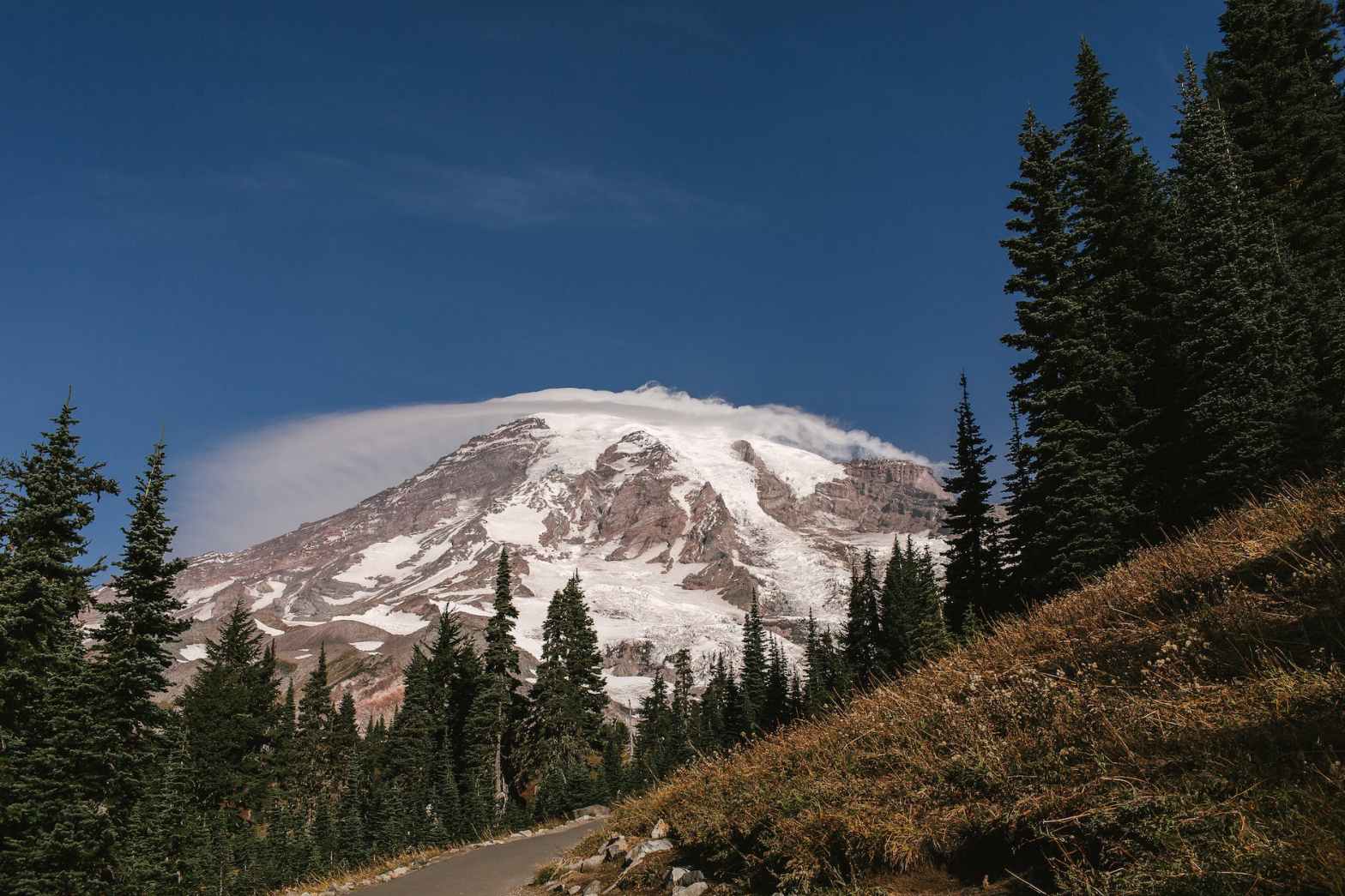
As I wonder about such questions, I think back the two-day climb of Mt.Rainier, 60 miles outside of Seattle (see previous post: https://rabbirumphius.com/2023/09/02/labor/) Arriving at the summit brought a tremendous sense of relief. With tears streaming down my face, I looked out at a great expanse, a snow-filled crown to this active volcano lay before us.  What I held in that moment was pure awe for this mighty giant in the Seattle skyline. There was no conquering Mt.Rainier, no notch to add to my belt. There was only the revelation that the climb had brought me to my knees, while making me stronger.

More than anything, the rope team instilled courage to take each step of that climb. On Monday, on Yom Kippur morning we will read the powerful words of Parashat Nitzavim —”You stand this day all of you before the Eternal your God.”  After years of wandering the desert, after trials which could break the spirit of all who endured them, Moses and the people of Israel pledge to keep the covenant a living and dynamic force. Persisting through the ebb and flow of empires and civilizations, the Jews have journeyed through great challenges.  And we, as we assemble and gather on the holiest of days, remember that we stand with the strength of the greater collective. In rope teams, so to speak: Atem nitzavim hayom kulchem lifnei Adonai Eloheichem.” We affirm these ancient words and cultivate hope. We hydrate our faith.  With these words and with practice, the days of Awe can reach us, just as we are and as we hope to be.

I recently came upon a story shared by Cantor Ellen Dreskin, by William Stimson, writer and Zen master practitioner. Stimson, who lives in Taiwan, entitled the vignette, “How to Move A Tree.”

Early one morning in a park in Taiwan I came across a man who had stopped off on his way home from the market to harness himself to a tree.   For a moment it looked as if he were trying to move the tree to another place, maybe drag it home for his front yard.   I had to laugh at the crazy thought.   That tree wasn’t going to budge.   The man was obviously engaged in some kind of exercise.    Most likely, he brought his harness out every morning to do the same practice.   I once read in a book of eastern philosophy that if you had a fish in a pond and you wanted it to get big and strong you put a stone in the middle of the pond.   The fish would swim around and around the stone trying to get to the other side.   No matter what side of the stone he was on, the other side always beckoned.   And so he kept swimming.   In time, he would be much bigger and stronger than a fish in a pond without a stone in the middle.  

It seems crazy to attempt the impossible, and yet it brings about a strength that can’t be gotten otherwise.   This man will never move the tree; but he will become very strong.   I may or may not become the writer I set out to be in my youth, but the effort has really changed my life and I feel it’s made me a better person.   The fish, no matter what side of the stone he gets to, never reaches the “other” side.   He’s always on the side he’s on.   The other side, though, by being there, eventually makes of him a superior fish.  

A man, a tree, a fish, a stone; a blank page, a writer — no matter how hard we try, there is that which we can never quite reach.   But then one day we find that somehow it has reached us — and recognize, with surprise and astonishment, the other side.

God willing, this coming Tuesday, I will complete chemo with the last infusion, I pray, for my lifetime. Like that bright August morning at a mountain summit, I am brought to my knees, knowing that come what may, the rope is always there in my hands, with some person or some greater Presence reminding me I am not alone.

May the One who Binds our Wounds, the One who Strengthens our Steps, help us find the courage and the strength to make our way with grace and gratitude. And may we find time and again in our laboring breath, that the great expanse of a summit perspective reaches us—deep into our beating hearts, for many seasons to come.

Labor

The last lazy days of summer come to a close as flags are raised and sweltering temps fluctuate. The first Labor Day in 1882 was kicked off by the Central Labor Union with a large New York City parade. Soon it became a national holiday with the goal of greater respect for the myriad of ways laborers continue to build our country, often without just compensation or recognition.

Well before American leaders established this time in our calendars and in our consciousness, labor of all kinds became fixed as a frequent Scriptural commentary on human reality. Laboring in birth, toiling in the fields to grow food, gathering wood for fires, and so many other examples of labor that have become natural, despite their risks and challenges. And then there are the extremes, when labor is exploited or doesn’t result in enough sustenance, thereby causing shifts in location, physically, spiritually, emotionally. There’s the labor we choose, and the labor we don’t choose, and all of it, we pray, through collective effort, evolving towards a more ethical, balanced, and wholesome society.

Before chemo and the birthing of twins, I often think back to an experience of extreme physical labor I chose to pursue as a high school student. It’s been a helpful metaphor for me these days. I realize it’s a privilege that this was an option at all, and that it isn’t an example of back breaking work to help provide for my family.

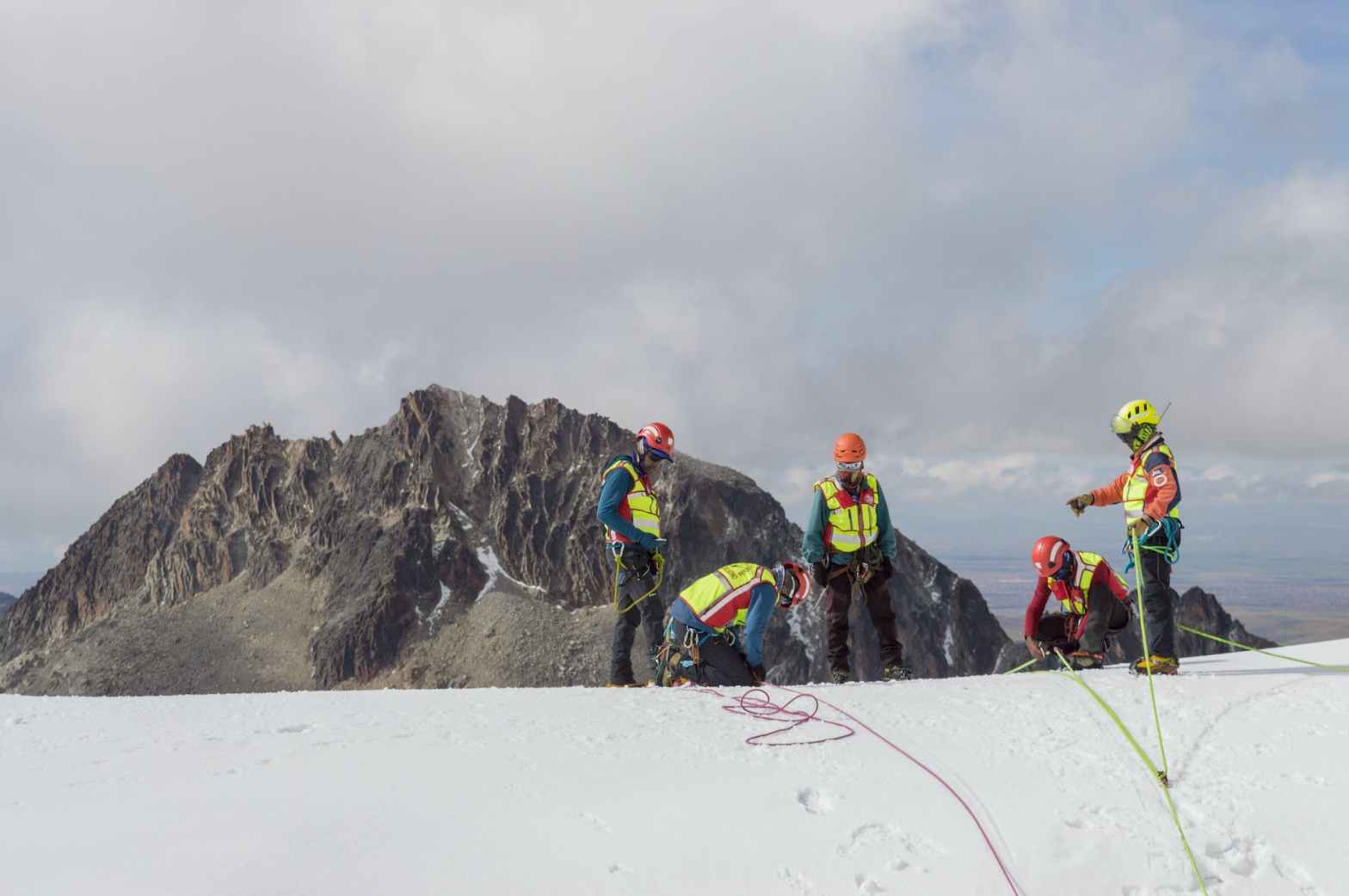
The summer after my junior year of high school, I went on a Pacific Northwest outdoor adventure, culminating in a two-day climb of Mt.Rainier, just outside of Seattle. We prepared all summer for the climb and had to go through boot camp style training before the guides agreed to bring us on a rope team. The first day we made our way up to base camp from Paradise, nestled on the slope of this glaciated wonder which stands 14,401 ft above sea level. From base camp, we woke up at midnight to climb 4,000 ft. during the coldest part of the night with the least amount of ice moment. With headlamps, crampons, an ice axe and a backpack with necessary gear, we made our way in rope teams. It was terrifying and breathtaking–literally, at times my breathing was so labored by the altitude I was ready to call it quits. I’m not sure I can make it, I said to one of the guides. “Well,” was the reply, “you can stay here in your sleeping bag, we will put a bright flag beside you, and get you on the way down several hours from now.” No thanks!

Looking back, more than anything, the rope team instilled courage in me to take each step of that climb. (And the multiple packs of M&Ms were essential as well!) Almost 30 years later, I am laboring through and climbing up some steep terrain with an incredible rope team of a devoted family circle, medical professionals, spiritual practitioners, and compassionate community members. I am learning anew what a blessing it is to hydrate with hope and love. Some days it’s hard to do so, and yet the rope is always there in my hands, with some person or some greater Presence reminding me I am not alone.

May the One who Binds our Wounds, the One who Strengthens our Steps, help us find the courage and the strength to make our way with true grace and abundant gratitude.

Breast Cancer Barbie

After numerous parenting conversations and ecstatic dances to the soundtrack, the family is off to see the Barbie movie. I’m sitting this one out in favor of a quiet Sunday afternoon with Luna, who, for the record, has been known to steal an unsuspecting doll here or there, leaving teeth marks in an arm or leg.

Although I won’t be seeing the movie today, I’ve been thinking about my own evolution with Barbie, from child to parent. Rather than any particular doll, I remember my Barbie camper with such fondness (which is likely residing in a landfill along with horrifying numbers of plastic objects). Oh the adventures and stories created, the little duffle bags packed, and the long naps on the pull-out beds. Barbie and Ken had many kissing sessions in the camper, and for other friends Ken and Ken did, Barbie and Barbie–all with evolution of self, the development of body, the curiosity of gender and sex, the pure fun, a backdrop to our adolescence and innocence. Later, I would become more critical of this figure standing on tip toe and whose body didn’t fit my own. She represented everything plastic and fake in my Los Angeles (fill in the blank of any place) environment.

By the time my kids were introduced to Barbie, she existed with different body shapes and names, diverse backgrounds and stories. We created our own dream house from cardboard during the pandemic, and while we are in the concluding, twilight years of Barbie play as the kids immerse in varied interests and activities, Barbie won’t ever completely ride off at sunset in her camper. She seems to stay around in our consciousness, including now, as my body undergoes so many changes.

Ruth Handler, inventor of Barbie and co-founder of Mattel, wasn’t a name with which I was familiar as a child. From the Los Angeles Times obituary: “Herself a breast cancer survivor, she personally sold and fitted the prosthesis and crisscrossed the country as a spokeswoman for early detection of the disease in the 1970s, when it was still a taboo subject. Recognizing the continuity in her evolution from “Barbie’s mom” to prosthesis pioneer, Handler sometimes quipped, “I’ve lived my life from breast to breast.” The creator of one of the most well-known dolls evolved in ways I hadn’t appreciated years ago, during a time when my own family were undergoing treatment. Since then, we’ve made tremendous strides as countless women and men have torn through the taboo with sweat and tears, dollars raised and articles published.

Alongside our physical, bodily selves we know there are some sensitive realities that evolve differently, that cannot be covered with pink lipstick or blush. Try as we may, there is no plastic container within which we can store away emotional and spiritual suffering of any kind. That requires different types of space, time, resources, and more. As the season of Elul begins this coming Shabbat, I am reminded of all the ways we open up our hearts to brokenness, and release what truths and hopes may have been stored away. We consider what help we may need to become more whole. The soul returns to it’s Source, seeking the space beyond ego and fear–a space for healing and spiritual attunement with ourselves, each other, and the Source of Breath.

Thank God, we don’t do this work alone. The evolution of Barbie I find most moving is that she exists with an ever-expanding community of friends. May it be so for whatever travails and joys we experience, savoring in the comfort of real connection to others, adventuring together on this windy road called life.

Why?

For years I thought the 1992 song “Why” by Annie Lennox concludes with the question “Do you know what I fear?” (it’s “Do you know what I feel?”). I’ll go with the imagined lyrics as we make our way through Av and set our sights on the ascent to Yom Kippur, the holiest of days.

I fear death. And it’s so comforting that our faith doesn’t skim over this fear. Go there, I hear in my heart, a gentle Divine whisper not a harsh command. There’s still sacred work to do, and places to explore with my love, and days with the sand between my toes, and moments in my children’s life I hope to witness, and times I want to remind them that they are safe and to trust themselves to be themselves, and Shabbat light I want to see flickering in Stern Chapel, and long talks with dear friends, and…and…and…

I think of a passage we often read on Yom Kippur before the prayer Untaneh Tokef by Rabbi Ed Feinstein (selection): “…I sat in shul for years reading these words before I realized the answer. The answer to each of these questions is “me.” Who will live and who will die? I will. Who at their end and who not at their end? Me…When I die it will be at the right time, and it will also be too soon. Fire, water, earthquake, plague? In my lifetime, I’ve been scorched and drowned, shaken and burdened, wandering and at rest, tranquil and troubled. That has been my life journey.”

Living with a diagnosis and cancer treatment, living with grief, and so many human realities, is living with the trembling of Unetaneh Tokef in all seasons. Rabbi Amy Eilberg writes: “In a sense, Untaneh Tokef invites the whole community into the truth with which sick and grieving people live everyday…like a shadow moving on, a cloud passing by, mere dust in the wind, a dream that flies away. This is the truth, and there can be comfort in standing in the sacred circle of community affirming it, at the same time committing to savor the fragile gift of life we are given.”

My fear of death will never evaporate or be buried under my faith. Rather, it can exist as my commitment to savoring the fragile gift of life grows with cultivation and care. My fear of death will wax and wane, it will be, and once I allow it to exist as something that doesn’t have a life of its own, a rushing flood that consumes, then I have more space to find comfort, strength, and connection standing in the sacred circle of community, on Shabbat, on Yom Kippur, and on this very day.

Over thirty years ago, this Los Angeles curly haired teen sang at the top of her lungs with friends, Annie Lennox’s words:

These are the contents of my head
And these are the years that we have spent
And this is what they represent
And this is how I feel
Do you know how I feel?

Yes. I know how I feel, and what I fear. Thank you, God, for the gift of this precious day, the 4th of August, the 17th day of Av.

Love unbound

We Alone by Alice Walker

We alone can devalue gold

by not caring if it falls or rises

in the marketplace.

Feathers, shells

and sea-shaped stones

are all as rare.


This could be our revolution:

to love what is plentiful

as much as

what’s scarce.

Michael and the kids are in Seattle visiting with family, which is bittersweet for me. Sad that I’m not making our yearly pilgrimage to the PNW, and sweet that I have the healing quiet of a home retreat to myself accompanied by focused catch ups with friends, books, a beer to indulge, writing and a bit of yoga stretching. I am alone, and I am not lonely.

At times, even when the house is bustling full and the circles of connection are starkly clear, I am aware of alone-ness. Only I know what it feels to be in this body that is quite different than the body my soul inhabited just six months before. Only I can articulate what I need and only I can release my emotions. Only I can…

And yet, like Alice Walker’s poem above, having faith is knowing the “Only I can” is stubbornly bound to “We alone…” This is God’s (in whatever way we understand God) gift to humanity — a covenantal quest to discover meaning and purpose, to have others surrounding us so that we can draw out hope when all seems scarce and lost.

This truth serves a greater good too, as we feel morally compelled to act and evolve–to realize that there is a plentitude of spiritual resources from which to navigate our personal and public brokenness. Jewish mystics referred to God as Ein Sof, Without End, Boundless, Infinite. In her own way, Jewish poet Emma Lazarus captured this mystical sense in her collection By the Waters of Babylon:

“…When the emancipating springtide breathes wholesome, quickening airs, when the Sun of Love shines out with cordial fires, lo, the Soul of Israel bursts her cobweb sheath, and flies forth attired in the winged beauty of immortality.”

Lazarus knew, years later Walker knew, and we too discover through our lives, that there is a Love without bounds, enduring through cobweb rubble and searing sun, urging us on, and filling our voice with an immortal melody. Feathers, shells and sea-shaped stones, the earth joins in my/your/our chorus.