*adapted sermon for Parashat Yitro, Temple Emanu-El on Feb.2, 2024 24 Sh’vat 5784
This past Sunday, I joined Youth Learning and Engagement staff in teaching first graders and their families about the holiday of Tu B’shvat, the New Year of the Trees, which we marked a little over a week ago. We sang, and blessed, and tasted different foods. It was quite the Sunday morning cacophony.
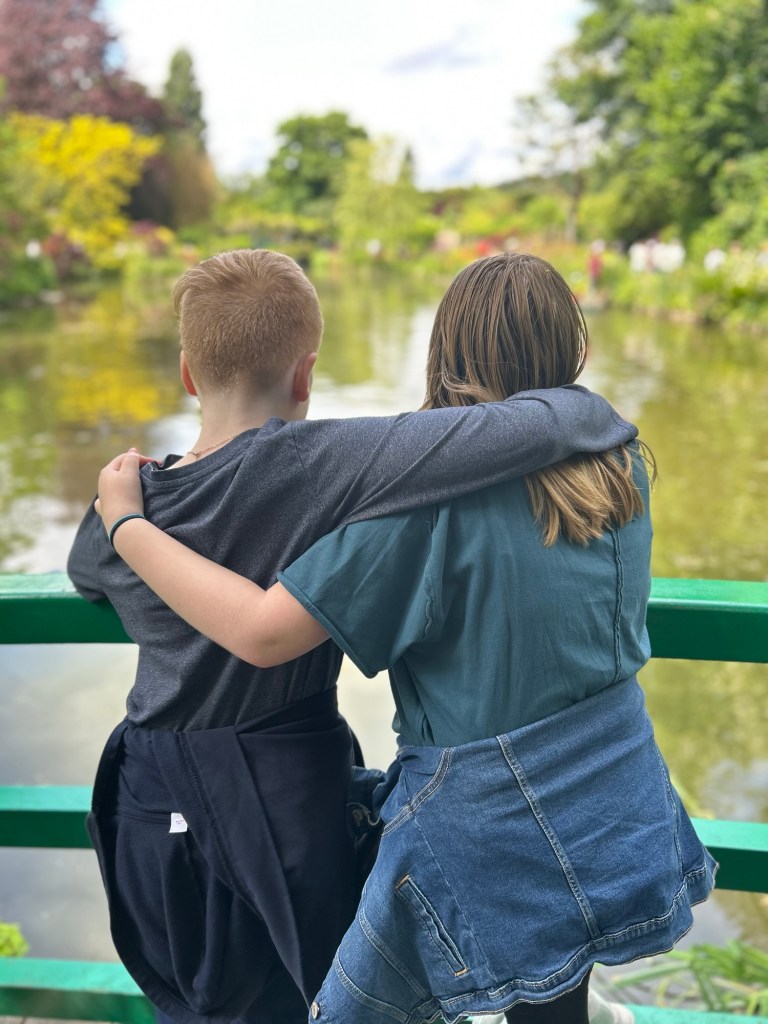
In one movement exercise that day, the first graders impressed me with their yoga skills. They balanced on one leg in Tree Pose, some lifting their hands above their heads, some with little hands together in a prayerful posture. After we tried to balance, I asked them to sit down and reach out a hand to their fellow classmate, palm to palm. I told them, reaching out to each other gives us life’s balance and helps us feel stronger. Feeling warmth and care brings us courage and hope. Yes, we each must also learn to stand on our own two feet, or our own foot when in Tree pose–but remember to keep those currents of connection active and growing. They are what carry us through.
The Tree pose lesson reminded me of a moment I’ve held dear since last Spring. I know many of you experienced The Light Years art festival, in collaboration with AURORA, a Dallas public arts organization, which unfolded with wonder and depth on our Temple campus in celebration of our 150th year. During one remarkable moment from that beautiful evening, I stood with a friend, holding hands, before the “You Are Magic” installation. The inflatable sculpture activated by sensors rose into the words “you are magic” when the warmth from hands circulated from one person to the next. It highlighted for us the ways, hand to hand, face to face, heart to heart, Zoom room to Zoom room, we can cultivate the strands of connection that make us a Temple community. It’s the kind of magic we call holiness, and it’s the kind of magic that can spark faith in the minds of weary travelers.
In all these ways and more, you have carried me and my family through a challenging time. In early March, it will be a year since I was diagnosed with breast cancer. At this point, I am in medical remission and I’m hopeful that this concludes treatment and surgeries for the rest of my life. Time will tell. I’m relieved to be feeling increased energy and generally, more like myself. And yet, I’ve changed. I am more attuned to a longing for redemption and healing than I once was and savor each day with a greater awareness of our mortality. I am also more deeply grateful for the sacred practices, and the soul-opening moments, the small gestures and caring outreach that remind us we are not alone.
So, tonight I want to pause and thank you. Thank you for so generously creating currents of connection through meal trains and sweet notes, flowers bursting with color, encouraging emails, thoughtful calls and adding my name before the Mi Sheberach. Thank you for offering tangible items like perfectly puffed pillows and cooling creams and detailed lists of what to know and who to talk to. Thank you for play lists with music that calms and music that empowers. Thank you for reaching out to Michael for coffee dates and for bringing the kids books and taking them for ice cream. Thank you for just being you — for modeling courage, for inspiring me to be my best self.
As I was reading through this week’s Torah portion, it occurred to me that this is a timely one to offer thanks for the ways we can carry each other through. Parashat Yitro reminds us that sacred encounters fuel our spirit, change our perspective, and motivate us strengthen our community.
Parashat Yitro begins with an introduction to Moses’ father-in-law, Jethro, a Midianite priest who acknowledges the Israelite God, a God who brings about the miraculous liberation of slaves. Jethro is a confidant and a supportive family member, as well as a participant in the ritual life of the Israelite people. And Jethro is a keen observer.
At one point, Jethro observes Moses’ daily work. We read: Moses sat as a magistrate among the people, while the people stood about Moses from morning until evening. But when Moses’ father-in-law saw how much he had to do for the people, he said, “What is this thing that you are doing for the people? Why do you act alone, while all the people stand about you from morning until evening?”
Moses replies, and I am paraphrasing: The people are seeking out my advice when they have troubles or conflicts. And people, being people, have a lot of tzurus, so could you make me another cup of coffee, please? Yitro shakes his head—Moses, this is just too much for one person.
And now quoting the verses of Torah again, listen to what Yitro says: You shall also seek out, from among all the people, capable individuals who fear God—trustworthy ones who spurn ill-gotten gain. Set these over them as chiefs of thousands, hundreds, fifties, and tens, and let them judge the people at all times. Have them bring every major dispute to you but let them decide every minor dispute themselves. Make it easier for yourself by letting them share the burden with you.
I hear in Yitro’s words a clarion call to remember that having power and agency should reside with humility. We are mortal, limited, and imperfect. And, simultaneously, we are partners with God in changing the world. I don’t think it’s a coincidence that our ancient sages placed this powerful lesson before the majestic moment of Mt.Sinai, for how could the leadership and the whole Israelite people receive Torah before learning how to share in the burden and the blessing of day to day life? Without mindfully created connections, how does Torah become a real, living presence in our world?
Working with you, and supporting y’all, is one of my greatest blessings. Together we are seeking to listen and learn and grow, to act and practice. From greeting people for Shabbat to supportive circles through grief and loss, from tending garden beds to packaging Hanukkah gifts for our Israeli brothers and sisters, from civic engagement efforts in our state and in DC to becoming a more inclusive spiritual home, and so much more. There are countless ways we are aligned in carrying forth our mission and still new opportunities we have yet to discover. What an honor and privilege it is for me, to be continuing in the sacred work of building our community with you.
We can hear in Yitro’s wisdom the ever present, urgent call – that we are the balance and steadiness for each other. When this is so, the Tree of Life becomes ever more vibrant in our lives and in the world. May we go forth as a community with renewed strength and hope for tomorrow.
















 Reflections by Rabbi Kim