The art of strength

(Parashat Vayechi sermon at Temple Emanu-El 1/2/26)

I finally caved and agreed it was time to install a TV in the living room. Now our family, or our pre-teens and their friends, can curl up on the couches and watch movies.

My resistance was rooted in a sense of overwhelm with the variety of screens that can occupy space and time—iPads and phones, TVs and Kindles. But I came to realize it isn’t about adding or subtracting screens per say—rather, it’s how we set limits and mindfully use the ones we have. It’s a practice, and one many feel challenged by in the modern age.

I admit, there is a new feature I love, which perhaps many of you have enjoyed for some time. Instead of looking at a blank black rectangular TV on the wall, you can select art. Collections from the Tate Museum, MoMA, Monet and Van Gogh have graced our living room wall. We had fall colors for Thanksgiving, spinning dreidels for Hanukkah, and a series of images in honor of the secular New Year.

This week the TV screen transformed into sparks of color and pizazz on rotation. Flutes brimmed with bubbling champagne, Radio City music hall glimmered with Manhattan winter lights, fireworks punctuated a Los Angeles sky with palm trees bowing to the splendor, doves brought tidings of peace, and crowds danced under disco balls in a frenzied array of moves.

The images told a story about the ways we might mark this yearly event across the globe. Some images were more contemplative and subdued in nature, others were glamorous and electric.

Regardless of how we celebrate, the turning of 2025 to 2026 can bring forth opportunities for reflection:

What has changed, in painful and in good ways?

Who am I now, who are we?

What inspires meaning and a sense of purpose?

How can we cultivate healing and repair?

During Rosh Hashanah we speak about the opening of gates for reflection on our soul’s journey and the ways we connect to others and to God. The Book of Life is before us –what will be written and what will we write? While December 31st at midnight is a far cry from Rosh Hashanah, with the majesty and spiritual depth our sacred practice can inspire, this is a season of transition in the greater culture of which we are a part. Plus, we’ve never believed that the work of change happens in finite periods of time, only during the fall. In other words, teshuva, the work of finding our way back to the core of who we are and who we seek to become, is a continual, lifelong practice.

New Years, the secular and the sacred, can feel like the closure of a chapter or a book and the beginning of a new one. And it just so happens, we start off 2026 with an alignment between our secular calendar and our Torah reading cycle! This Shabbat we read Parashat Vayechi, the last Torah portion in the Book of Genesis, so we really are ending one book and beginning a new one.

Lord Rabbi Jonathan Sacks, zichrono livracha, offered a beautiful recap of Vayechi, pointing to the central theme of the power we draw from family. Genesis ends with three significant events—

Jacob blesses Ephraim and Menashe,

Jacob blesses his twelve sons, and finally, following Jacob’s death,

Joseph and his brothers find a sense of fragile peace after years of conflict and tension.

The whole book of Genesis is punctuated by the challenges of sustaining a family—there are stories about infertility and jealousy, lies, banishment and even violence against family members. Given all this, as Rabbi Sacks noted:

The mere fact that Jacob is able to gather his sons together is unprecedented, and important. In the next chapter – the first of Exodus – the Israelites are, for the first time, described as a people. It is hard to see how they could live together as a people if they could not live together as a family…

…Genesis is not a hymn to the virtue of families. It is a candid, honest, fully worked-through account of what it is to confront some of the main problems within families, even the best…

Rabbi Sacks concluded with these words:…I believe that family is the birthplace of freedom. Caring for one another, we learn to care for the common good.https://rabbisacks.org/covenant-conversation/vayechi/

Family can take different forms, not only our blood relatives. For some of us, our family systems are far from safe or healthy. That is why there are so many stories in the Torah and through our tradition about friendships that become family, a community and a neighborhood can be too. In all these systems, we ideally practice care and conversation, listening and sharing. And in all these systems, we inevitably make mistakes. Yet, the last chapters of Genesis remind us—wherever we are, whatever web of connections we are part of, there are ever-new ways to cultivate strength and to strengthen one another.

The pages of the story keep turning…Genesis ends and Exodus begins but it is really a continual unfolding, with challenges and hopes, doubt and faith in ourselves and each other as cyclical elements through all of Torah, through all time, rather than a linear march through events. Perhaps that’s why, when arriving at the end of each of the five books of Moses we say the following words: Chazak, chazak v’nitchazek. Be strong, be strong, and may we be strengthened.

A year ago, I remember a friend, who is really like a sister, offered a blessing for 2025: May it be a more gentle year for you. After a cancer diagnosis and the sudden loss of my dad, I responded with a rousing AMEN. And then a week later, my childhood home burned in the Palisades fire. Needless to say, we exchanged a different blessing this year—more along the lines of Chazak, chazak v’nitchazek. Be strong, be strong, and may we be strengthened.

So as the seasons turn, and at the dawn of 2026, let us hold close these words from our Jewish new year (Machzor Mishkan HaNefesh).

Once two Sages were walking very early in the valley

And they saw the light of the morning star.

Said one to the other,

‘This is how the redemption will be.

The dawn breaks with a single ray of light

And bit by bit the sky is illumined,

Until morning comes and the darkness is gone.

So the redemption will occur little by little,

Growing steadily and gradually

Until the world is full of light.’

Do not wait for a miracle

Or the sudden transformation of the world.

Bring the day closer, step by step,

With every act of courage, of kindness,

Of healing and repair.

Do not be discouraged by the darkness.

Lift up every spark you can

And watch the horizon

For the coming of dawn.

Look closely!

It has already begun.

For whatever comes, and whatever we create, may it be that we walk with connection to something greater than us, and that through our caring presence, and through our courage, we strengthen one another with sparks of joy and healing that can light up the night sky.


Drafting pencil

I learned of the following poem from my mentor and colleague, Rabbi David Stern, and I am forever grateful for the gift of these words:

Special Orders by Edward Hirsch

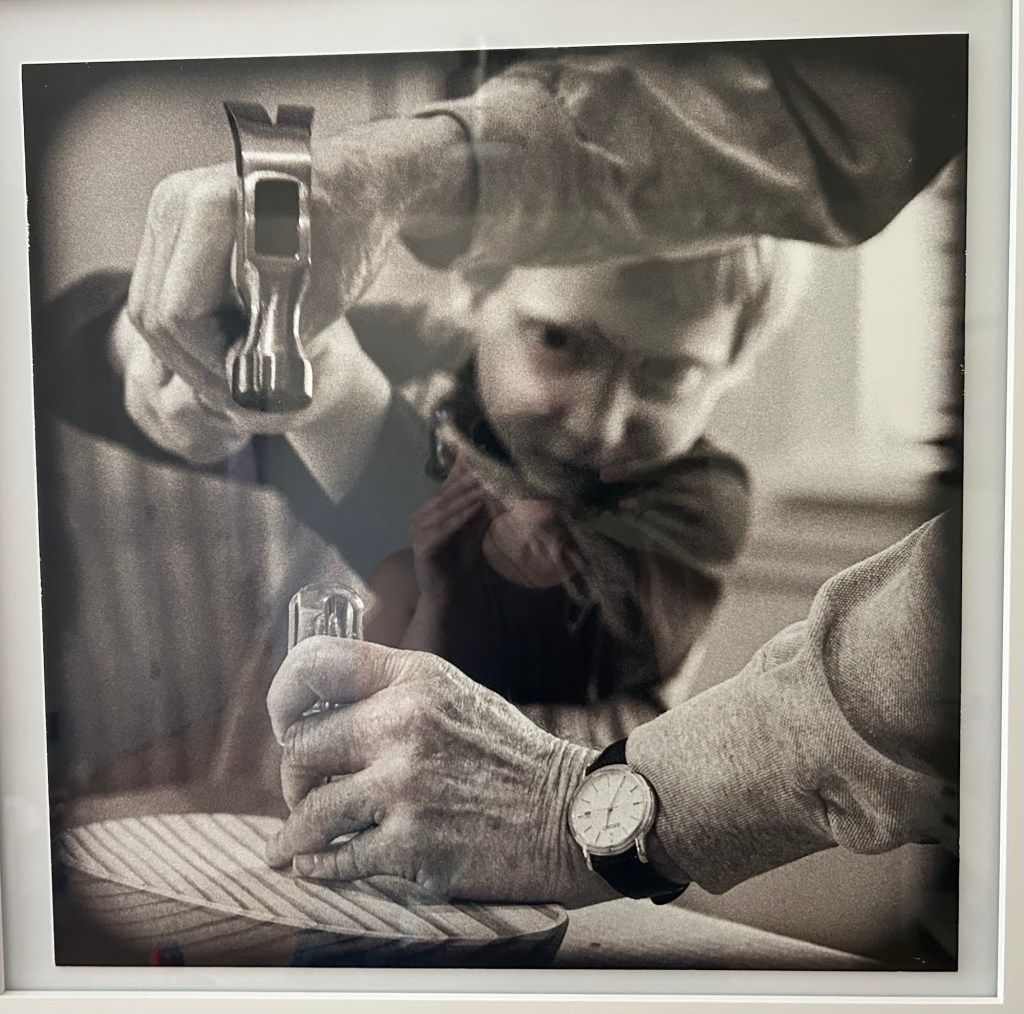
Give me back my father walking the halls of Wertheimer Box and Paper Company with sawdust clinging to his shoes.

Give me back his tape measure and his keys, his drafting pencil and his order forms; give me his daydreams on lined paper.

I don’t understand the uncontainable grief. Whatever you had that never fit, whatever else you needed, believe me,

my father, who wanted your business, would squat down at your side and sketch you a container for it. 

I shared this treasure at a memorial service yesterday and could barely begin to say the words as it felt so true as I come to accept that my father’s physical presence is searingly absent. In these days of sermon drafts and soul accounting and vast wonder that we are here at all, I feel his absence intensely. But I also feel the opportunity— to learn and to evolve with this tender, broken heart and to live with an even greater sense of presence and purpose.

And how do we approach the collective sense of trembling we feel as 5786 begins only a week away? Perhaps, Hirsch’s words can guide us beyond the personal, reminding us of the immeasurable presence of Avinu Malkeinu, (Our Father, our King) of Imeinu Malkatanu (Our Mother, our Queen). For me, the majestic language for God is a partial picture of my faith. This year, may the King/Queen/Judge, rise from the throne or bench, and squat down beside me, us, helping lift our drafting pencil to imagine and create healing and wholeness for ourselves, our loved ones, our people, our world.

Shanah Tovah, dear ones.

Weeping

The Place Where We Are Right, Yehuda Amichai

From the place where we are right

flowers will never grow in the spring.

The place where we are right is hard and trampled like a yard.

But doubts and loves

dig up the world like a mole, a plow.

And a whisper will be heard in the place where the ruined house once stood.

We are in the narrow place, as the days turn from Tammuz to Av. The first day of Av (Rosh Chodesh Av)* begins tomorrow night, and yet, it has felt like Av for ages now.

The moon ebbs and flows, as a mother’s womb, and I wonder, does the moon weep with us, women of desert and stone? We are in the narrow place of war and my heart aches. For the families of hostages. For young soldiers setting out across trampled yards and ruins, and the circles of people who love them.

For the children. Like the angels weeping for the Egyptian army drowning in the Sea of Reeds, the lives lost for our freedom, how can we not weep for the children on both sides of borders and cultures? We mustn’t trample our compassion into yards of pavement and dust. We mustn’t plow our whole, faithful selves into sharp edges. Listen to the whisper of children, longing for peace.

*As the month of Av begins, please join me in donating to an organization I’ve held in high regard for decades, NIF: https://www.nif.org/nifs-campaign-to-address-humanitarian-needs-in-gaza/

Are you there, God? It’s me, Zelophehad’s daughter.

This upcoming Torah portion, Pinchas, beckons with hints and wisdom that stirs my heart. After their father dies, the daughters of Zelophechad were unable to inherit their father’s land because land could only be passed down to sons. Thankfully, after the daughters raised their objections to Moses, and Moses consulted with God, the law changed, establishing a new approach to inheritance. God said to Moses, “The plea of Zelophechad’s daughters is just: you should give them a hereditary holding among their father’s kinsmen; transfer their father’s share to them.” (Numbers 27:6).  The daughters found themselves in a terribly narrow place, one created by grief, and the community’s unjust policy added further injury to their loss. But the people paused, acknowledged the daughters before them, and together, established greater ethical standards in the apportioning process of land.

I imagine those daughters. I imagine them holding each other and calling out to God before approaching Moses. Amidst their grief they are resolute, and want to plant roots in the earth, to speak in common voice, to remain part of a collective, to challenge their people to evolve towards compassion and care, justice and healing. Can we hear them and see them? Can we rise each day for the daughters, for the sons, whose lives illumine the darkness?

Layers of grief at every turn. Fires and flood waters, children swept away by war and river. I’ve felt grief that feels both foreign and familiar–beyond what seems possible and simmering embers from the recent losses of home–in my body, in my family, in the Palisades flames, and so much more. We are part of many tribes, often with connections that go unseen, and some that emerge out of the greatest tragedies.

Ana Adonai harofei lish’vurei leiv um’chabeish l’atzvotam –Healer of the Broken Hearted and Binder of their Wounds, are you there? It’s us, we are the daughters of desert and hope. Give us strength as we make our way.

Coming Home

We have almost arrived at Sinai as the counting continues (day 46).

I climbed the mountain believed to be Sinai years ago and remember meeting quite a few characters along the way to a breathtaking summit—a desert expanse that stretched to eternity. As I reflect back, and prepare for our return home after this month of travel, I have been thinking quite a bit about the mountain ascent. Sinai is both a physical meeting point between us and God, and a portable experience of revelation that can occur anywhere.

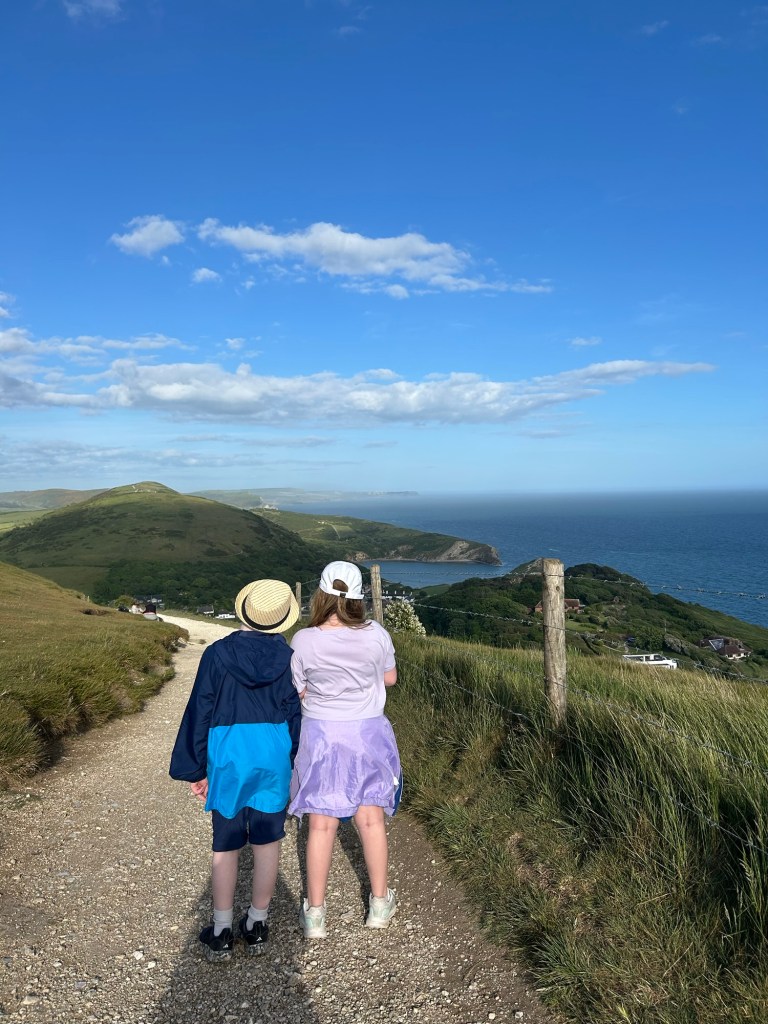
As the great naturalist John Muir once said: “Going to the mountains is going home.” It’s been so true for me, but not only in the literal sense. Yes, the jagged peaks of the Sierra Nevada range, the countless memories of Olympic National Park hikes, bring a unique spark of joy to my soul but there are other climbs that leave an indelible imprint on who we’ve been and who we are becoming. Some of the climbs, like the journey to motherhood and welcoming our two miracles are transformative in the amount of joy that fills our hearts—others begin from a place of trembling fear as we enter through dark forests of peril, seeking the light of healing and hope. Grit and a sense of purpose can help strengthen each step.

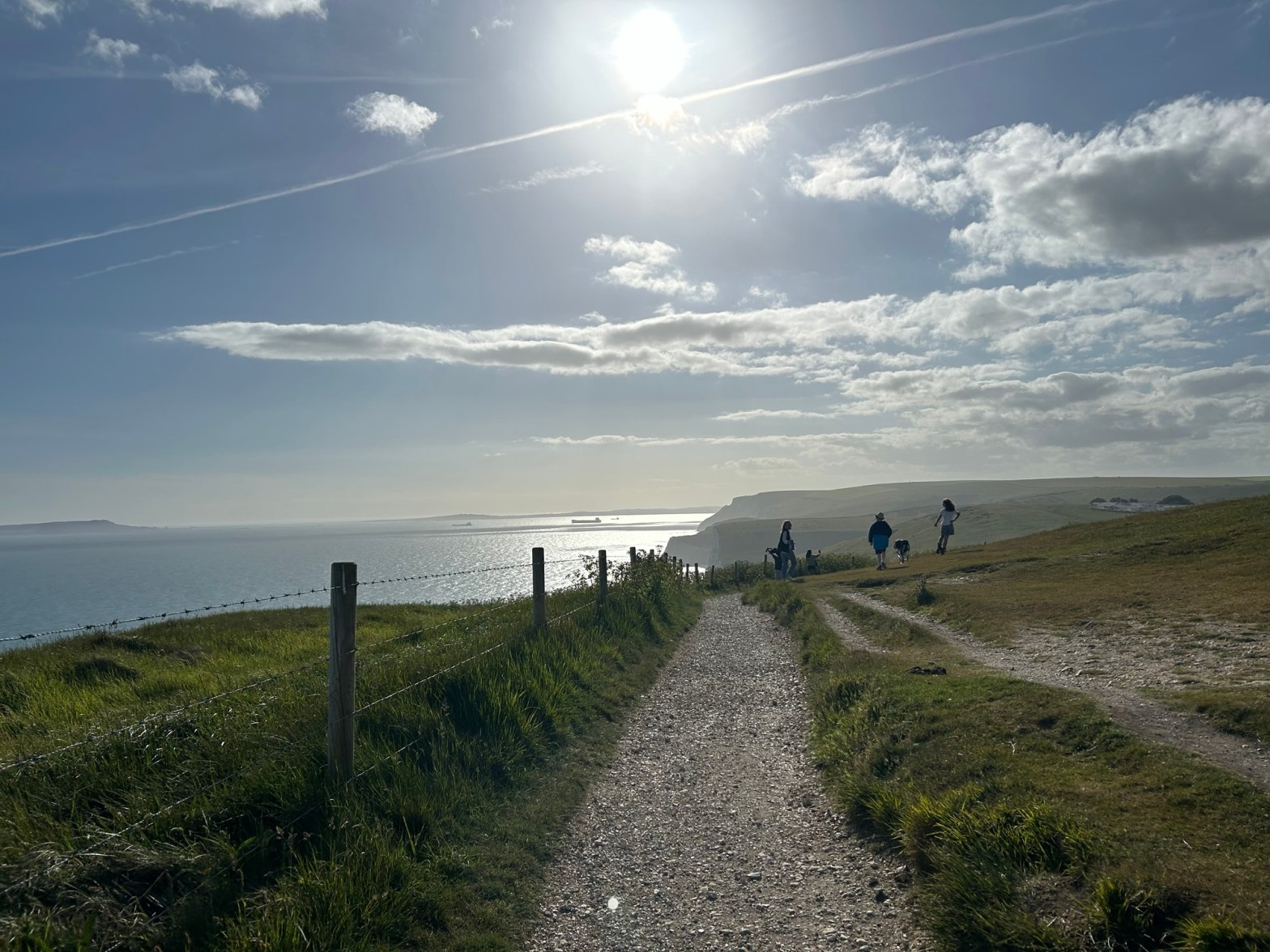
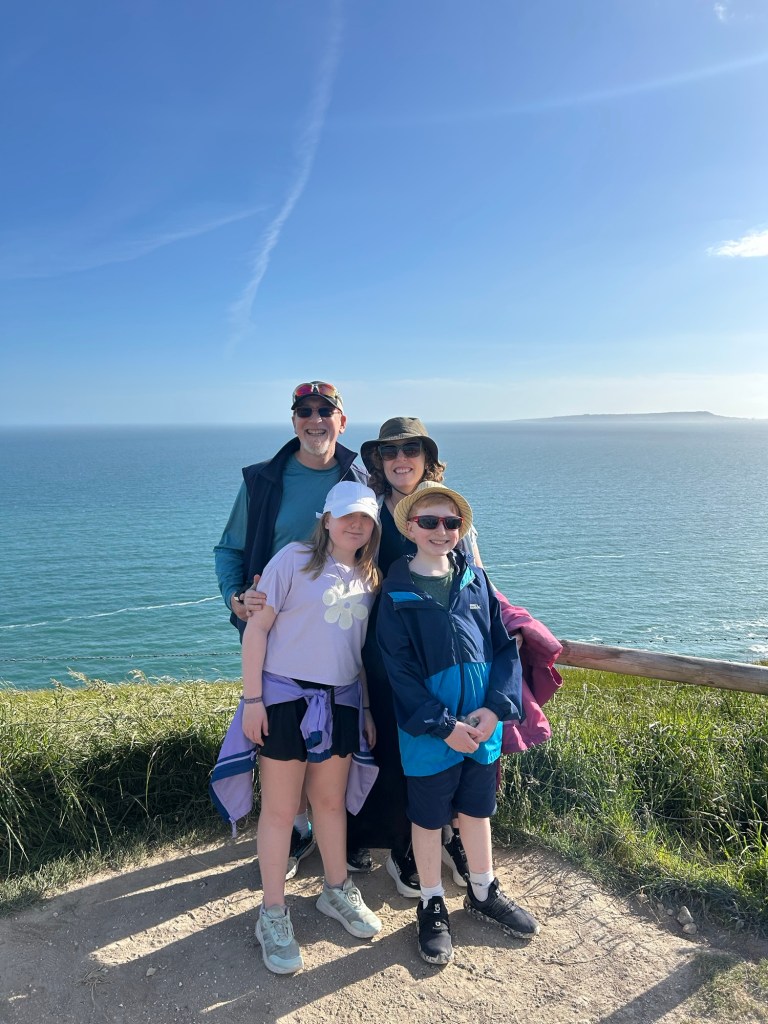
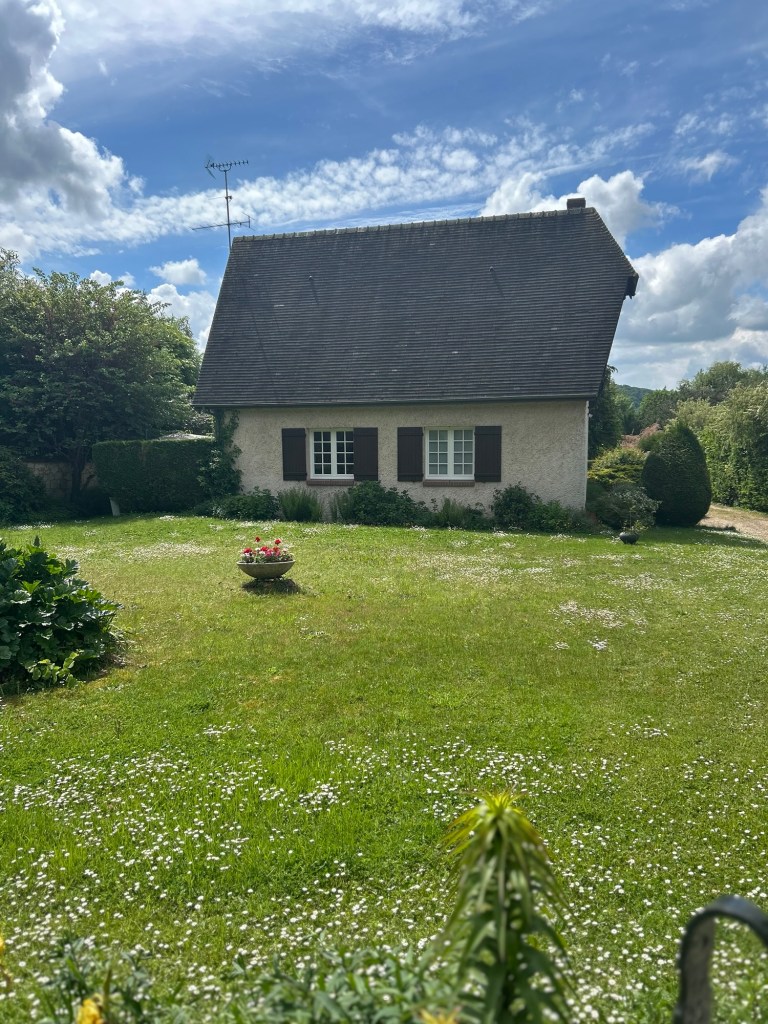
The close of this time in England has been a sacred gift for us. We are staying in the countryside with one of my dearest friends from childhood and her lovely family. In addition to the local fairs and the fields, the vibrant flowers, the menagerie of animals and fresh air, we’ve had heartfelt conversations about faith, service, history, family and more. At the core of so much of what we’ve discussed is the question: “Where is home?” In a time when we are experiencing such change and uncertainty in places we call home, in systems and conflicts that feel so deeply broken and painful, home can still be felt when we dedicate ourselves to cultivating some good — to remain open to others and courageously carry on with what we can do to make this world just a bit more compassionate. Perhaps all of life is a process of coming home, never quite there, but in the building and growing and believing we can still find blessings.

Roots

“As I put roots into the ground, every step I take brings more roots up to accept and welcome me in—into my heritage and into the woman I am slowly becoming, even in this very moment. These roots are embedded in the soil of who God is and who God has always been…we feel the mud pulse with memory. We feel the trees tell us stories…” (Kaitlin Curtice).

I had in my mind’s eye a sense of what this time of traveling together abroad for the first time as a family (until now, we’ve traveled all over the States with our 11 year olds) might be like—and it’s been a gift that I couldn’t have fully imagined. We’ve been fortunate to have gracious hosts and spectacular weather, and, despite some frayed nerves, have been a pretty amazing traveling team! We’ve had full days and leisurely days, planned itineraries and spontaneous discoveries. As the last week of this European trip spans before us, I have been thinking back on the insights I’ve gained through the eyes of our children and for myself. Here are a few, and I will continue to share more as we count up the days to Shavuot—happy 39th day of the Omer!-to our return to Dallas.

  1. We are so interconnected and in the deep roots of humanity, we can find such a sense of the Divine. This hasn’t come only through delicious, sweet, sunny moments of indulgence or pleasure (although we’ve had quite a bit of culinary focus in each day!) — it’s been in seeing our children try to absorb the darkness of the past, the complexity of today, and the uncertainty of the future. We’ve had intense learning moments and discussions about the fate of Jewish children in Nazi Europe, the shifts in America and the world toward greater extremism, the struggle for peace and stability, the suffering of Israelis and Palestinians and all innocents who are trapped in cycles of violence. Navigating the intensity of raising children and keeping a moral compass steady is something we can’t do alone, and we are grateful for the people and places along the way that have deepened our efforts, while challenging us to continue to reflect and act wherever we are.
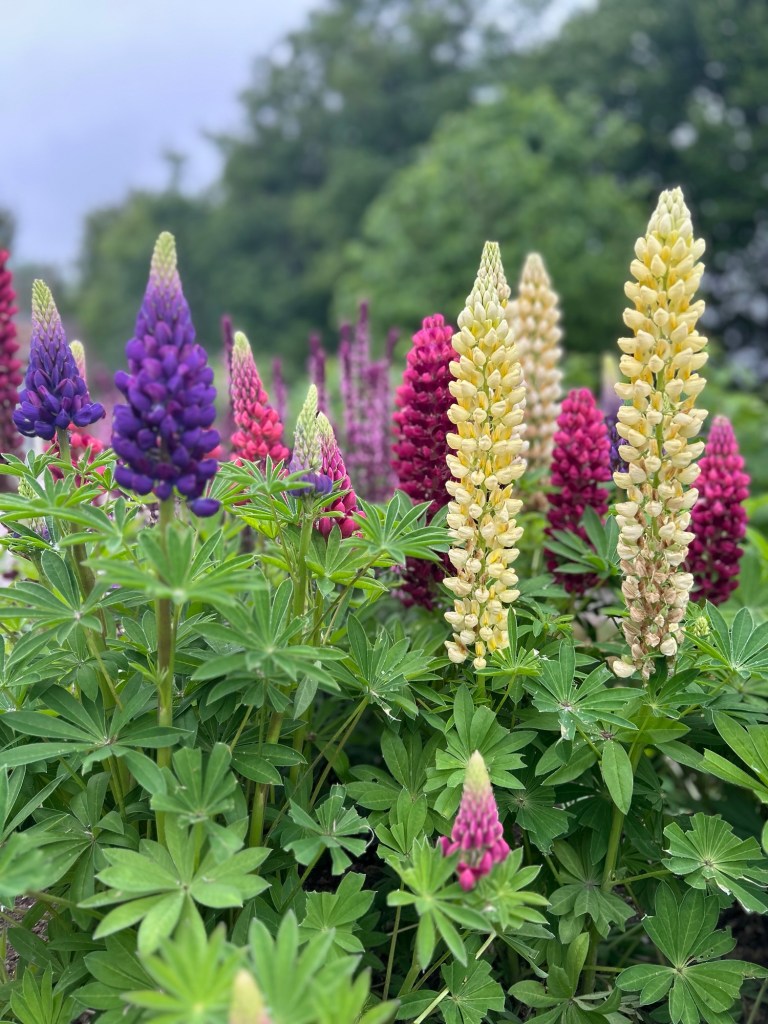
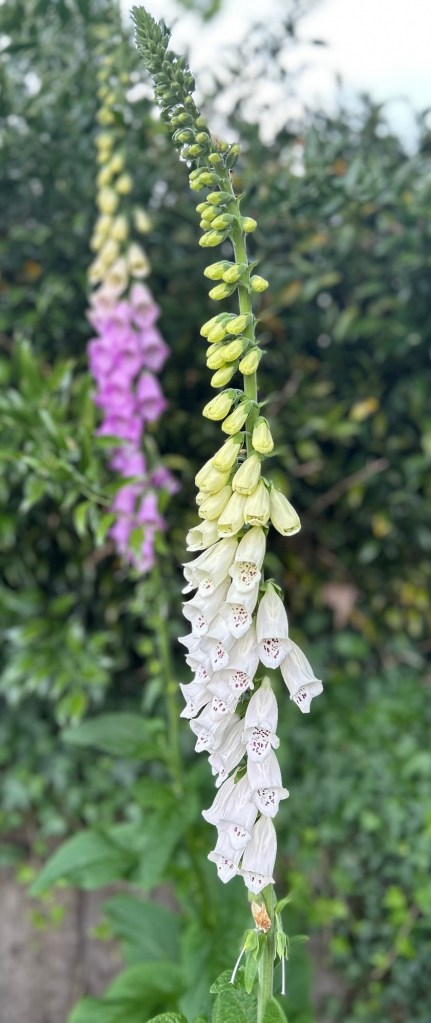
  2. Each one of us can cultivate gardens. One doesn’t need to be an expert—start at the beginning with soil, water, and seeds of hope. We’ve mostly been traveling through urban landscapes, but just outside the city or throughout the pavement pathways, the historic sites and modern buildings, we’ve found such magnificent gardens. It’s been a powerful reminder that the scent of earth can be so calming and restorative to the weary soul, while the children run around in an open, grassy space, or we sit and read on a park bench, or stroll through gardens with bursting color. And certainly gardens come in so many forms, including art and poetry, kneading bread and song. Sometimes the beauty is in the asymmetry, sometimes in the simplicity, sometime just in the soulful effort.
  3. And finally, for today, the pulse of memory is in every place and every corner of our earth. Often, we become so accustomed to the rhythms of our lives that the pulse becomes faint or seemingly irrelevant. During a pause—whether an extended sabbatical, or weekly Shabbat observance, or moments in any day—we have the opportunity to hear and feel and know with a greater attunement.
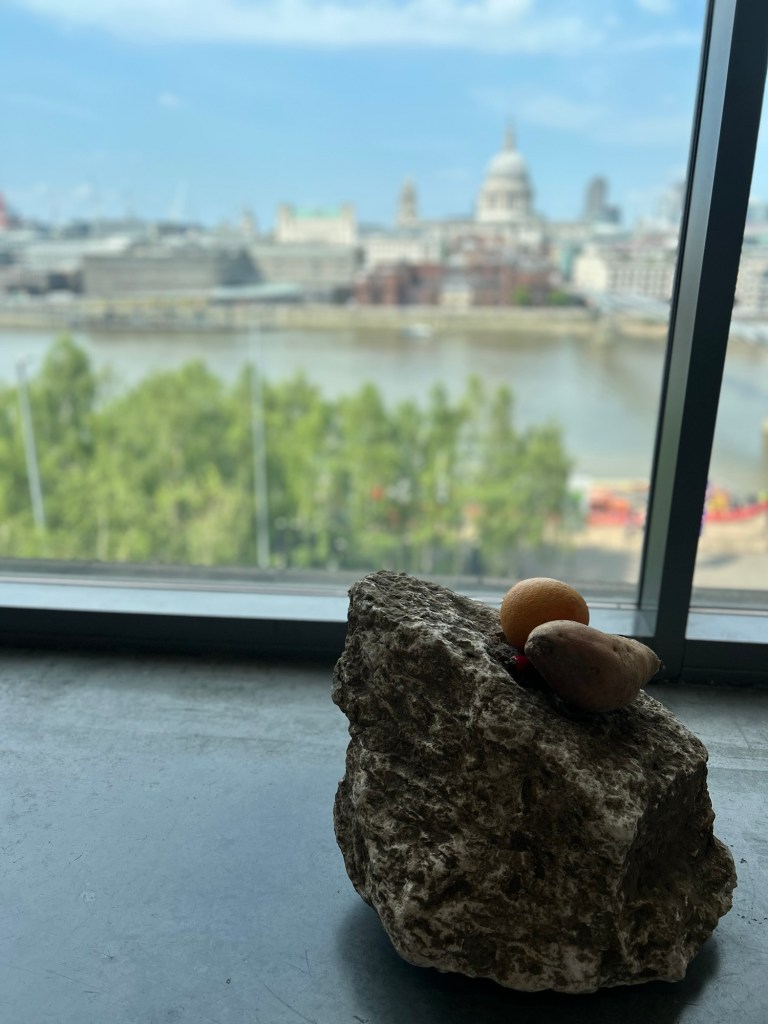
Exhibit at the Tate Modern
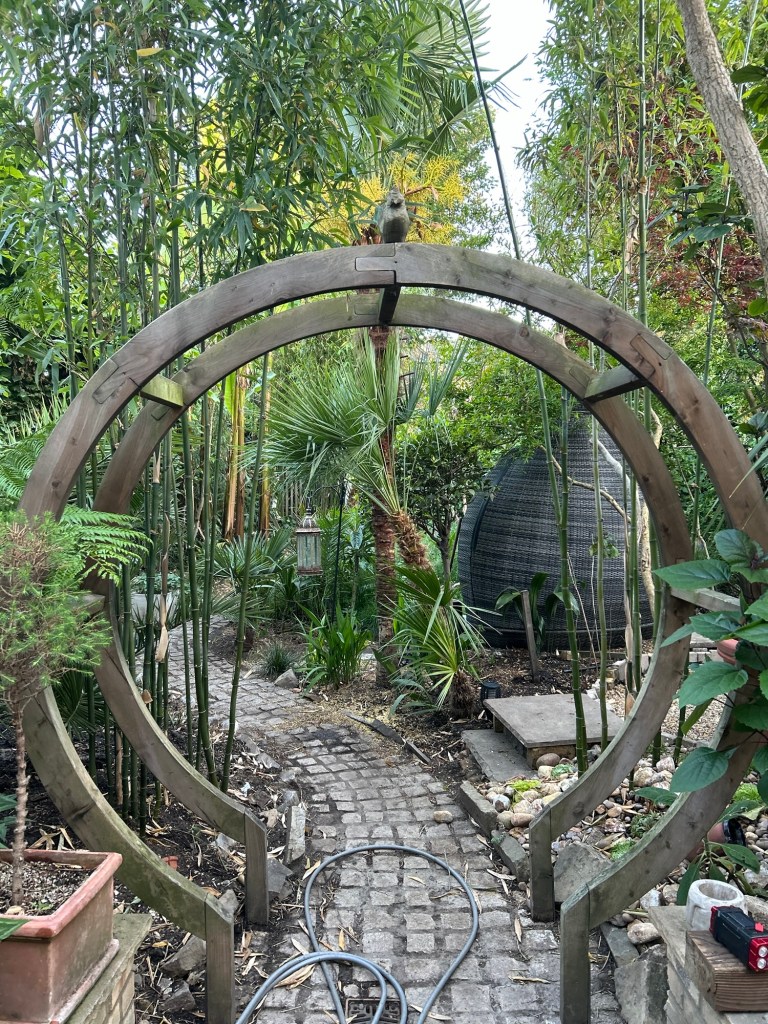
Garden at the 17th century house where we are staying in London
Kensington gardens

Slowing down

Parisians pour through the subway and bustle about like New Yorkers, and we’ve spoken to more than a few who work several jobs to make ends meet.

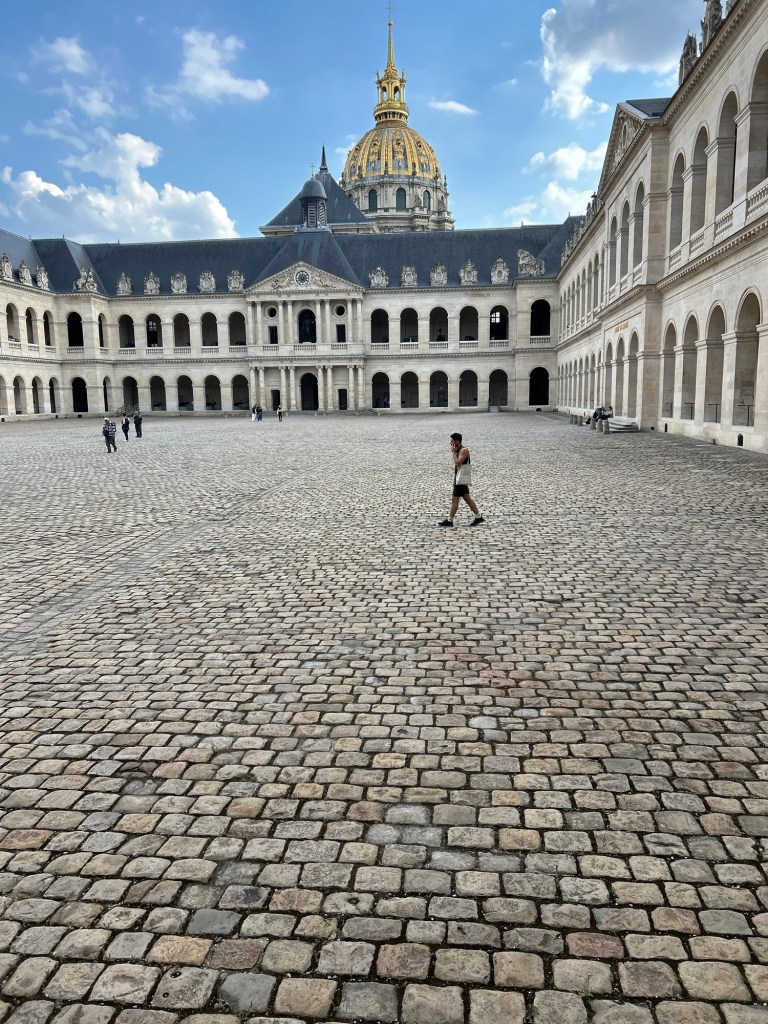
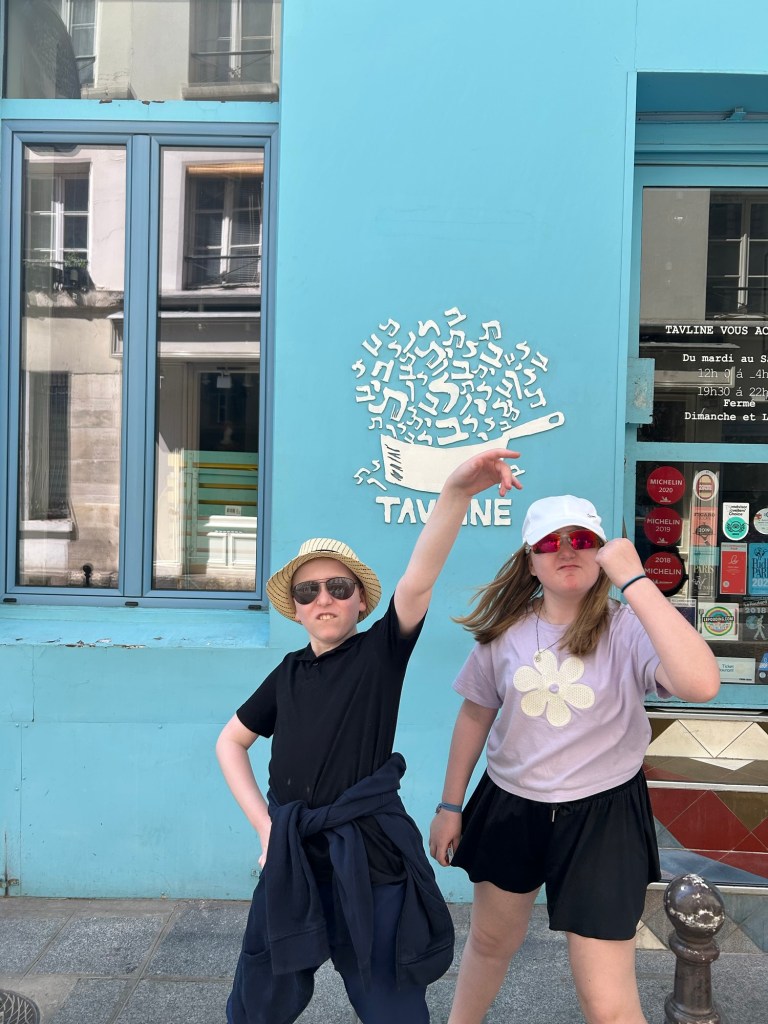
But even in this urban drumbeat, there’s a general ethos of “savoring”—stopping in a nearby park on a warm afternoon, letting your feet dangle over the Seine, pursuing the many bookstores with coffee cups clanking in the adjoining cafe, beginning dinner as the summer light wanes over golden cathedral spires. Or writing this post from a velvet covered chair in an upstairs room at Shakespeare and Company in the early evening.

A spark of Shabbat and mindful savoring amidst a world that can sometimes feel as if it’s spinning faster than light.

May we remember to pause and savor wherever we are…

We sing

A favorite passage I came across recently:

We sing because we must. We sing because it fills our lungs with nourishing air, and lets out hearts soar with the notes we let out. We sing because it allows us to speak of love and loss, delight and desire, all encoded in lyrics that let us pretend that those feelings are not quite ours. In song, we have permission to rehearse all our heartbreaks, all our lusts…best of all, we can sing together, whole families knowing the same songs and giving them the same meaning. When I sing with my mother, I am struck every time that our voices are the same. There’s a moment of deep, genetic resonance in hitting the exact same note in the exact same way. When I sing with my husband, our voices clash, but we sing the songs that mean something only to us, most often the yearning tones of “Wichita Lineman.” When I sing with my son, I am teaching him something: not just words and lyrics, but how to survive. Like the robin, we sometimes sing to show how strong we are, and we sometimes sing in hope of better times. We sing either way. (Wintering by Katherine May, p.228)

In the Garden

For now the winter is past, the rains are over and gone (Song of Songs 2:11).

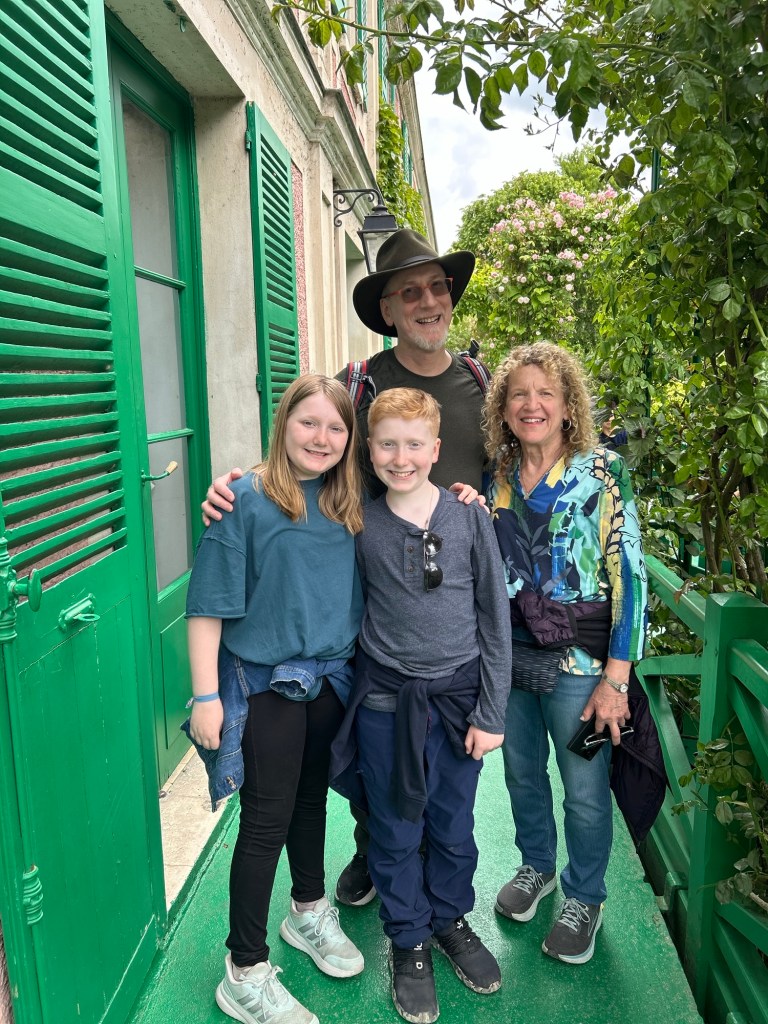
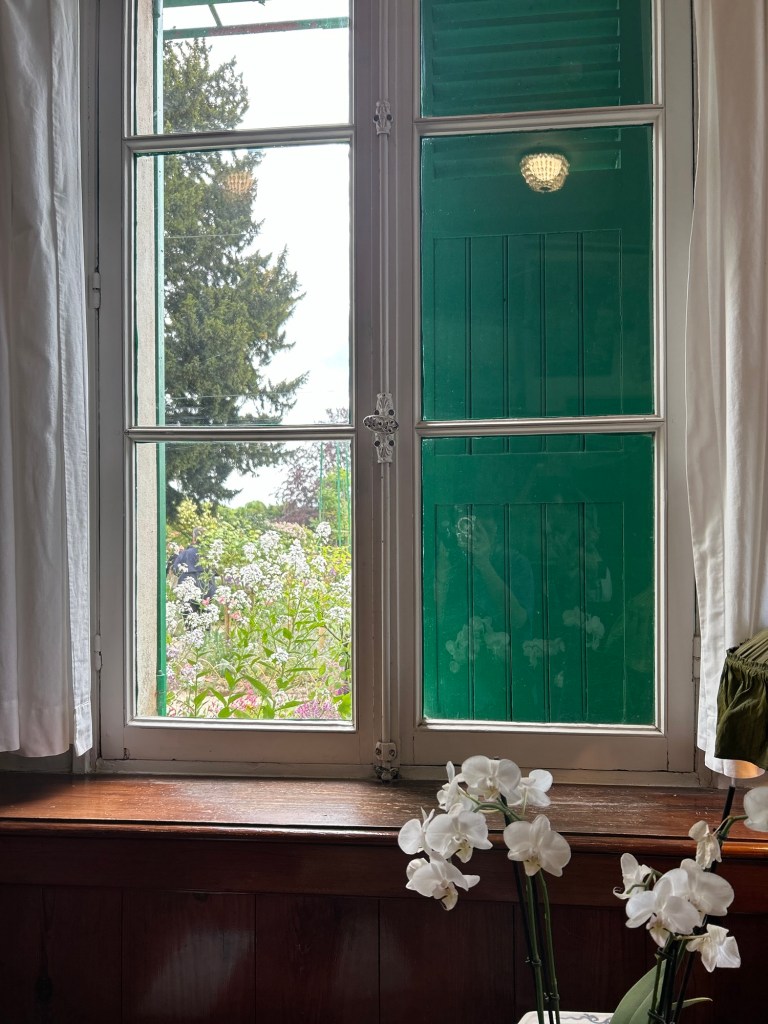
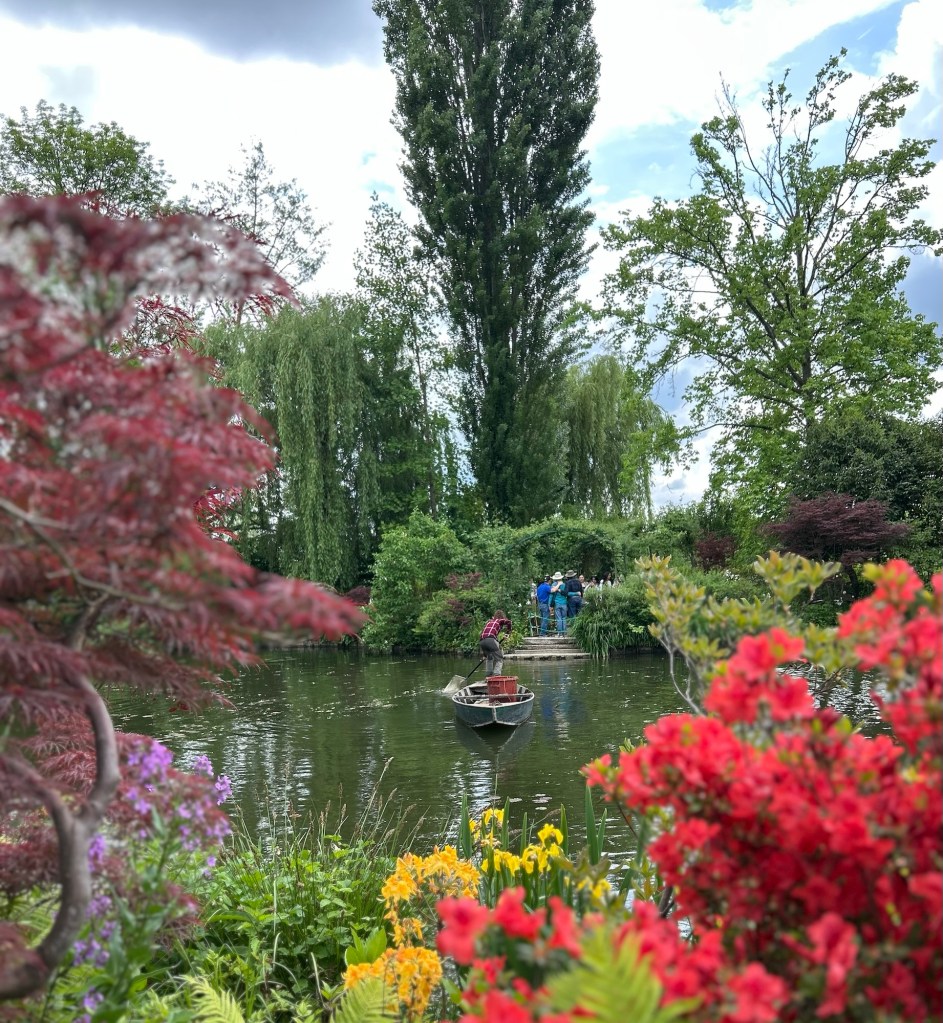
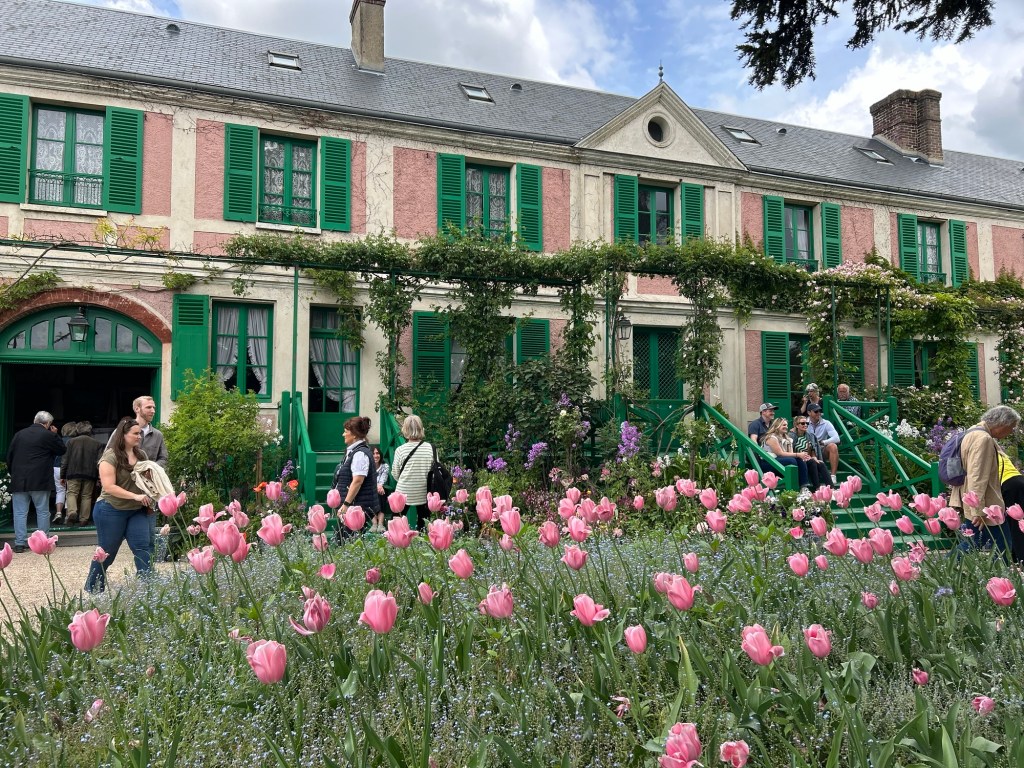
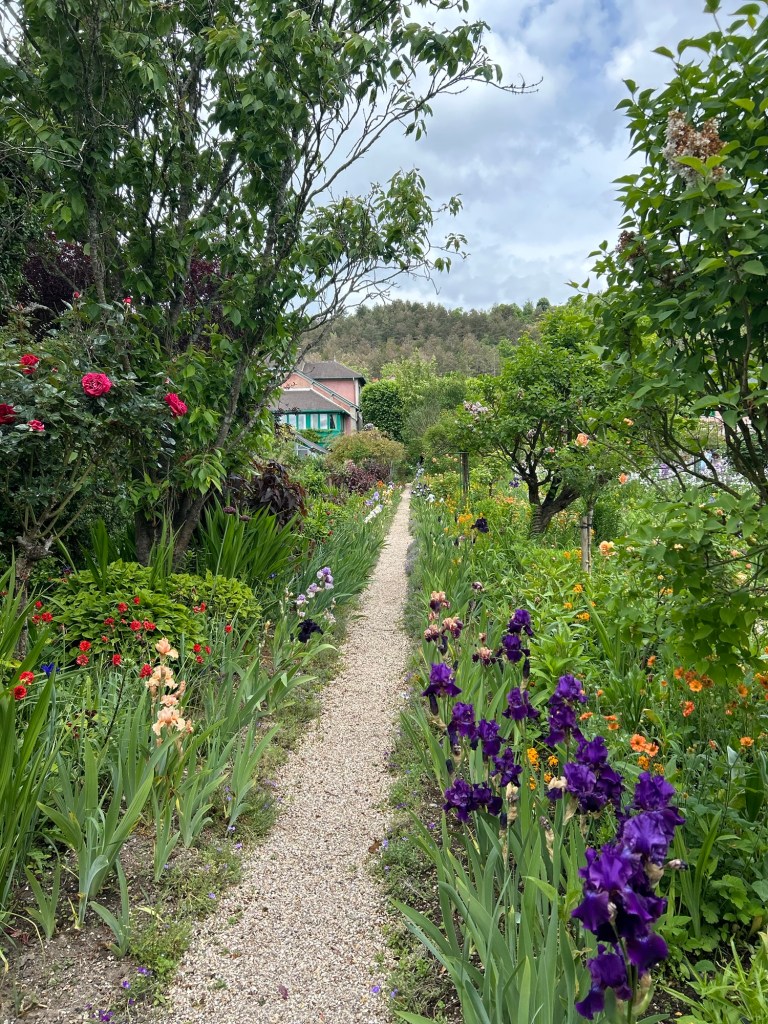
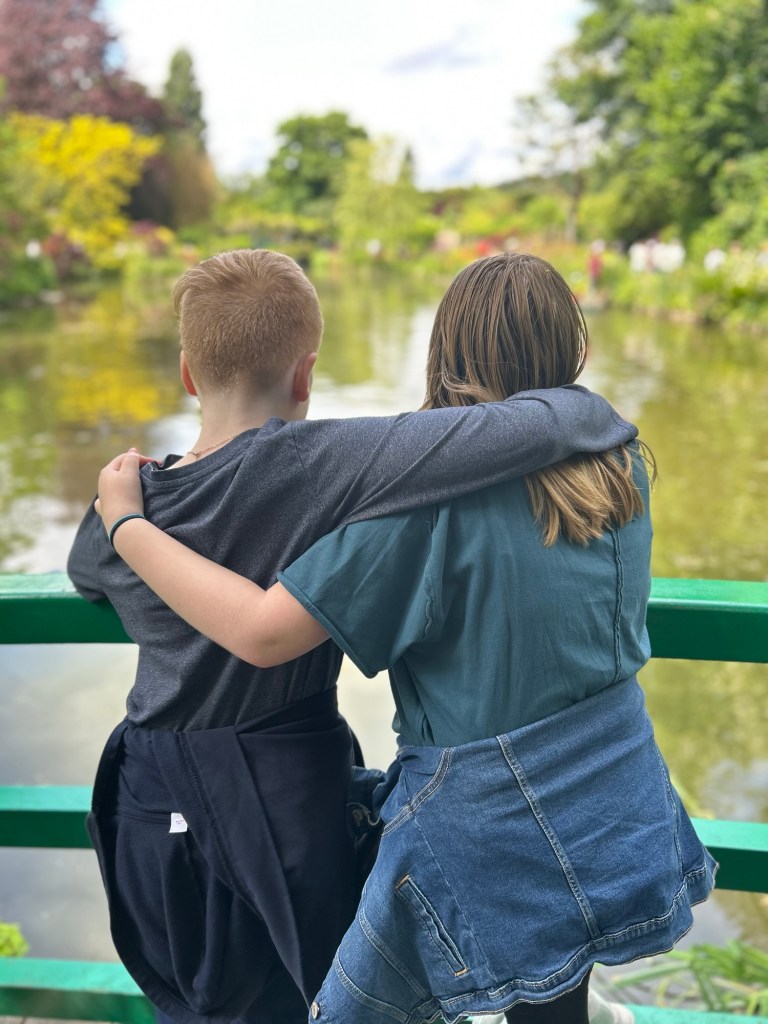
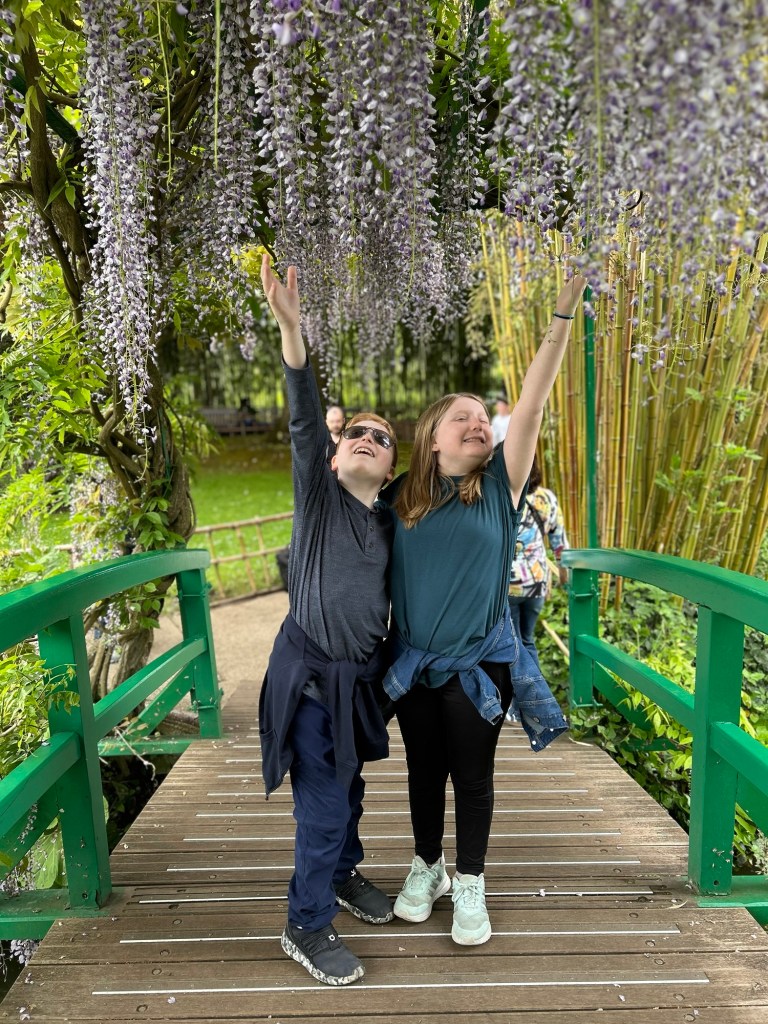
We took the train toward Rouen, along with a steady flow of other Monet enthusiasts, and spilled out into the center of Vernon, an adjacent town. We hopped on a local bus that wound its way along the country road as bikers peddled behind, and soon we arrived to the start of Giverny. Since it was almost lunch, we paused at a cafe with a small garden in front, just a taste of the bursts of color we would soon find.

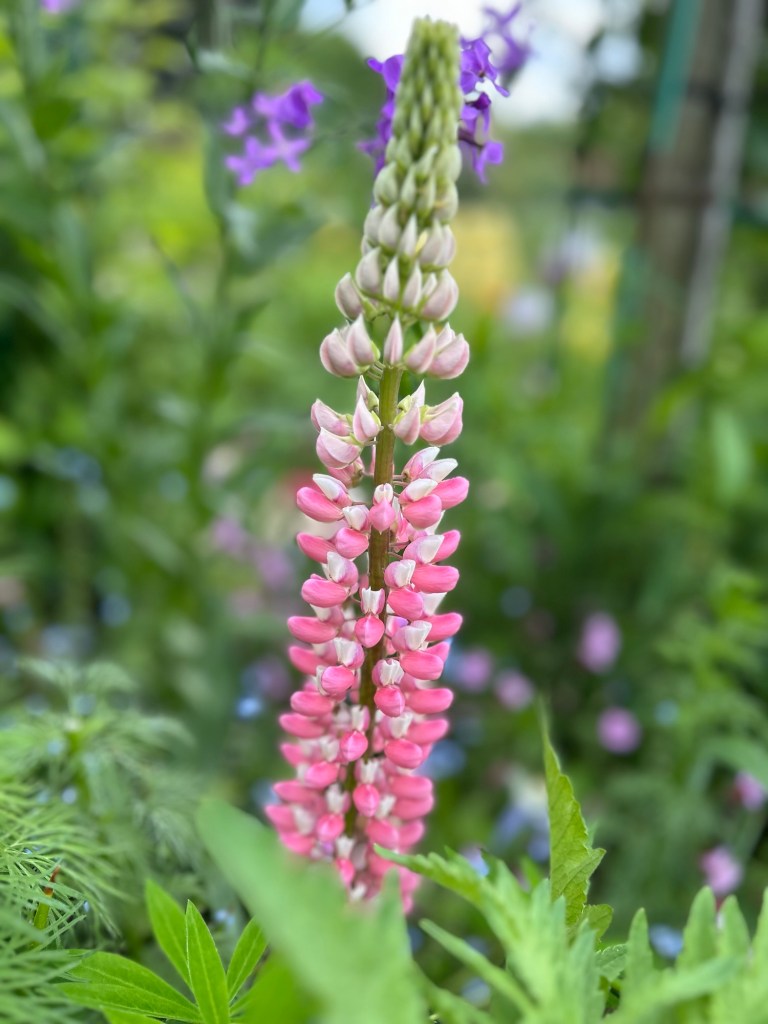
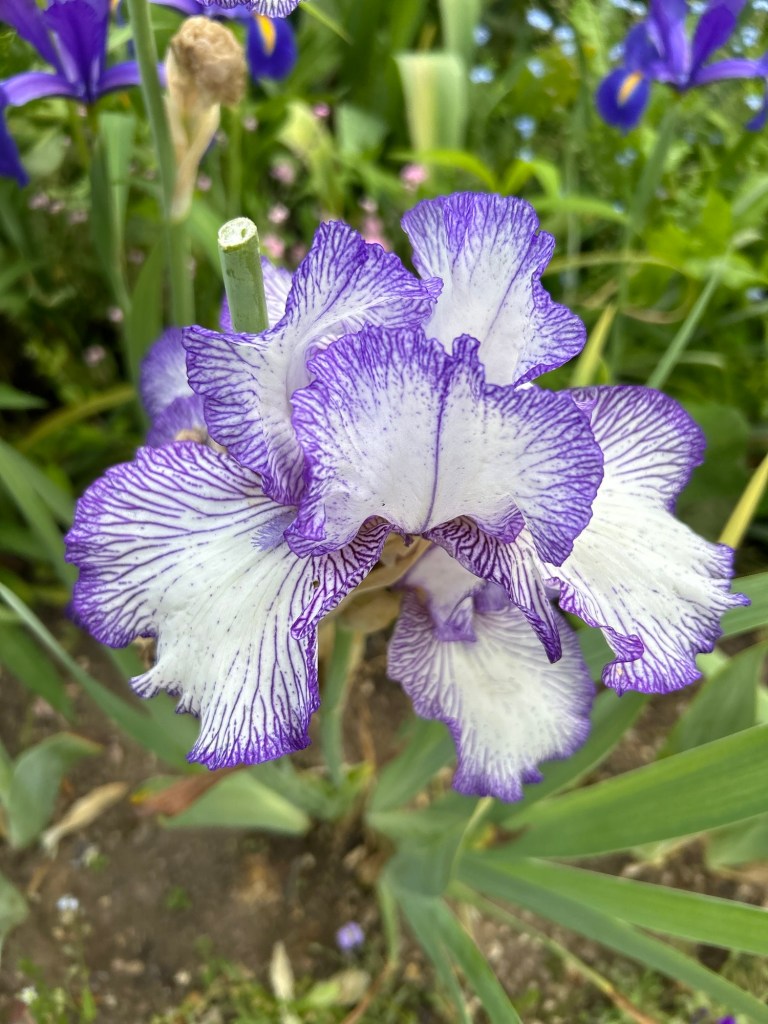
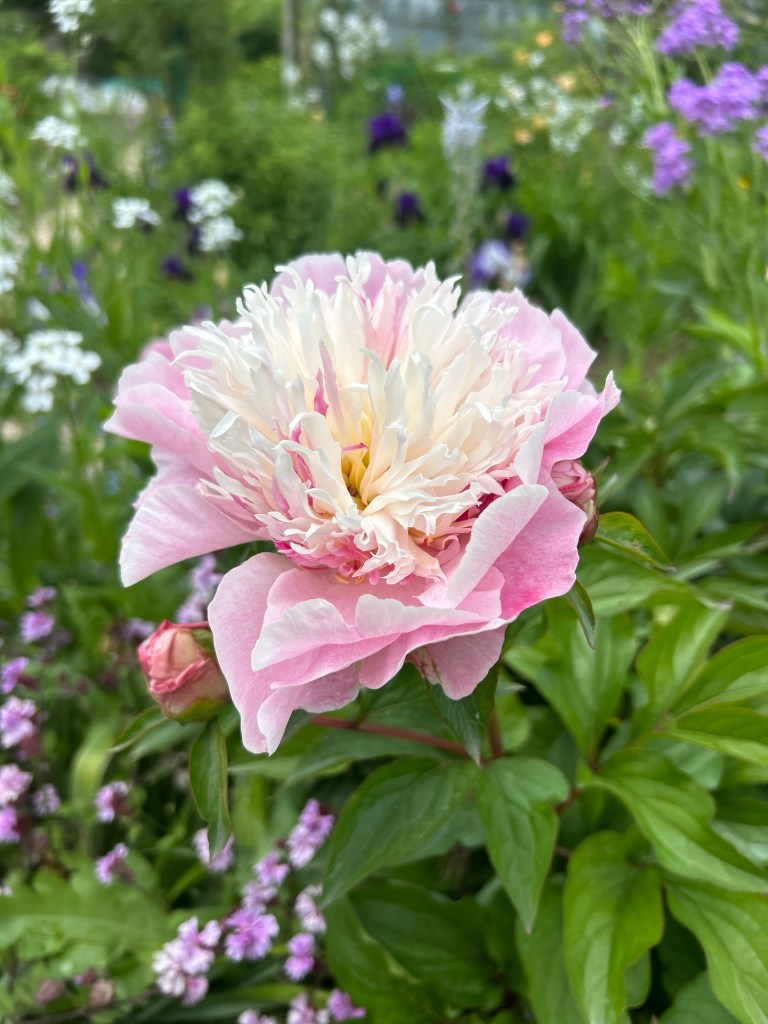
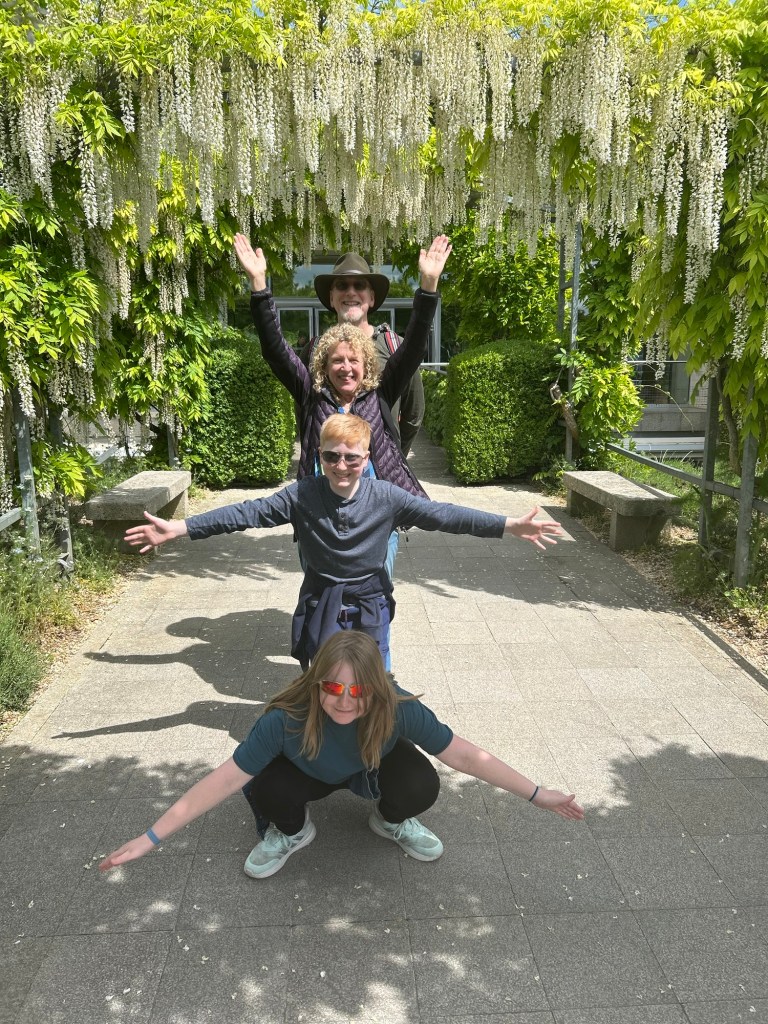
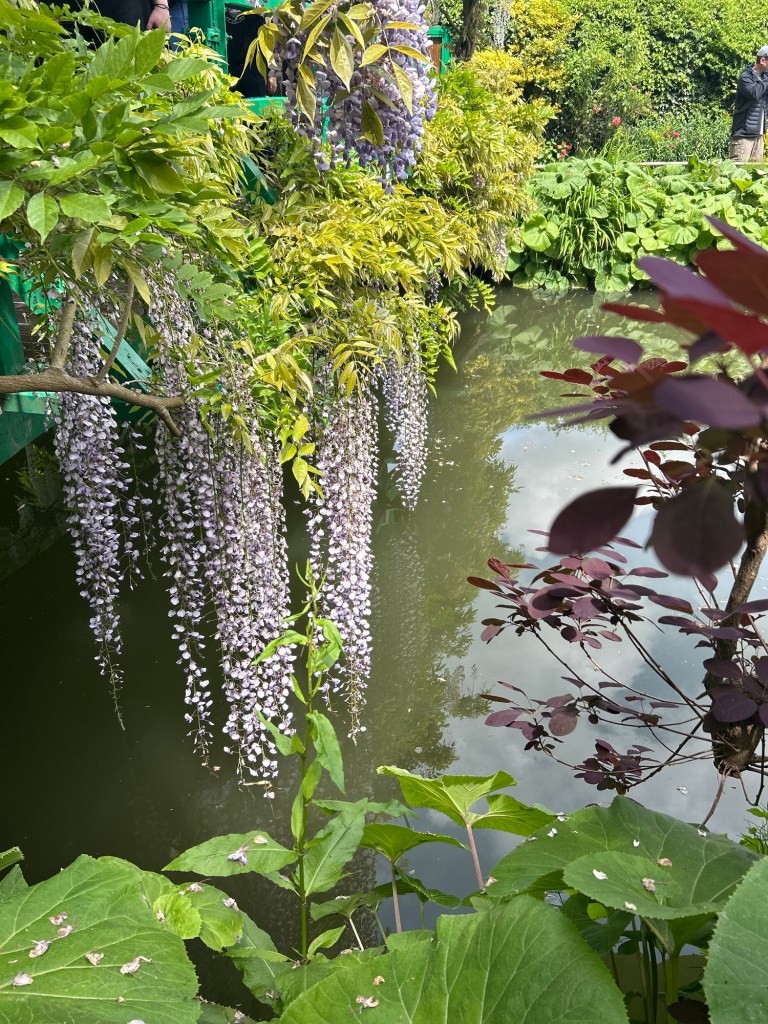
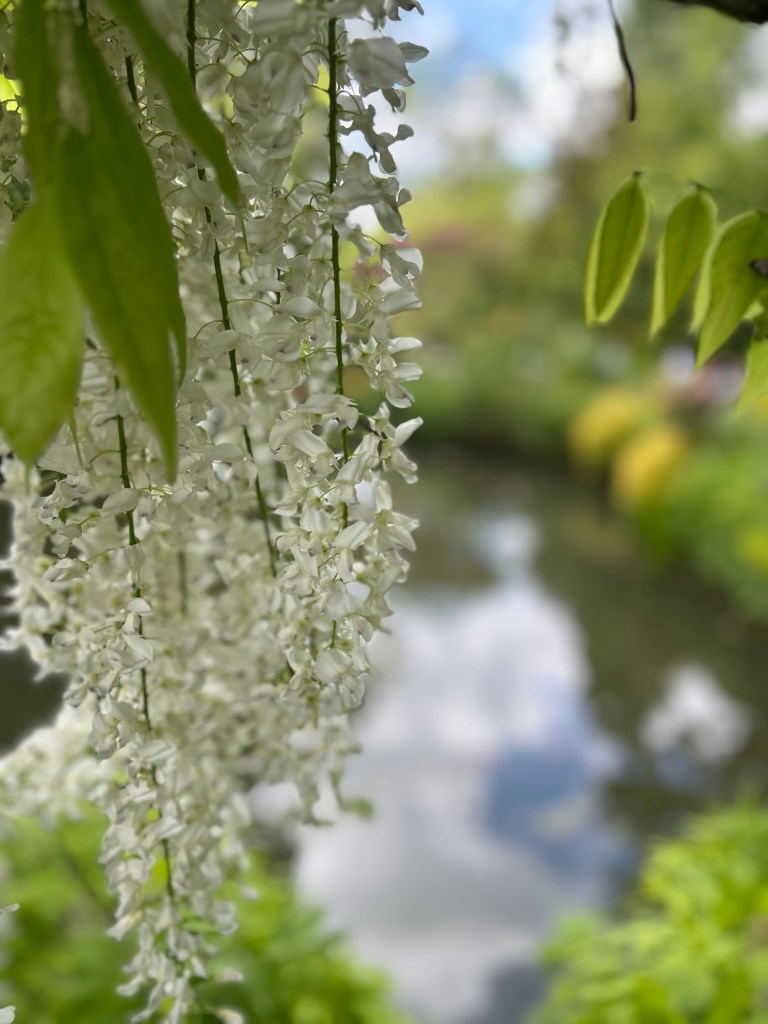
When we finally found Monet’s home and the water lily pond, the path beckoned us into the cool shade. People were quietly reading, painting, capturing the magic (as if that’s possible) and reveling in the boundless beauty. This is the garden of Song of Songs. This is the healing haven of flower and water and paintbrush and pen. Simple and yet bursting with spring. Thank you, Claude, for inspiring multitudes to gather in the sanctuary of nature—may it be so for generations to come.

Sleepy and a bit restless, we arrived at the train station, knowing the urban bustle would greet us at the end of the line. As we waited, a family of four sat at a high boy table playing cards and invited us to join. Although we lived oceans away, it felt like we knew them and I realized later why. I immediately noticed the mother’s short stubble of shorn hair and the lowering of their gaze when Jojo asked more about missing school for their family month long excursion through Europe. Carpe Diem, my heart said, yes…take this time together, savor this as the winter will come as it does for all, some in the spring of their days. Still light from the beauty of the garden, I felt the simultaneous intermingling of sadness caught in my throat. And this is the garden of Song of Songs too—all fleeting—and still we sing in trembling wonder.